

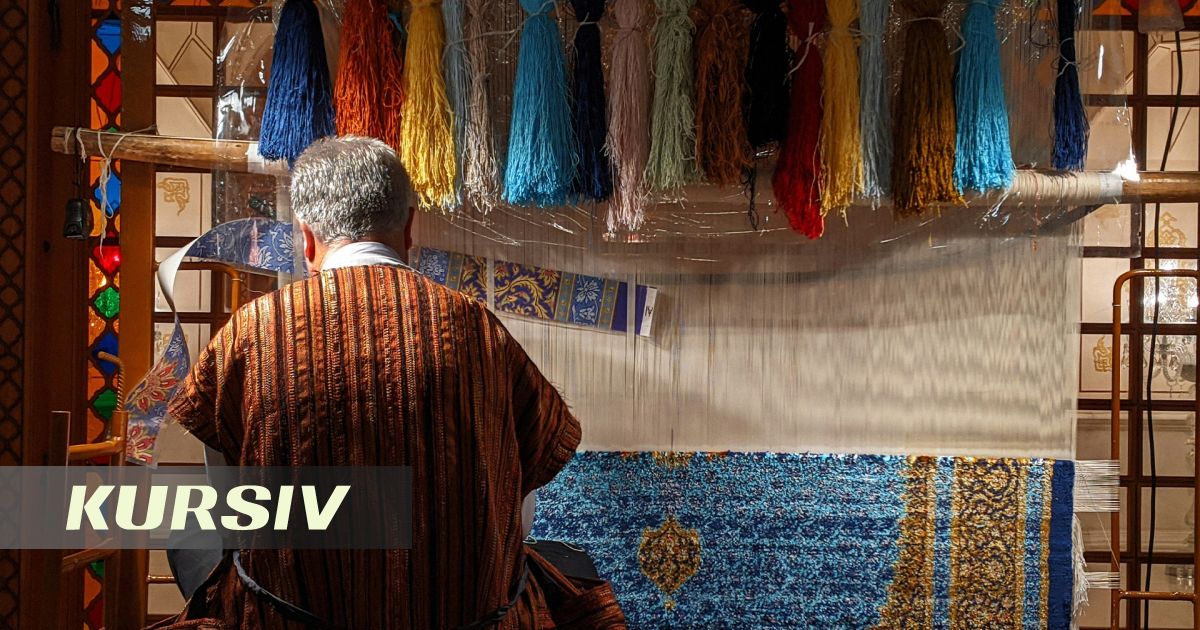
In Kazakhstan, Persian hand-woven carpets are being created by ethnic Kazakh repatriates from Iran, with a single piece costing up to $20,000 and a silk carpet taking about five years to make, according to infohub.kz.
The carpet-making process was demonstrated to participants of the Be Woman forum. Kursiv LifeStyle learned how long such work takes and how it is paid.
In the forum's lobby, a company was presented that strives to carry out full-cycle work — from dyeing threads to the actual production of carpets.
"Modern Chinese dyes leave marks on the skin and last no more than 50 years. We use natural dyes for the threads: such carpets last for centuries," said Gauhar Kabdugaliyeva, an art historian and representative of the company.
The craftswomen make carpets by hand: they stretch the warp threads on a special loom, tie the pattern threads between them, and after each knot cut them with a short knife. A small wool prayer rug takes them seven days with an eight-hour workday. Its price will be approximately 500,000 tenge per square meter.
Two Kazakh women who moved from Iran produce the works. Recall that Kazakhstanis massively migrated to that country in the early 20th century.
"Our craftsmen brought their way of life with them from Iran. Respecting their traditions, we allowed them to interrupt their workday for a siesta: they go to sleep for two to three hours during the day," Gauhar shared this interesting detail.
Handwork is a long process regardless of the schedule. Different thread thicknesses may also be used for carpets. For example, if made of silk, a carpet measuring 1.5 by 1.5 meters takes about five years. Such work will cost around $20,000 (9 million tenge).
However, Gauhar emphasizes, such carpets last for centuries and their price only increases over time.
"In my husband's family, there is a carpet that remained from his great-grandfather. Over about a hundred years, it has not faded and has not been damaged by moths, which is also interesting. Nowadays, we treat carpets against insects with chemicals. The secret of how it was done before is most likely lost," our interlocutor added.
Earlier, Kursiv LifeStyle wrote about the ancient Kazakh carpets called tuskiiz: they are made using the patchwork technique.