

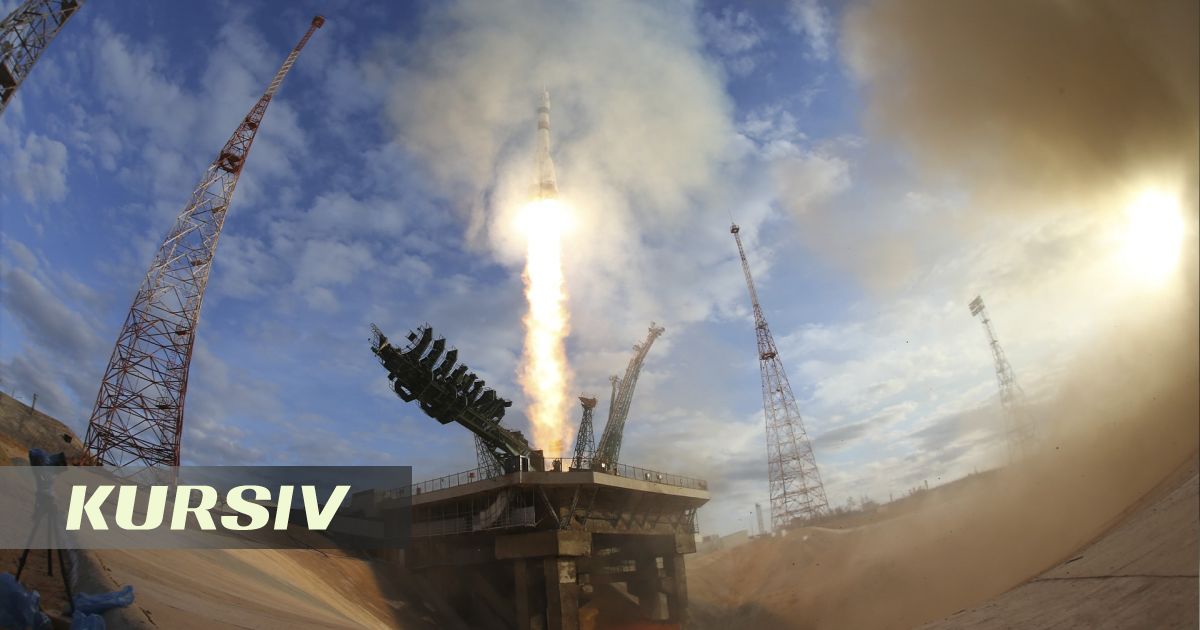
Russia will continue launching Proton-M rockets from the Baikonur Cosmodrome, which use highly toxic heptyl, while Kazakhstan will not receive additional payments for environmental risks. The Ministry of Artificial Intelligence and Digital Development of the Republic of Kazakhstan told Kursiv in response to a request, as reported by infohub.kz.
According to the ministry, only one Proton-M launch was carried out from Baikonur in 2026 — on February 12. No other launches are planned until the end of the year. Thus, out of the previously agreed plan of 10 rockets, Roscosmos still has nine launches to conduct.
The Ministry of AI emphasized that Kazakhstan will not demand additional payments from Russia for possible harm to nature and local residents, since over the past 10 years the number of Proton launches has already decreased significantly and has not exceeded previously agreed limits.
"In effect, this is about extending the deadlines for carrying out launches (within the previously agreed number of launches by the parties) of the remaining number of Proton launch vehicles," the ministry noted.
The decision to extend the launches under the terms of joint operation of Baikonur was officially adopted by the parties at a meeting of the intergovernmental commission back in 2025.
Proton-M is a heavy-class launch vehicle developed in 1961–1967. It uses heptyl as fuel — a highly toxic substance that poses a danger to the environment and human health.
Throughout the rocket's launch history, major accidents have occurred repeatedly: since 1991, 13 emergencies have been recorded. In 1999, Proton fell twice in the Karaganda Region. In the first accident, a fragment fell on a residential area, causing a fire due to fuel spillage, while in the second, debris fell in a sparsely populated area.
In 2007, a Proton-M crashed 40 km from Zhezkazgan. On that day, former Kazakh President Nursultan Nazarbayev was in the city. Despite the rapid elimination of the consequences, Kazakhstan then demanded $60.7 million in compensation from Russia, but the amount was later reduced 24-fold to $2.5 million.
From 2013 to 2015, a whole series of accidents occurred with the rockets. During one of the crashes, a Proton-M exploded just 2.5 km from the launch complex with 600 tons of toxic fuel on board.
Over all the years of operating the highly toxic rockets, Kazakhstan has repeatedly tried to achieve their complete ban. However, it was impossible to revise the terms of the complex's lease or change the financial parameters even after major emergencies. As an alternative, the Russian side proposed replacing Proton-M with the more environmentally friendly Angara, but in April 2024 Russia still proposed that Kazakhstan continue launches of the launch vehicle after 2025.
In 2024, Majilis member Aidos Sarym stated that Kazakhstan is not abandoning launches from Baikonur, including the launch of toxic Protons, since the cosmodrome guarantees work and social stability for the city, where thousands of Kazakhstanis are involved in servicing the complex. In addition, maintaining the site allows the country to develop more environmentally friendly projects such as the Baiterek program using kerosene fuel and to maintain its position in the global space industry amid the general cheapening of launches.