

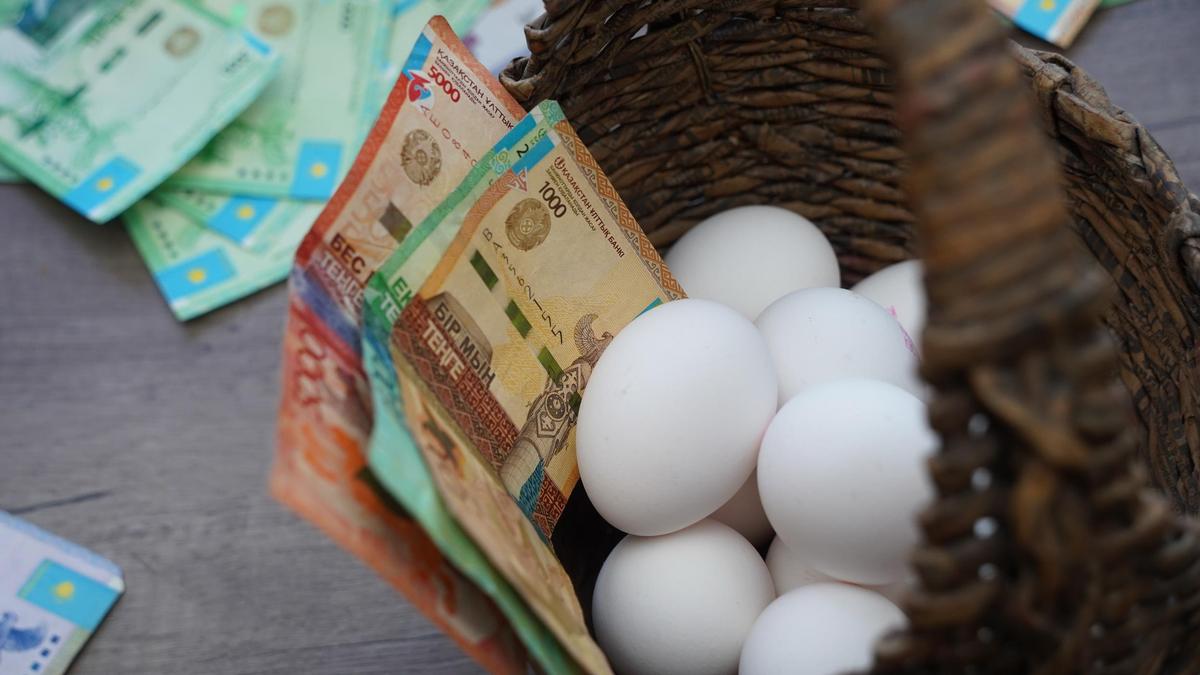
Average monthly household spending per person in Kazakhstan has risen about 9.5-fold over two decades, according to analysts at life insurer Freedom Life. In 2006, the average person spent 151,221 tenge a year, or roughly 12,600 tenge a month. By the second quarter of 2026, that figure had reached 358,584 tenge per person over three months — 119,528 tenge a month, the website infohub.kz reports.
The cost of living has changed markedly over the period, with food, household goods, clothing and appliances all becoming more expensive, which has in turn affected how much people spend. The analysts stress that the figures cover spending per person rather than per household: wages are calculated per worker, while spending is calculated for every household member, including children and those not in work.
The structure of household spending has also shifted. In 2006, food accounted for 39.2% of spending, non-food goods for 30.4% and paid services for 24.5%. In the second quarter of 2026, the share going to food had risen to 50.5%, while paid services accounted for 20.7% and non-food goods for 19.5%.
In monetary terms, of the average 358,600 tenge spent per person over three months, about 181,100 tenge went on food. Paid services accounted for 74,200 tenge, non-food goods for 69,900 tenge and loan and debt repayments for 26,200 tenge.
To gauge the scale of the change over two decades, the analysts compared the prices of individual goods in 2006 and 2026. Beef rose nine-fold, from 422 to 3,810 tenge a kilogram; vegetable oil 5.6-fold, from 163 to 906 tenge a litre; eggs 4.2-fold, from 142 to 593 tenge a dozen; and first-grade wheat flour bread 4.5-fold, from 51 to 230 tenge a kilogram.
Among non-food goods, laundry soap (200 g) rose 13.5-fold, from 31 to 420 tenge; a television set eight-fold, from 35,000 to 280,000 tenge; a refrigerator 7.3-fold, from 48,000 to 350,000 tenge; a shirt 5.1-fold, from 1,965 to 9,990 tenge; and trousers 4.7-fold, from 3,421 to 16,000 tenge. AI-92 petrol saw the smallest increase, now costing 2.8–3.4 times more than in 2006 — 247 tenge a litre against 73–88 tenge.
Other non-food goods have also become more expensive, with the cost of clothing, household chemicals, appliances and electronics rising over the 20 years. Direct price comparisons are not always meaningful, however: modern appliances differ from older ones in technology and functionality, so the price gap is not driven by inflation alone. Even so, the overall figures show how substantially the cost of living in Kazakhstan has risen over the past 20 years.