

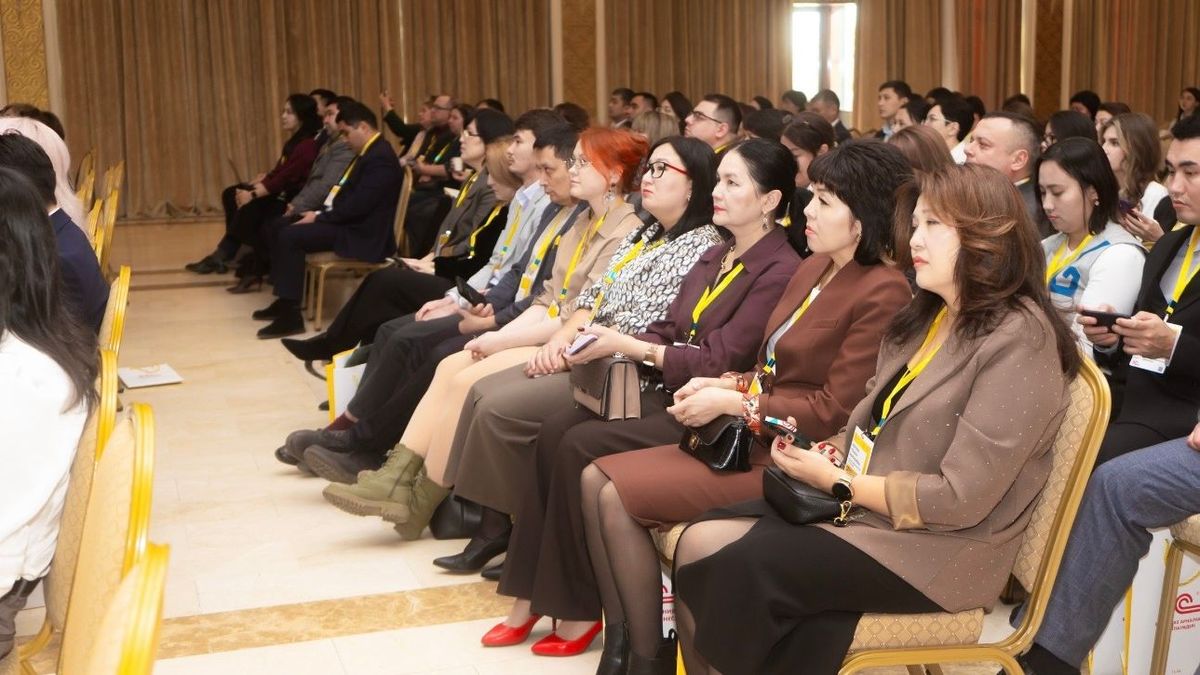
Kazakhstan plans to introduce artificial intelligence and adaptive testing into its Unified National Testing (UNT) system. Gul Jusupova, a representative of the Ministry of Science and Higher Education of the Republic of Kazakhstan, announced this at the XVI scientific-practical conference "1C Kazakhstan," according to infohub.kz.
In her report on the transformation of higher education in the era of artificial intelligence, she identified the modernization of the UNT as one of the areas of digitalization in the education system. Among the priorities are the introduction of AI, the development of adaptive testing, and raising the national exam to internationally recognized standards.
These plans are being discussed amid preparations for a new format of the entrance exam, the Admission Insight Test (AIT), which the National Testing Center is developing jointly with the international organization ETS. The new model envisions assessing not only subject knowledge but also critical thinking, research skills, and digital literacy. Piloting of the new format is scheduled for spring 2027.
Thus, the changes may affect not only the content of exam questions but also the very approach to assessing the knowledge of future students. At the same time, the specific mechanisms for using artificial intelligence in the UNT have not yet been disclosed.
"Artificial intelligence is changing not only the educational process but also the requirements for learning outcomes. Today it is important to assess not only the amount of information absorbed but also a person's ability to analyze, apply knowledge, and work with modern technologies. It is in this direction that the higher education system is developing, including the improvement of knowledge assessment tools," Gul Jusupova noted.
Issues of introducing new technologies in education became one of the central topics of the 1C conference. Representatives of government bodies, universities, and the technology business discussed how specialist training should change amid the rapid digitalization of the economy.
According to Dmitry Godun, director of 1C Kazakhstan, educational programs must take into account the real requirements of employers, and practical digital skills need to be developed during training.
"Today, technologies change faster than traditional educational programs. Therefore, it is important that students have the opportunity to work with modern digital tools and solve real business problems while still studying. Artificial intelligence and automation are already becoming part of the professional environment, and our task is to help educational institutions train specialists capable of effectively using these technologies," Dmitry Godun emphasized.
One example of such interaction is the work of 1C Kazakhstan with educational institutions. Today, there are 12 dedicated 1C classrooms in the country, and teacher training is underway in five more educational organizations. As part of cooperation with the Ministry of Science and Higher Education, the company is also participating in equipping universities with computer equipment. Three national universities have already received 15 computers each.
It is worth noting that the XVI scientific-practical conference was attended by representatives of 26 universities and 21 colleges from 20 cities of Kazakhstan. The main focus was on the digital transformation of education, the development of professional competencies, and the training of personnel for the modern economy.