

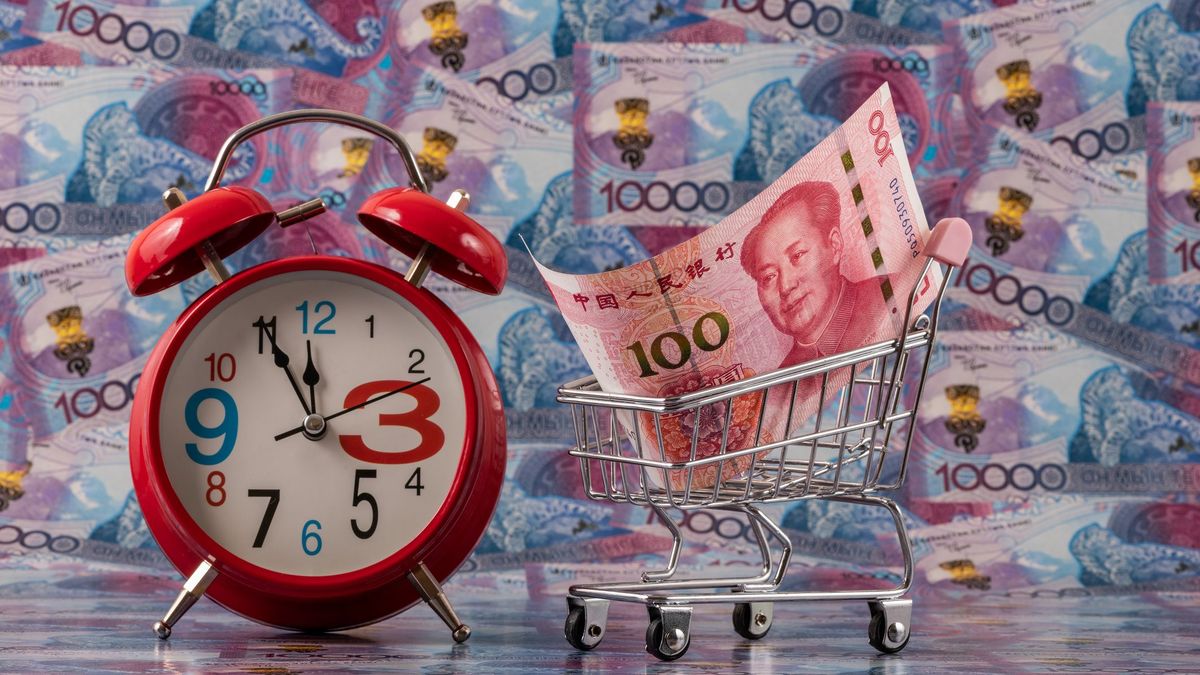
Kazakhstan's appetite for the Chinese currency has weakened markedly in 2026: in January–July, exchange offices sold a net 303 million tenge worth of yuan, down 45.9% from a year earlier, the website infohub.kz reports.
According to the National Bank of the Republic of Kazakhstan, net dollar sales (sales minus purchases by exchange offices) in July 2026 amounted to about 123.03 billion tenge — roughly the same level as a year earlier. The yuan has moved in the opposite direction: in July, households bought a net 12.2 million tenge worth of the Chinese currency, taking into account yuan sold back to exchange offices. A year earlier that month, net sales reached 156.6 million tenge.
As the portal Finprom notes, there were no serious reasons for such a sharp decline. Unlike the dollar, whose average rate reached 507.6 tenge in January before falling to 472.13 tenge in July, the yuan saw no such swings.
"The average official rate for January-July last year was about 71 tenge per yuan, while for the same period in 2026 it was about 70.7 tenge, meaning the difference did not even reach 1%," analysts note.
In total, in January–July 2026, exchange offices sold 303 million tenge more in yuan than they bought. That is 45.9% less than a year earlier. For comparison: in the first seven months of 2025, net sales of the Chinese currency totaled 559.7 million tenge, and in the same period of 2024, 727.6 million. Thus, demand for the yuan has fallen 2.4-fold in two years.
The regional pattern has also shifted: in Almaty, net sales shrank 6.2-fold, to 58.4 million tenge, while Karaganda region took the lead with 104.4 million tenge.
Notably, the decline in cash yuan transactions comes against the backdrop of Kazakhstan's substantial trade with China. In January–July 2026, exports of Kazakh goods to China totaled $9.2 billion, imports of Chinese goods reached $10.9 billion, and overall trade turnover hit $20 billion.
China became the largest destination for Kazakh exports with an 18% share and the second-largest source of imports with a 29.4% share. At the same time, the volume of foreign trade does not fully reflect household demand for cash yuan, and interest in it remains limited.