

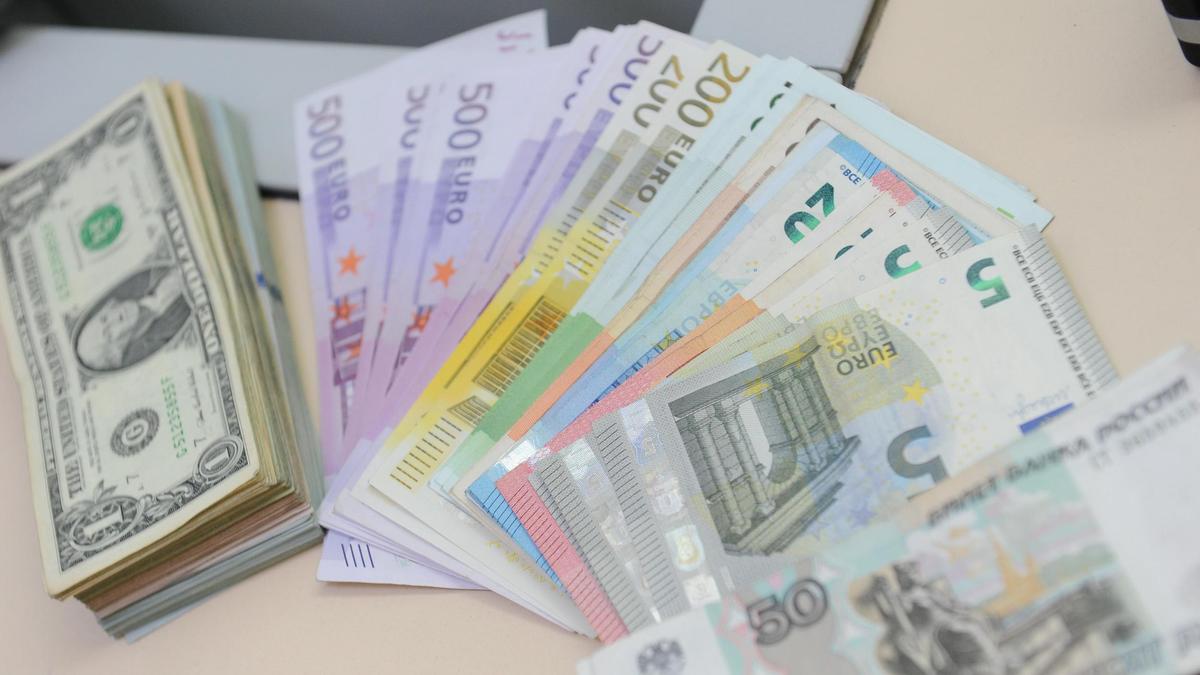
In July, the volume of foreign currency operations in Kazakhstan showed an unexpected shift in population preferences. For the first time in four months, the ruble was bought more actively than sold, reports infohub.kz.
The National Bank of the Republic of Kazakhstan published data on purchases and sales of foreign currency. According to July indicators, there was overall interest in foreign money across the country, with positive values in the ratio of purchases to sales.
For example, the situation is as follows: for the US dollar, sales to the population exceeded purchases by just over 123 billion tenge. The most active buyers were residents of Almaty (60.4 billion tenge) and Shymkent (22.1 billion tenge). For the euro, the volume of purchases by the population exceeded sales by 11.5 billion tenge. The leaders were Almaty (4.9 billion tenge) and Astana (2.7 billion tenge). The population bought Russian rubles for 126.5 million tenge more than they sold. The largest positive indicator was recorded in the Karaganda region (1.1 billion tenge).
Thus, in July, Kazakhstanis bought more cash foreign currency than they sold.
The dollar has held the largest share of demand since the beginning of 2026. Maximum interest was recorded in January (150.3 billion tenge), followed by a decline to the May minimum (65.3 billion tenge), with a subsequent recovery in June and July (126.5 and 123 billion tenge, respectively).
Typically, Kazakhstanis tend to sell dollars more than buy when the exchange rate falls. When the rate rises, the population, on the contrary, actively buys currency. This is indicated by net sales statistics and the average dollar exchange rate by month.
Only in July did Kazakhstanis maintain high interest despite the weakening of the US currency.
In turn, demand for the euro remained stable at 8.3-12.0 billion tenge for most months, except for June, when there was a significant increase to 25.7 billion tenge.
As for the Russian currency, in most months (January, April, May, June) net sales of cash rubles were observed. The largest outflow was recorded in April (-39.8 billion tenge) and May (-30.0 billion tenge). The maximum interest in buying was in March – 7.4 billion tenge.
In July, net demand turned positive again, albeit slightly. But the balance changed from minus 17.5 billion tenge to plus 1 million tenge – meaning the population sharply increased purchases of cash rubles. This also happened against the backdrop of an almost unchanged indicator for the dollar and a more than twofold decrease in euro purchases.