

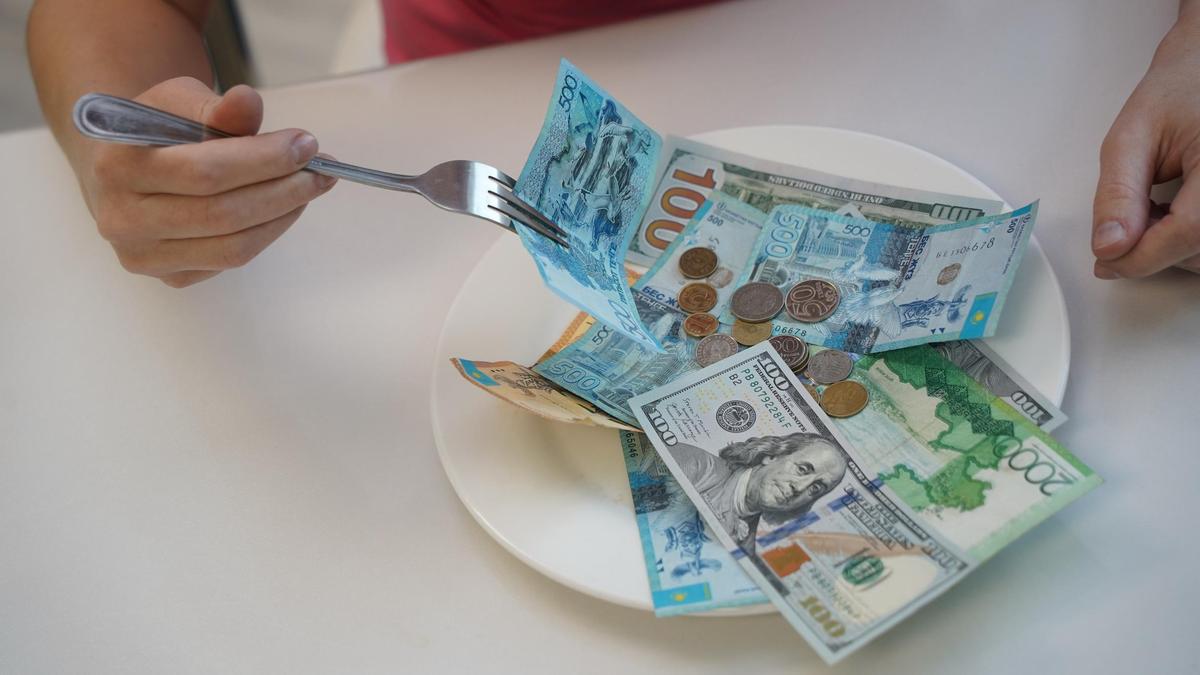
From January to July 2026, food service establishments in Kazakhstan sold food and drinks worth nearly 1 trillion tenge. Over the past year, restaurant and cafe services have risen in price by an average of 10.9%, reports infohub.kz.
Inflation in Kazakhstan remains double-digit at 10.2% as of July 2026. It is important to note that prices are rising not only for food products but also in catering establishments: canteens, cafes, fast food outlets, and restaurants. According to the Bureau of National Statistics (BNS), in July, restaurant and cafe services rose by 0.3% month-on-month and by 10.9% year-on-year.
Dinner at a restaurant for Kazakhstanis has become on average 9.4% more expensive, while lunch at a canteen has risen by 11.8%. Fast food in the country has gone up by 10.3%.
According to Numbeo calculations, the average check at an inexpensive Kazakh restaurant is 5,000 tenge. A dinner for two, including three courses but excluding drinks, will cost 18,000 tenge, while a combo meal at a fast food outlet averages 3,500 tenge. Naturally, the actual check will depend on the level of the establishment, as well as the chosen dishes and drinks.
Looking at the monetary turnover of public catering in the country, according to BNS data, from January to July, domestic establishments provided services worth 998.9 billion tenge – 15.6% more than in the same period of 2025.
Earlier it was reported that food products account for almost half of Kazakhstanis' expenses – on average 171,531 tenge per quarter per person. However, this figure does not include eating out.
According to BNS data, in the first quarter of 2026, per capita spending on restaurants, cafes, and similar establishments amounted to 9,977 tenge. Residents of Almaty spend the most on eating out – 19,491 tenge per quarter per person. Astana follows with 16,750 tenge, and Pavlodar region closes the top three with 14,761 tenge. The lowest figure was recorded in Atyrau region – only 2,413 tenge per capita per quarter.
This amount may seem unrealistically small, but the reason lies in the calculation methods: analysts took the total amount spent by Kazakhstanis on eating out and distributed it among the entire population, including those who do not visit restaurants and cafes.
Earlier it was also reported that many staple foods in Kazakhstan are currently rapidly becoming cheaper.