

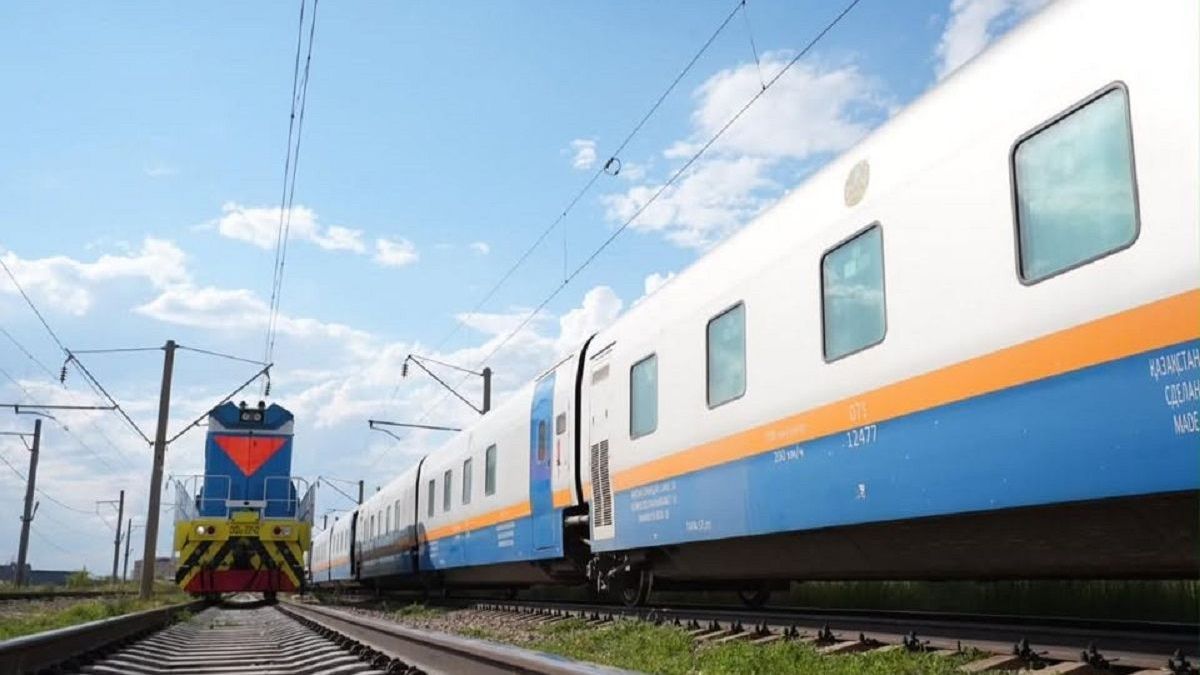
Kazakhstan's national railway company KTZ has discussed rail safety with private operators and carriage repair companies at a meeting in Almaty, citing violations, train delays and the technical condition of passenger carriages, infohub.kz reports.
According to the national company's press service, 14 private rail passenger operators work in the country alongside the national carrier, Passenger Transportation JSC. Meeting participants reviewed results for the first 10 months of 2026, safety violations, the technical condition of passenger carriages, repair quality and the causes of train delays.
According to the statement, third-party organizations and carriage repair companies were responsible for 13 safety violations during the period — two more than in the same period last year. Technical faults blamed on repair companies caused 19 passenger train delays.
In 2026, 411 passenger carriages underwent scheduled repairs. Another 521 carriages were sent for unscheduled repairs because of faults attributed to repair companies. Total excess downtime reached 2,305 days. Fourteen carriages exceeded the allowed downtime after leaving repair, for a combined delay of 65 days.
The meeting paid particular attention to the work of private passenger operators. Over the 10 months, trains operated by private carriers were involved in five safety violations, and 20 delays were recorded for technical reasons.
Participants also noted that private operators report faults and the causes of delays late and miss deadlines for submitting requests to attach and detach carriages, the press service said.
KTZ drew particular attention from private operators and carriage repair companies to the need for unconditional compliance with safety requirements.
"High-quality maintenance and repair of carriages, serviceable rolling stock and proper production control are mandatory conditions for organizing a safe transportation process," KTZ said.
Following the meeting, company heads were instructed to take measures to eliminate the violations identified; strengthen control over the technical condition of carriages and repair quality; provide production sites with the necessary spare parts and qualified specialists; increase managers' personal responsibility for traffic safety and establish prompt information exchange with KTZ units.