

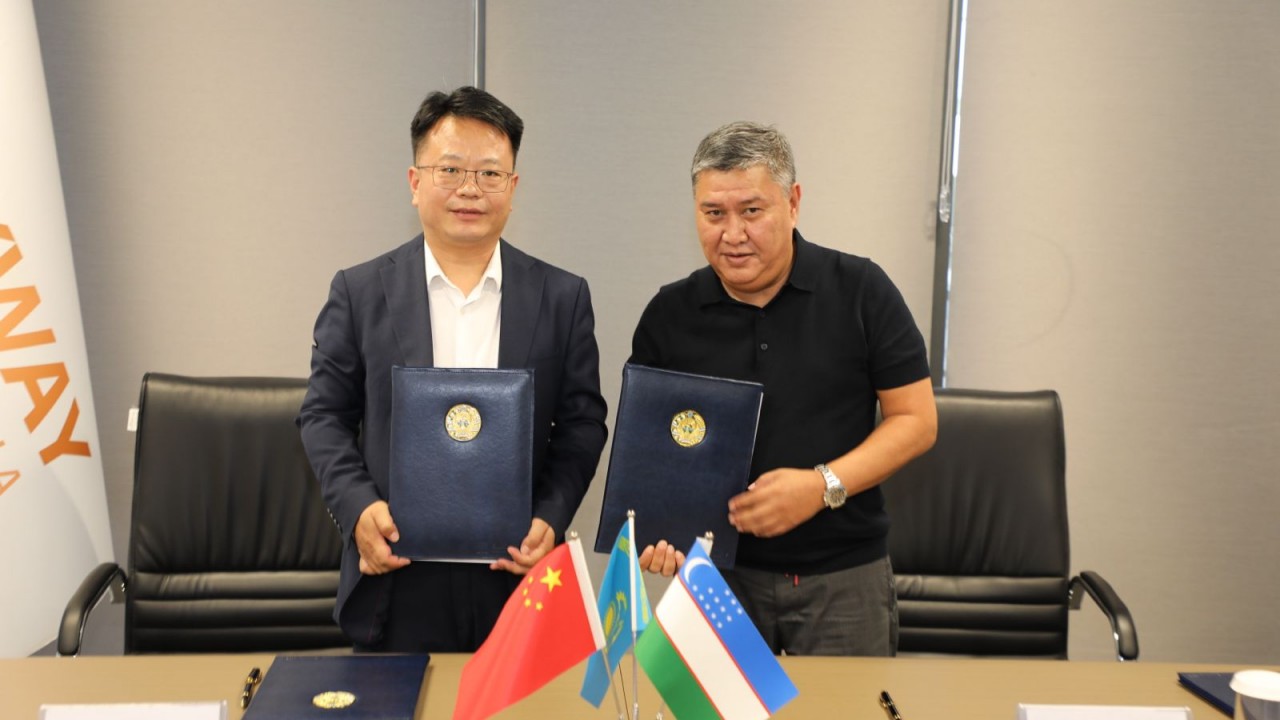
A joint venture between Silkway CA and China Railway Construction Engineering Group (CRCEG) has signed a contract for the second phase of a multifunctional logistics center in the Tashkent region. The project will see the construction of modern warehouse facilities totaling approximately 60,000 square meters, according to the website infohub.kz.
The new facilities will include a Class A+ warehouse covering 41,472 square meters and a multi-section cold storage complex of 18,432 square meters. The cold storage will be equipped with a multi-zone temperature control system, allowing simultaneous maintenance of different storage modes, from deep freezing to short-term cooling. An automated inventory management and product sorting system based on arrival dates is also planned.
The first phase of construction began in March 2026 and includes the development of railway infrastructure, a container terminal, and warehouse capacity. Both phases are being carried out by the same general contractor, CRCEG, ensuring continuity of technological solutions and uniform construction standards. Major work is expected to be completed in 2027.
The multifunctional logistics center is being built in the Yangiyul district of the Tashkent region on a 159.4-hectare site. The Silkway Central Asia project is part of intergovernmental cooperation between Kazakhstan and Uzbekistan, based on agreements reached by the two countries' presidents. The construction operator is the joint venture Silkway CA LLC, established in March 2025 with the participation of Kazakhstan's PTC Holding group and Uzbekistan Railways (JSC Uzbekistan Temir Yollari).
The new center will become part of PTC Holding's growing network of transport and logistics facilities, which already includes the Dostyk TransTerminal container terminal on the Kazakhstan-China border and the Poti TransTerminal in Georgia's port of Poti. These facilities handle cargo at key sections of international routes linking China, Central Asia, the Caucasus, and the Black Sea. The launch of the center in the Tashkent region will expand the area's warehouse and terminal capacity, enhancing its role in global supply chains.