

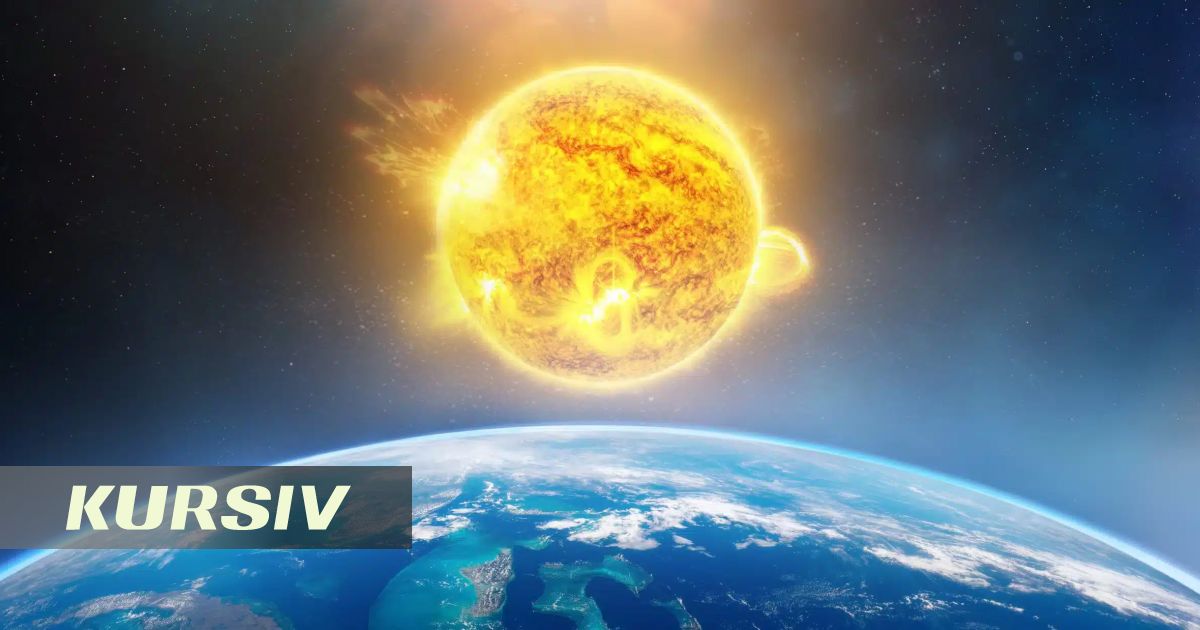
A G3-level magnetic storm, the strongest in the past three months, has been registered on Earth, according to the Laboratory of Solar Astronomy at the Institute of Space Research of the Russian Academy of Sciences and the Institute of Solar-Terrestrial Physics of the Siberian Branch of the Russian Academy of Sciences, as reported by infohub.kz.
According to scientists, the disturbance began at approximately 22:00 Astana time on October 10. The previous storm of comparable strength was observed on July 4.
The U.S. Space Weather Prediction Center of the National Oceanic and Atmospheric Administration (NOAA) also confirmed that the maximum three-hour geomagnetic activity index Kp over the past day reached 7, corresponding to G3 level. This information was included in a forecast issued on the morning of October 11.
The event was caused by the arrival at Earth of plasma clouds ejected by the Sun during an activity burst earlier in the week. As noted by the laboratory, the storm was accompanied by intense auroras at geographic latitudes of 50 degrees and above.
"According to the forecast, the geomagnetic field may remain in a disturbed state for about another day," scientists reported on the evening of October 10.
Earlier, the laboratory had warned of three solar plasma clouds. The first was ejected on October 6 during an M1.4-class flare, with its arrival expected on the evening of October 9.
Two more clouds left the Sun on October 7 and 8. According to preliminary calculations, they could merge en route and reach Earth by midday on October 11. At that time, scientists predicted G2-level storms.
On NOAA's five-level scale, G3 is classified as a strong geomagnetic storm. At such intensity, disruptions to satellite navigation and radio communications are possible, along with increased atmospheric drag on satellites in low orbits and malfunctions in certain protective devices of power systems. These are potential consequences of the G3 level, not confirmed failures during the current storm.
NOAA's forecast for October 11–12 expects G1–G2 geomagnetic storms — from weak to moderate. They are linked to the arrival of several coronal mass ejections and the possible impact of a high-speed solar wind stream.
The Russian laboratory notes that solar activity in early October increased compared to a calm September. However, it is still premature to consider this a sustained trend for the entire month: activity remains uneven, and further development depends on the state of sunspot groups.
Earlier, Kursiv wrote that scientists had predicted a magnetic storm on October 9. At that time, its strength was expected not to exceed G2 level, and an elevated geomagnetic background could persist through October 10.