

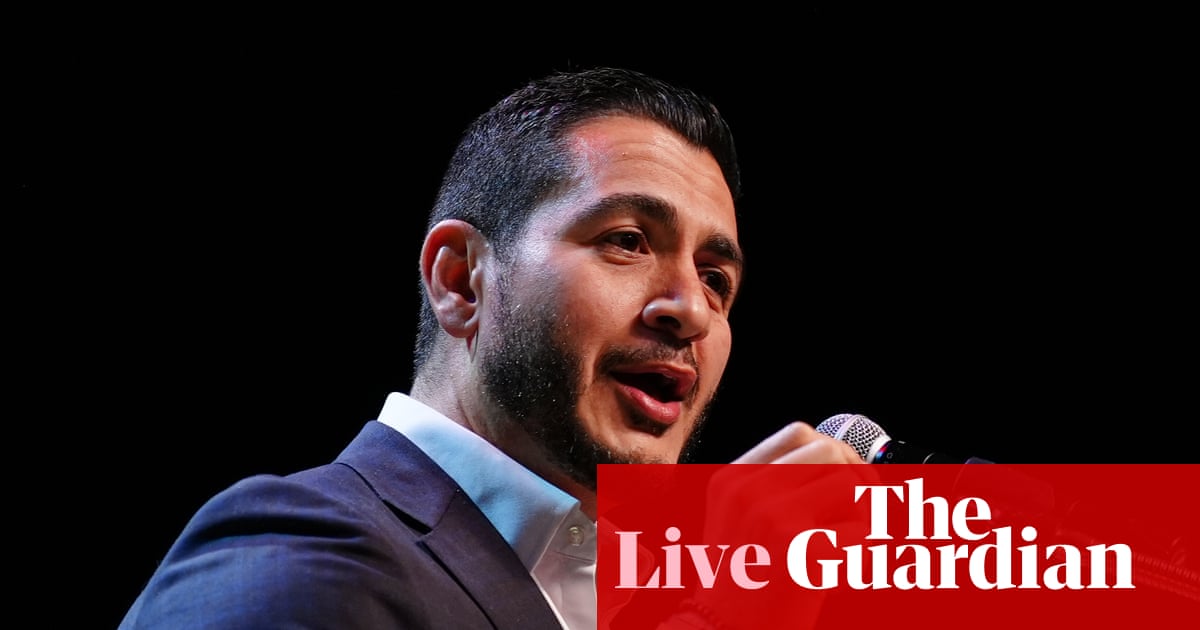
The Democratic primary for Senate in Michigan remains too close to call, with progressive former public health official Abdul El-Sayed holding a narrow lead over Congresswoman Haley Stevens, as reported by infohub.kz.
As of around 5 a.m. local time, El-Sayed had 49.5% of the vote and Stevens 45.78%, with more than 95% of votes counted. Both candidates addressed supporters, saying the count could continue well into the day.
“We knew that this was going to be a close race, and that’s exactly what we’ve got,” Stevens said. “I am feeling fired up, and you should be too.”
The bitter and expensive campaign attracted national attention not just because the general election for the seat will help decide which party controls the Senate, but also because it became the most notable proxy battle between the Democratic Party’s establishment and progressive wings.
Candidates from the left flank, including democratic socialists, have found surprising success in the party’s U.S. House primaries, including in New York and Denver. A progressive victory in Michigan would be significant for the movement.
The winner of Tuesday’s race will face the Republican nominee, former Representative Mike Rogers, in November, to succeed retiring Democratic Senator Gary Peters. Rogers ran unopposed in the Republican primary.
In other developments:
In Michigan, Jocelyn Benson clinched the Democratic nomination in the governor’s race and will face Republican John James, a congressman endorsed by Donald Trump, to replace term-limited Democratic Governor Gretchen Whitmer.
Further down ballot, progressive William Lawrence won a competitive three-way Democratic primary in Michigan’s seventh congressional district. Lawrence, a community organizer who co-founded the Sunrise Movement, will challenge Republican incumbent Tom Barrett.
In Washington state, two-term centrist Democrat Marie Gluesenkamp Perez advanced to the general election for her competitive U.S. House seat. She will face Republican state Senator John Braun, who is backed by Trump. The state uses a top-two primary system, regardless of party.
In Missouri, Democratic Congressman Wesley Bell won his primary in the St. Louis area, ending progressive former Representative Cori Bush’s bid for a comeback. Bell’s victory blunted the momentum of pro-Palestinian candidates in recent elections.
In the Midwest, Kansas state Senator Cindy Holscher won the Democratic nomination for governor, beating two other candidates. Ty Masterson, the Trump-backed Kansas state Senate president, clinched the GOP nomination in a crowded race. The general election is set to be fiercely competitive as Republicans aim to retake the governor’s mansion.