

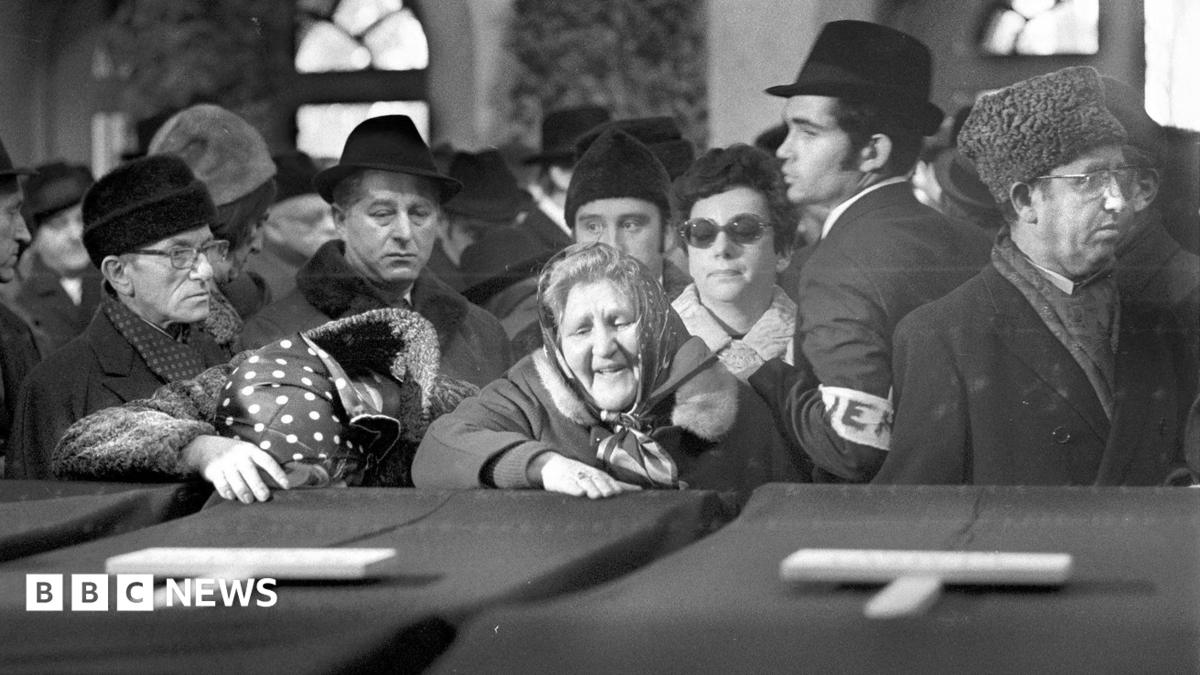
German investigators have identified the arsonist who set fire to a Jewish community centre in Munich in 1970, killing seven people, as a 25-year-old lone neo-Nazi with known antisemitic views. The suspect, named by Der Spiegel as Bernd V., died in 2020, and prosecutors say they now have compelling grounds to believe he was the perpetrator.
The seven victims were all Holocaust survivors aged 59 to 71, and 15 others were injured in the blaze. The fire broke out at about 20:40 on 13 February 1970, when the killer poured petrol into the wooden stairwell of a retirement home housed inside the Jewish community building on Reichenbachstrasse. The fire quickly spread to the top floor, and while many escaped to the roof or were rescued, four died in the stairwell and another after jumping from a window.
Prosecutors based their conclusion on credible information from a woman who came forward last year after the death of a close relative who had known the man well. According to prosecutors, the suspect was heard to claim that "the Jews had everything" and he wanted to "set them on fire" within the vicinity of the building, and 15 minutes later it was engulfed in flames. These remarks were corroborated by other family members, and other witnesses described the man as having a "Hitler-fixation" and listening to records of Nazi speeches in his youth.
One head teacher reported that the suspect had used a Hitler-youth dagger given by his father during a confrontation, and he later received a juvenile conviction for blowing up two phone kiosks. Der Spiegel reports that the female witness's relative was once part of a burglary gang, and on the night of the arson they had taken part in a failed raid on a jewellery store in nearby Gärtnerplatz, which infuriated Bernd V. and stirred him into an antisemitic rage.
The investigation was closed in 2017 due to lack of evidence, but reopened last year. Prosecutors note that the presumption of innocence still applies even after death, and there is no reliable evidence of anyone else's involvement. Fifty-six years later, German authorities are confident they have solved the notorious crime, though the case may be seen as a historic police failure. Bernd V.'s name had been brought to investigators in the early 1970s by a cellmate, but insufficient evidence led to the case being dropped.