

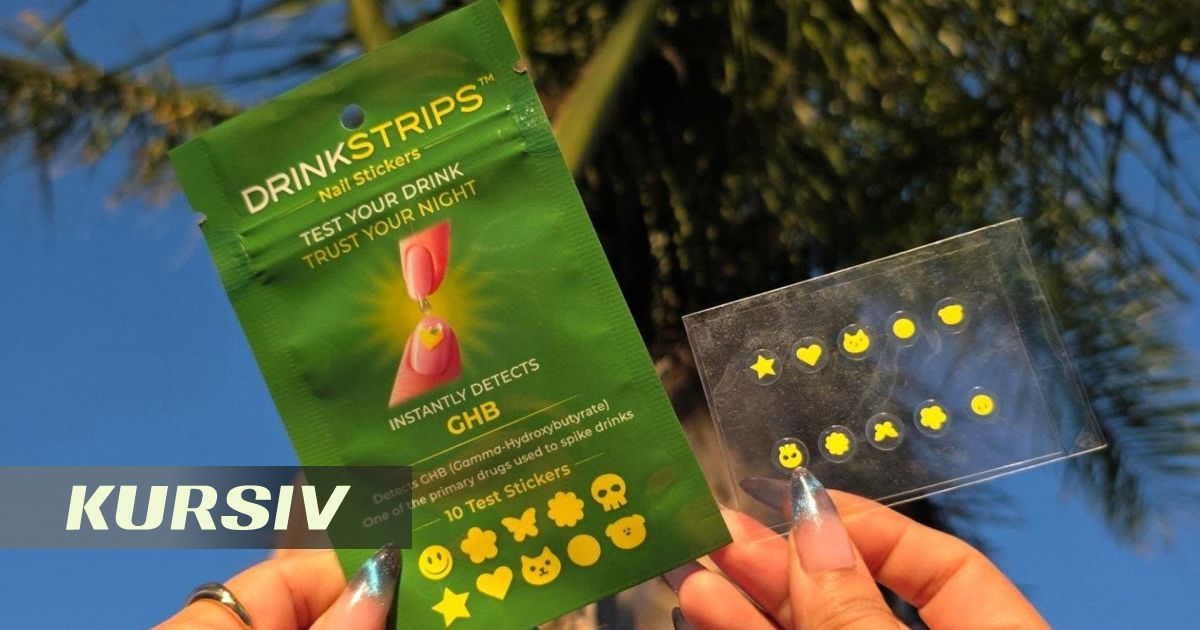
Miniature nail stickers that can test a drink for substances capable of causing loss of control and consciousness are gaining popularity on social media. They look like an ordinary manicure accessory, fit in a wallet, and deliver a result in just a minute. However, there is an important caveat — such tests do not detect all dangerous substances, infohub.kz reports.
The stickers were created in response to the problem of spiking — the practice of secretly adding alcohol, drugs, or other psychoactive substances to someone's drink. This can happen in bars, nightclubs, and at parties.
The principle is fairly simple: the sticker has a special zone with a chemical reagent. A drop of the drink is applied to it, and you wait 10 to 60 seconds. If the area changes color, it may indicate the presence of a certain substance.
Manufacturers claim the test helps detect GHB — a substance also known as "liquid ecstasy" or "G." It can cause drowsiness, confusion, and loss of consciousness, and becomes especially dangerous when combined with alcohol.
A single pack contains six or 10 disposable stickers, depending on the configuration. They are the size of a business card, making them easy to carry. After testing, the sticker is thrown away.
If the sticker changes color, the drink should not be consumed. At the same time, no reaction does not guarantee the cocktail is safe. The test is designed for specific substances and may not detect other drugs or sedatives.
Special drink-testing stickers are not yet sold in Kazakhstan. However, they can be ordered from manufacturers' websites or on Amazon.
Prices start at around 2,700 tenge per test. There are packs of six (about 5,300 tenge), 10 (12,200 tenge), and 20 tests (23,100 tenge). The cost does not include delivery.
Reviews of similar tests include doubts about their accuracy. For example, buyers have reported that the stickers changed color when testing ordinary tap and bottled water.
In 2025, the Journal of Forensic Sciences published a study of eight commercial GHB tests. Researchers found that some tests failed to detect the substance even at high concentrations. In addition, the color of the drink itself could interfere with correctly assessing the result.
Earlier, Kursiv LifeStyle wrote that the #IamJaneDoe campaign, launched in support of a raped student in the United States, received widespread support in the Kazakh internet. In the U.S., the young woman accused seven members of the Chi Phi fraternity at the prestigious Cornell University of gang rape for a second time.