

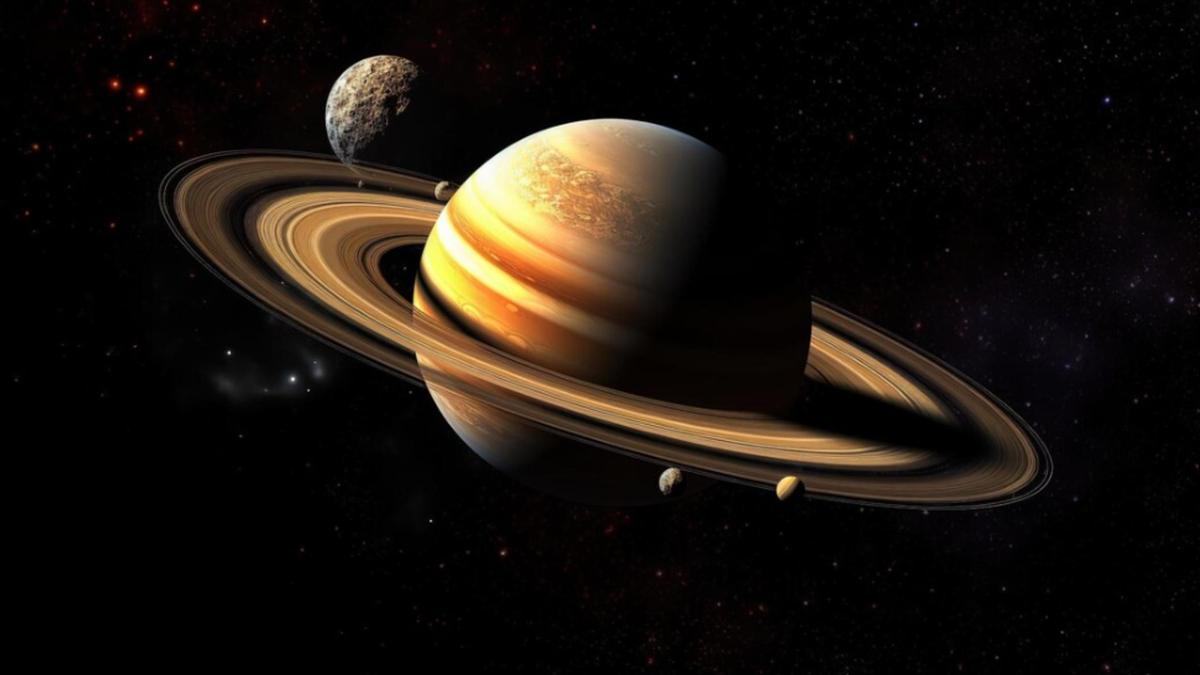
Astronomers at NASA have detected a giant decagonal structure in the atmosphere at Saturn's south pole, reports infohub.kz.
The Hubble Space Telescope has spotted a new atmospheric feature shaped like a decagon near Saturn's south pole. Scientists from NASA's Goddard Space Flight Center and the University of the Basque Country analyzed the images and confirmed the existence of a giant atmospheric wave never seen before. Unlike the famous northern hexagon, known for over 40 years, the decagon has formed recently. The findings were published in the journal Science Advances.
Amateur astronomers Trevor Barry and Jean-Paul Auger first noticed signs of a wavy band in 2024 while analyzing data from the OPAL project. Later, Hubble images from 2025 confirmed that the structure had developed into a clear decagon. Lead researcher Agustín Sánchez-Lavega from the University of the Basque Country noted that scientists had been searching for an analog to the northern hexagon since 1990, but spacecraft, including Cassini, had detected nothing similar.
The images show that the wave is located within a jet stream and penetrates deep into the atmosphere, spanning several layers. Researcher Amy Simon from NASA emphasized that the main mystery is the cause of the sudden appearance of the structure over the past few years. Scientists plan to continue observations with the James Webb Space Telescope to determine whether the decagon will remain a permanent feature or eventually disappear.