

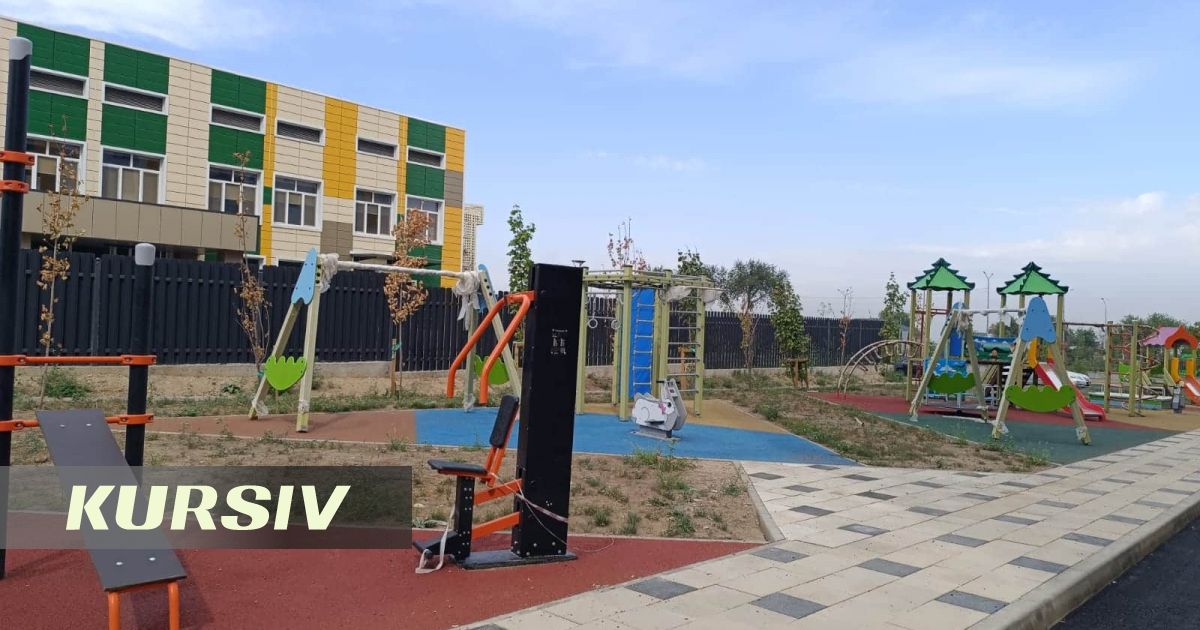
Social infrastructure is actively developing in Almaty's Nauryzbai district, where new schools and kindergartens are being built to provide residents with quality educational services, reports infohub.kz.
During a press tour organized by the Nauryzbai district akimat together with the Regional Communications Service of Almaty, journalists were shown both the educational facilities under construction and those already commissioned. The development of social infrastructure remains a priority for the district, which is actively growing and being built up.
Currently, construction continues on boarding school No. 15 with a capacity of 340 places and a dormitory. The facility is fully ready, and its opening is scheduled for September 2026. Also, the construction of an extension for 375 places to school-gymnasium No. 174 is being completed, which will welcome its first students in September of this year.
In parallel, projects for the construction of preschool institutions are being implemented. By the end of the third quarter of 2026, it is planned to complete the construction of three kindergartens: two facilities for 320 places each in the microdistricts of Nurly Dala and Kuramys, as well as a kindergarten for 240 places in the Kalkaman microdistrict.
The district's network of educational institutions has already been expanded with new facilities. Five schools have been commissioned: school No. 41 near the Alem City residential complex with 1,200 places, school No. 214 in the Nurly Dala residential complex with 1,500 places, school No. 221 on Sabdenov Street with 2,500 places, school No. 219 in the Kuramys microdistrict with 1,500 places, and school No. 223 in the Alma City-3 residential complex with 1,200 places. In addition, kindergarten No. 202 with 320 places has started operating in the Shugyla microdistrict.
As noted by the akim of the Nauryzbai district, Nazira Togizbayeva, the development of social infrastructure remains one of the key areas of work in one of the fastest-growing districts of Almaty. The construction of new schools and kindergartens helps reduce the shortage of student places, makes education more accessible for residents of new microdistricts, and creates comfortable conditions for learning and upbringing of children.