

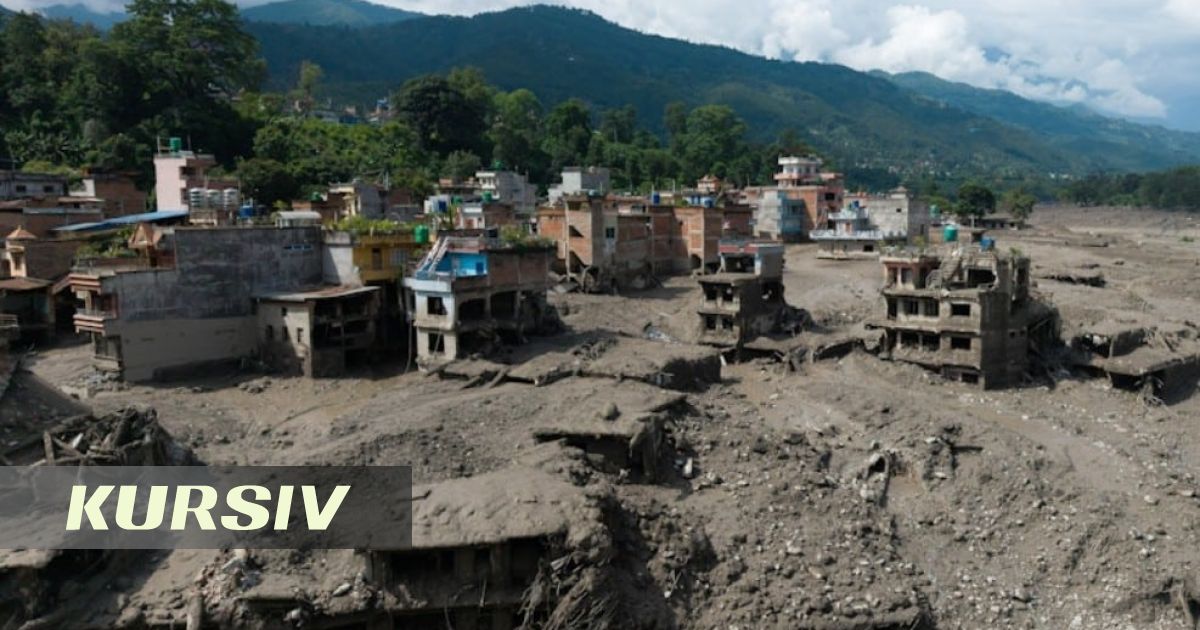
The death toll from the devastating floods in Nepal has risen to 157, with three more deaths reported in China's Tibet region, according to infohub.kz.
The tragedy occurred on August 26 in the high-altitude Rasuwa district, near the Nepal-China border. Powerful torrents of water, mud, and rocks swept away homes, roads, bridges, vehicles, and hydropower facilities. Footage posted online shows people being swept away near the border crossing.
According to the latest data from Nepal's Ministry of Tourism, more than 400 tourists are listed as missing, of whom about 340 are foreign nationals. Sunil Sharma, a spokesperson for the Nepal Tourism Board, said the missing include 133 Indian pilgrims, 47 U.S. citizens, 34 Australians, 33 Britons, and 24 Canadians. Tourists from Germany, Spain, the Netherlands, Malaysia, South Africa, and other countries are also being sought. South Korea reported eight of its citizens missing, who were working on a hydropower plant construction.
In Tibet, at least three people have died, and 265 are reported missing. A landslide hit the Gyirong border post, damaging roads, communication lines, and power supply.
The flood is believed to have been triggered by a glacial collapse, sending a massive rush of water and debris down the valley. Experts say the glacier broke off at an altitude of about 5,200 meters and fell 1,200 meters. The flow traveled down the Lhende Khola, Bhote Koshi, and Trishuli rivers. In one stretch, water levels rose nine meters in just half an hour. Shortly before the disaster, a magnitude 4.4 earthquake struck the area, which may have triggered the collapse, but this theory has not been confirmed.
Rescuers continue to search for the missing, but efforts are hampered by destroyed roads, mud, and high water levels. Helicopters have been unable to land in some affected areas.
Earlier, Kazakhstan's Foreign Ministry stated that no Kazakh citizens were among the victims or missing. Official representative Zhanbolat Ussenov said the situation is under the ministry's control.