

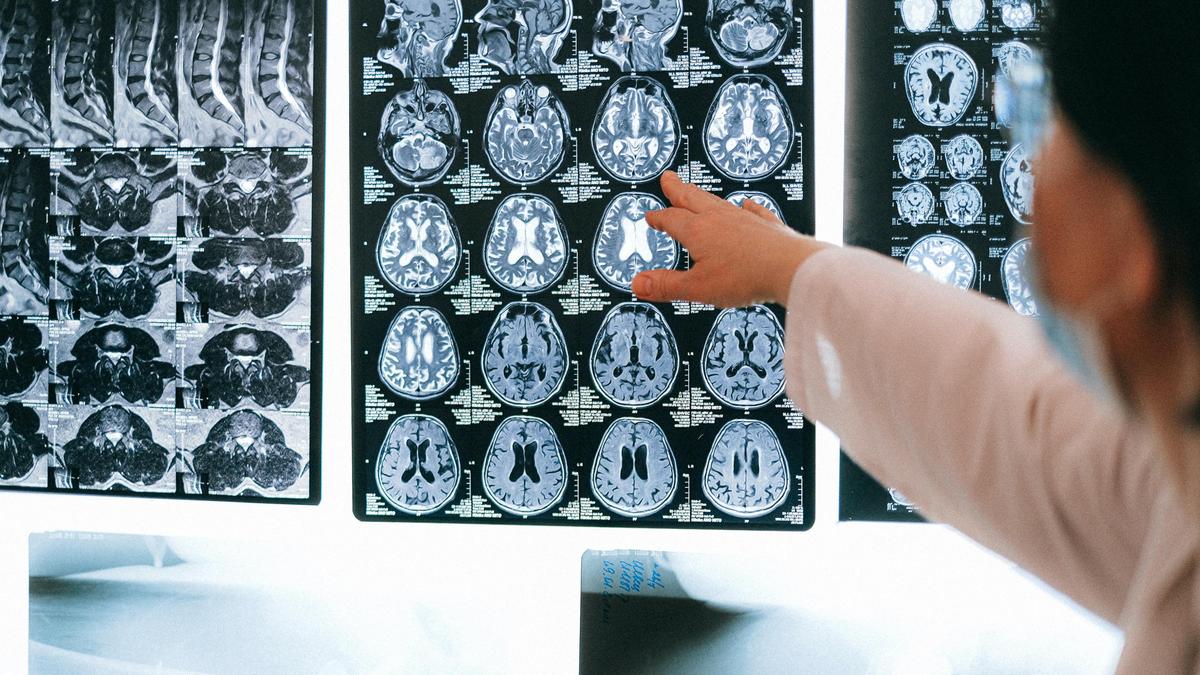
An international team of researchers has found that most brain cells are not narrowly specialized tools built for a single function but general-purpose elements capable of responding to a wide range of information, the website infohub.kz reports.
An analysis of 43 regions of the mouse brain showed that, rather than being narrowly specialized, neurons process different types of information simultaneously, ScienceDaily writes. That is the conclusion of an international team of researchers from the Zuckerman Institute at Columbia University, the Paris Brain Institute and the Swiss Federal Institute of Technology in Lausanne, who published their findings in the journal Nature.
The study's authors, Lorenzo Posani, Shuqi Wang and Stefano Fusi, analyzed a large dataset of recordings of individual neuron activity from 43 regions of the mouse cerebral cortex, collected by the International Brain Laboratory consortium while the animals performed identical tasks. Narrow specialization turned out to be characteristic mainly of cells in primary sensory areas, such as those responsible for the initial processing of visual signals. In the other cortical areas, general-purpose neurons dominate.
According to Stefano Fusi, scientists spent decades picturing the brain as a mechanism of gears with rigidly assigned roles and discarded from their analyses those cells whose responses could not be clearly deciphered. The new work showed that each neuron is unique in its multitasking ability and can encode several characteristics of an object at once — for example, both its color and its shape. Working together, groups of such cells form "multidimensional" representations of data that the brain can reuse to solve a wide variety of tasks without creating separate neural circuits for each one. The researchers are now working with colleagues at the California Institute of Technology to test whether human brain neurons work in a similar way.