

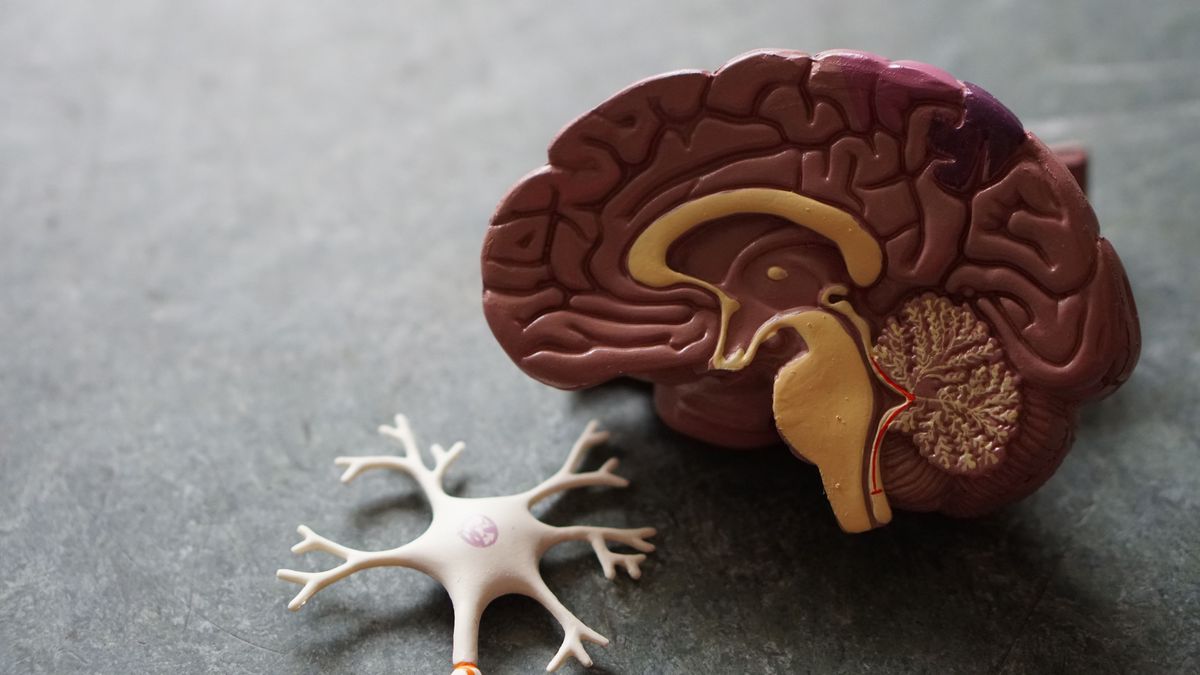
American neuroscientists have found that the crossed connection between the brain's hemispheres and the opposite sides of the body originated in ancient jawless fish roughly 500 million years ago, infohub.kz reports.
The researchers offered a new scientific explanation for a fundamental mystery of the nervous system: why the left hemisphere controls the right side of the body while the right hemisphere governs the left. The results of the theoretical work by Martin Wessendorf, an associate professor at the University of Minnesota, and neuroscientist Daniel Wang were published in the journal "Frontiers in Neuroanatomy." The authors concluded that the crossed structure of neural circuits offered no direct adaptive advantage for survival but instead resulted from the evolutionary inheritance of the basic visual architecture of the earliest vertebrates.
The scientists identify the eye's optical system as the key source of this structure. The lens projects a light image onto the retina upside down, after which nerve fibers split at the optic chiasm, directing signals to opposite sides of the central nervous system. This information reaches an ancient midbrain structure, the optic tectum, which is present in all vertebrates. According to the researchers' calculations, this apparatus took shape in primitive jawless fish during the Cambrian period about 500 million years ago.
As four-legged animals evolved, new motor and sensory pathways formed on top of an already existing map. The dorsal column pathway for tactile sensation, the spinothalamic tract for pain, and the tectospinal and rubrospinal motor tracts all inherited the crossed principle. The corticospinal tract, which enables fine motor control of human fingers, also developed on the foundation of older sensory pathways.