

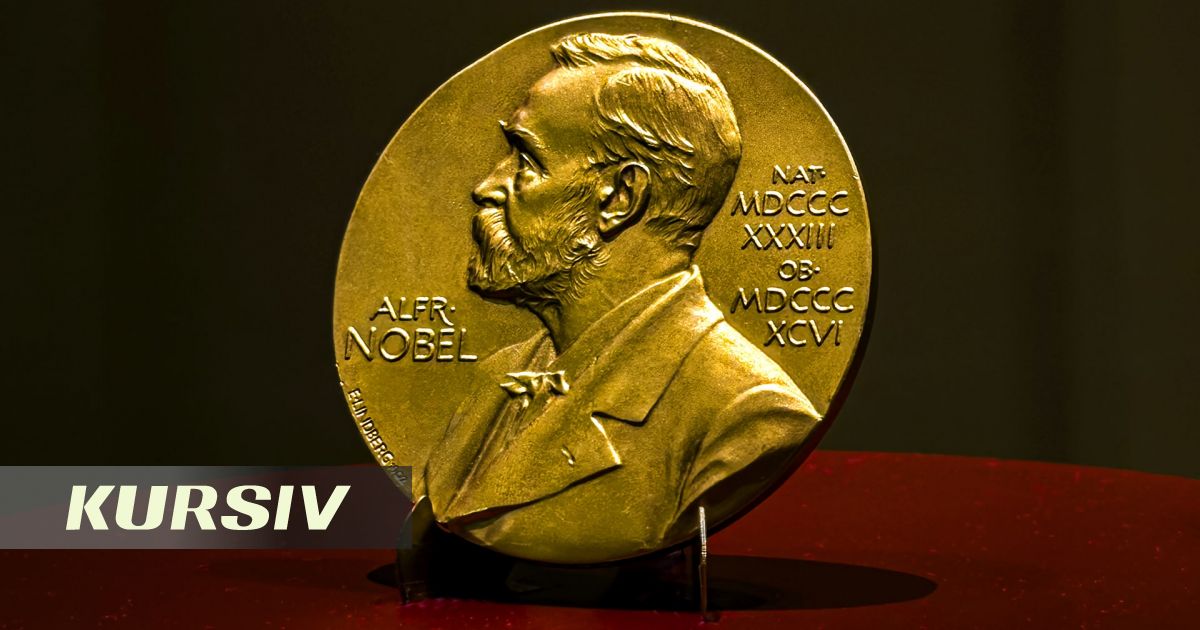
The 2026 Nobel Prize in Chemistry has been awarded to Henri B. Kagan and Kenso Soai, who figured out how one "mirror" form of a molecule can spontaneously gain the upper hand over the other in chemical reactions, infohub.kz reports.
The laureates managed to explain something scientists had puzzled over for more than 100 years.
Many molecules in nature, such as the amino acids that make up humans, come in two mirror-image versions (like a left and a right hand). Living organisms always use only one of these versions. Why nature chose that one, and how this asymmetry arose, remained a mystery for a long time.
Henri B. Kagan and Kenso Soai discovered special chemical processes — autocatalysis and nonlinear effects. In simple terms, they found reactions capable of "multiplying" mirror molecules of the desired type on their own. The discovery explains how, at the dawn of life on Earth, one version of molecules could have gained the advantage over the other.
Heiner Linke, chair of the Nobel Committee for Chemistry, called the scientists' work the solution to a chemical riddle that had persisted for more than a century.
What is more, it is crucial in medicine. Many drugs work only in the form of the correct mirror molecule, while its twin may prove useless or even dangerous. The discovery by Kagan and Soai could directly affect the safety of modern medicines.
Notably, in 2026 the Nobel Prize marks its anniversary — 125 years — and the prize money was increased this time to 12 million Swedish kronor (about 540 million tenge).
Earlier, Kursiv LifeStyle wrote that the Nobel Prize in Physiology or Medicine went to the scientists who developed the optogenetics method. The developers of the method — Karl Deisseroth of the United States, along with Peter Hegemann and Georg Nagel of Germany — devised a mechanism by which cells "responsible," for example, for fear, depression or memory, can, so to speak, be switched on or off.