

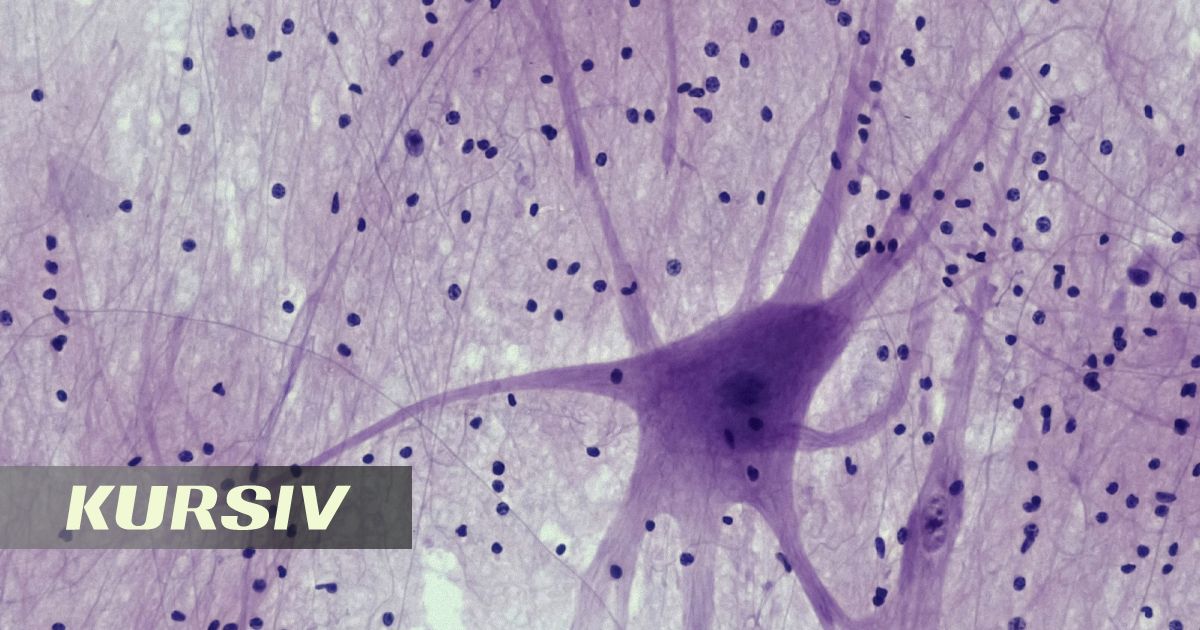
On October 5, 2026, the Nobel Assembly at the Karolinska Institute announced the winners of the Nobel Prize in Physiology or Medicine. The award goes to Karl Deisseroth, Peter Hegemann, and Georg Nagel for discoveries that laid the foundation for optogenetics, a method now used to study how the brain works, infohub.kz reports.
The story of this discovery began with a single-celled alga, Chlamydomonas. German scientist Peter Hegemann became interested in how it determines the direction of a light source and swims toward it.
In the early 2000s, Hegemann and Georg Nagel discovered an unusual protein in the alga — channelrhodopsin. It sits on the cell surface and responds to blue light. When light hits the protein, a channel opens in it, allowing charged particles — ions — to enter the cell. This triggers an electrical impulse.
It turned out that if the gene for this protein is transferred into another cell, that cell also becomes light-sensitive.
Karl Deisseroth applied this property to nerve cells. He introduced the channelrhodopsin gene into rat neurons and then showed that blue light could make these cells generate a nerve signal.
Two years later, Deisseroth was able to use the same principle in the brains of living mice. Thus optogenetics was born.
Its principle is fairly simple: scientists make nerve cells light-sensitive, and then use a light signal to activate or suppress their activity.
Before optogenetics, scientists found it difficult to establish cause-and-effect relationships in the brain. They could observe which brain areas activated during a certain action, but could not always prove that those particular cells controlled the process.
Optogenetics has enabled much more precise study of neural circuits involved in memory, emotions, and behavior. The method is used in research on neurological and psychiatric disorders.
Researchers are now exploring the possibility of using optogenetics in medicine, including for restoring vision in people.
Earlier, Kursiv Health wrote that scientists are currently conducting experiments on artificial eye lenses in space in order to eventually operate on cosmonauts.