

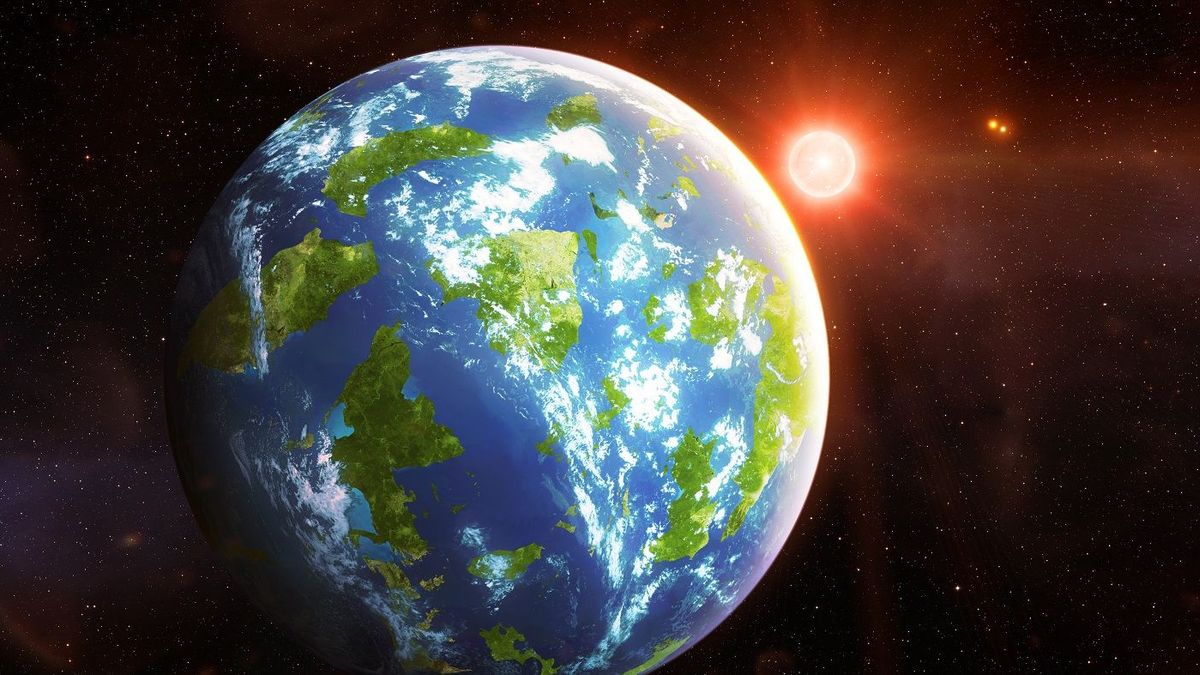
Computer modeling has shown that Earth-like planetary systems often form naturally, according to infohub.kz.
At the Origins 2026 conference in Paris, Nader Haghighipour of the University of Hawaii at Manoa presented the results of more than a thousand simulations of planet formation. The researchers abandoned older models that assumed fixed parameters of the Solar System and instead began their calculations from a multitude of random initial conditions, relying solely on the laws of physics.
It turned out that planets similar to Earth regularly emerge at a distance of one astronomical unit from their star. Analogues of Venus and Mars also frequently appeared in the simulations. At the same time, modern computing power made it possible to cut the algorithms' running time from six months to just a few weeks.
The experiment's results confirm that Earth-like worlds in the habitable zones of Sun-like stars are not a unique accident. According to astronomers, this new understanding of planet formation processes will help in the more efficient search for potentially habitable worlds beyond our system.