

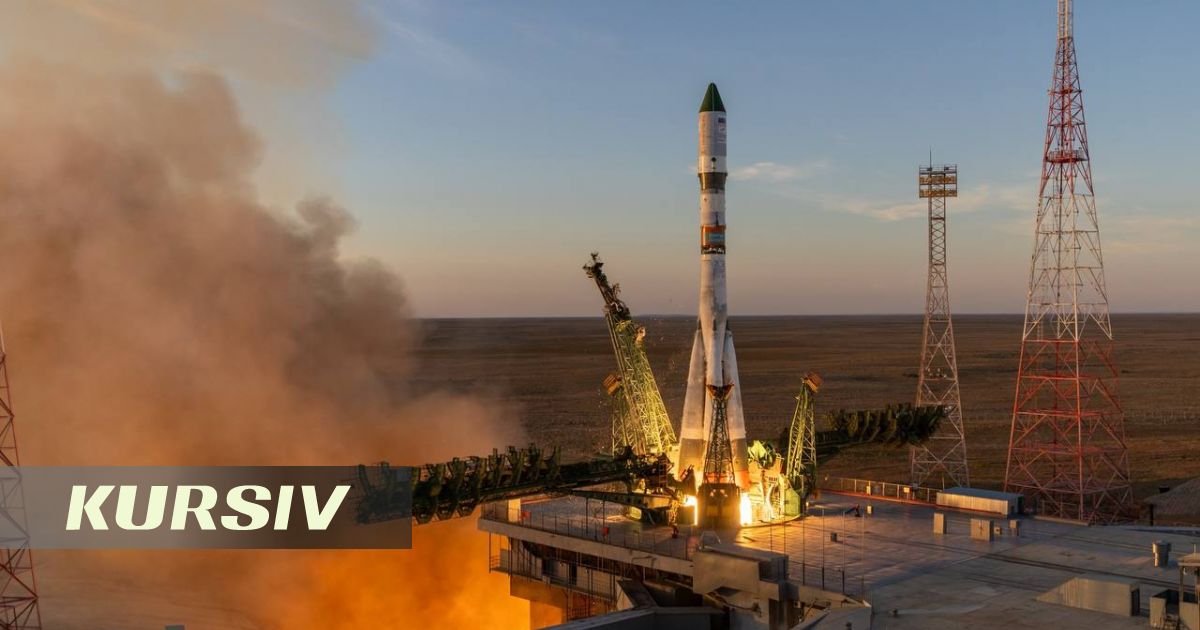
The Progress MS-35 cargo spacecraft has launched from the Baikonur Cosmodrome to the International Space Station, carrying not only supplies for the crew but also equipment for an experiment with a remotely controlled robot, according to infohub.kz.
The Soyuz-2.1b rocket lifted off on September 16 at 16:34 Moscow time (18:34 Astana time) from the launch complex at Site 31. Roscosmos reported that the spacecraft successfully reached its designated orbit, separated from the rocket's third stage, and deployed its solar panels and antennas.
Progress MS-35 will deliver a total of more than 2.4 tonnes of cargo, including 842 kg of fuel, 420 kg of water, 50 kg of oxygen, 275 kg of food, as well as medications, hygiene supplies, equipment, and consumables for the station's operations.
A separate portion of the cargo is intended for scientific experiments, including the Teleidroid project.
As part of the experiment, cosmonauts will test whether an anthropomorphic robot can perform certain operations in open space under remote control.
To this end, a special cosmonaut workstation and an exoskeleton were sent to the station. With its help, the operator will be able to control the robot's movements. Roscosmos cosmonaut Anna Kikina has trained to work as an operator.
The Teleidroid itself will arrive at the ISS on the next cargo spacecraft.
During the experiment, the crew plans to test whether the robot can pick up items from storage, hand tools to a cosmonaut, and perform various operations with them.
The docking of Progress MS-35 with the Poisk module of the station's Russian segment is scheduled for September 19 at 16:46 Moscow time.
Earlier, Kursiv reported that Russia will pay Kazakhstan more than 55 billion tenge for the lease of Baikonur in 2027.
On the eve, Roscosmos head Dmitry Bakanov said that Kazakhstan's initiative to transform Baikonur into an international space hub would not affect cooperation with Russia.