

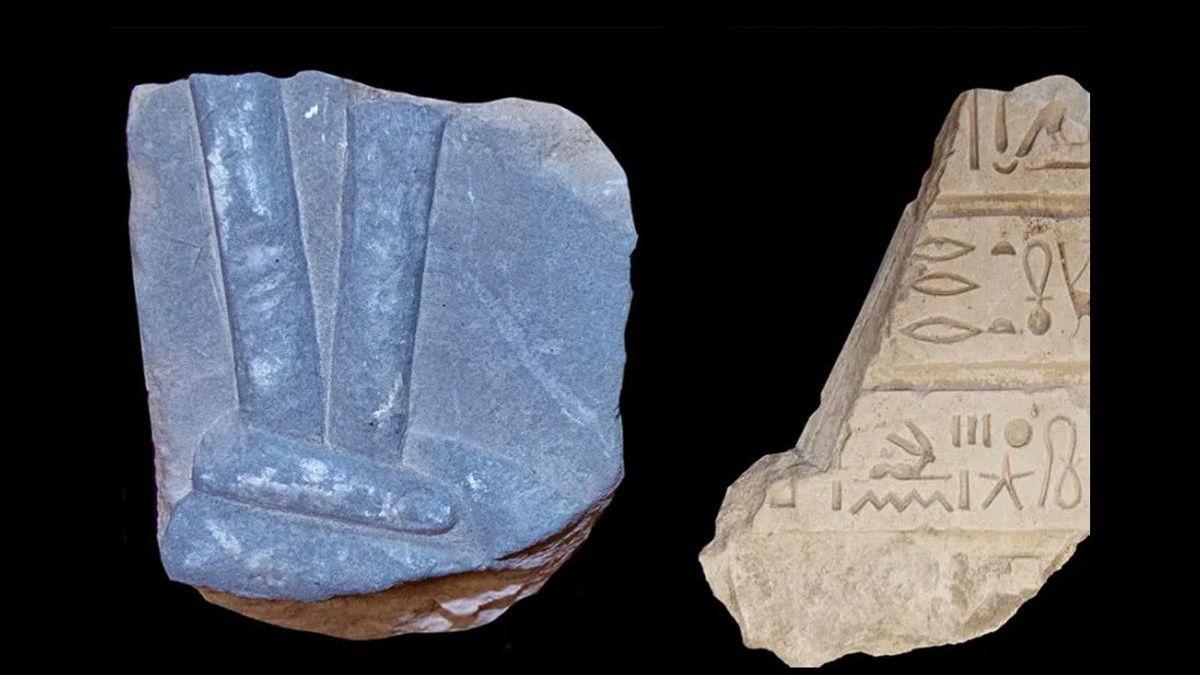
An archaeological mission working at Tell Abu Saifi in the Ismailia province of northern Sinai has uncovered a sandstone doorjamb bearing the name of Pharaoh Ramses II and a reference to the city of Mesen, which may shed light on the location of this lost ancient Egyptian city, reports infohub.kz.
On three sides of the artifact, dating to the 19th Dynasty, royal titles of Ramses II and a record of the restoration of a statue of "Horus, Lord of the City of Mesen" are preserved. According to Egyptian scholars, the find on the ancient military route, the Way of Horus, may link Tell Abu Saifi to the long-sought city of Mesen.
Excavations at the site have also revealed the ruins of a temple with a massive mudbrick wall, a sanctuary, and storage rooms. The complex expanded during the Ptolemaic period, and in the 3rd century AD, the Romans partially dismantled it to build a military camp and installed lime kilns in place of the sanctuary.
Other finds include two paved roads and a slate statue of an army scribe from the 26th Dynasty. These discoveries confirm the strategic status of the area.