

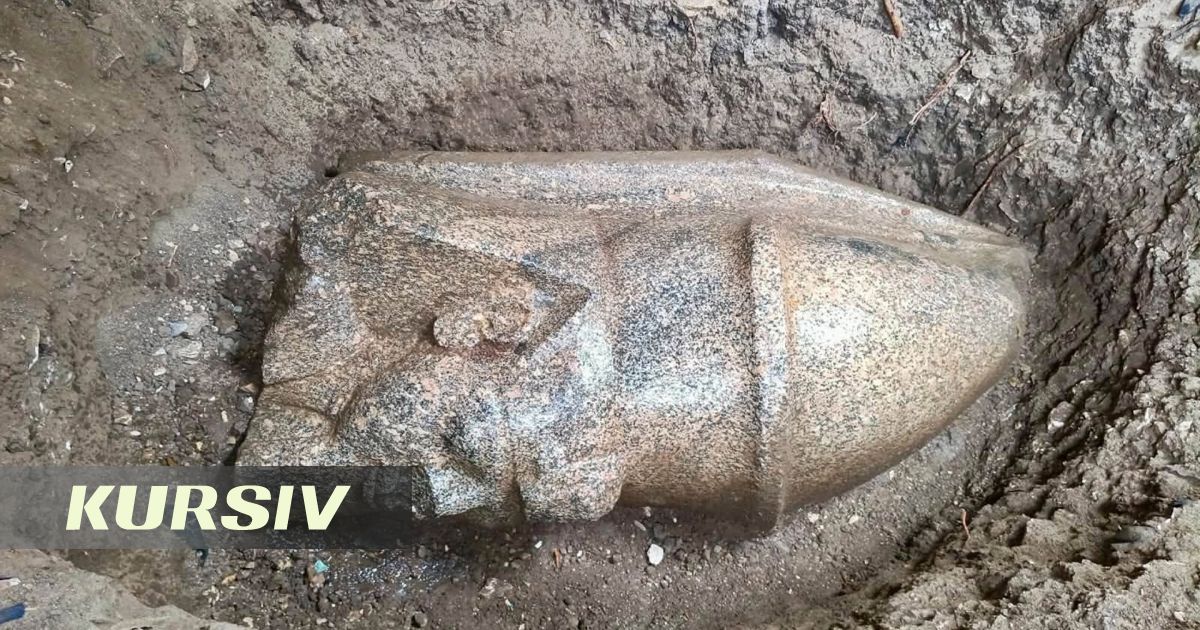
Fragments of two colossal royal statues have been discovered in Egypt: one of the sculptures depicts the pharaoh Ramses II and, together with its base, could have reached 8.5 meters in height, the website infohub.kz reports.
Excavations began after a local resident found a stone bearing ancient inscriptions near his home. The find was made in the village of Behbet el-Hagar in the Nile Delta. The man was working on his plot when he noticed the inscribed stone and reported it to archaeologists.
Specialists arrived at the site and began digging. As a result, they uncovered parts of two large royal statues and a block of pink granite with hieroglyphs.
The main find is a granite head of Ramses II. It stands about 1.6 meters tall. The pharaoh is depicted wearing the double crown, which symbolized rule over Upper and Lower Egypt.
Nearby, archaeologists found part of a supporting pillar bearing one of the ruler's royal names. This inscription helped confirm that the statue depicts Ramses II.
According to Hisham el-Leithy, secretary-general of Egypt's Supreme Council of Antiquities, judging by the size of the head, the entire statue together with its base could have reached 8.5 meters — roughly the height of a three-story house.
Archaeologists also found fragments of a second royal statue. The surviving section is about 2.4 meters long. The sculpture has no legs or base, but its face and headdress are well preserved.
The pharaoh is shown wearing the traditional striped headdress known as the nemes. The facial features resemble those of the first statue. Scientists therefore suggest that both sculptures may depict Ramses II, though this has yet to be confirmed.
Behbet el-Hagar is known for the ruins of a large temple dedicated to the goddess Isis, one of the most important deities in ancient Egyptian religion.
The main part of the surviving temple complex dates to the 4th century BC. Ramses II ruled roughly nine centuries earlier.
The new find may therefore help determine what stood on this site before. More ancient structures may have existed here. For now, however, scientists do not know whether the statues originally stood in this spot or were moved from elsewhere.
Ramses II ruled Egypt from about 1279 to 1213 BC. He is considered one of the most famous pharaohs and is renowned for his large-scale construction of temples and monuments.
Earlier, "Kursiv" reported that a resident of Taraz had developed a Kazakh version of the popular board game "Monopoly" about the history of the Great Steppe. The game is intended to introduce young people to the country's historical and cultural heritage and to fill the shortage of board games in the Kazakh language.