

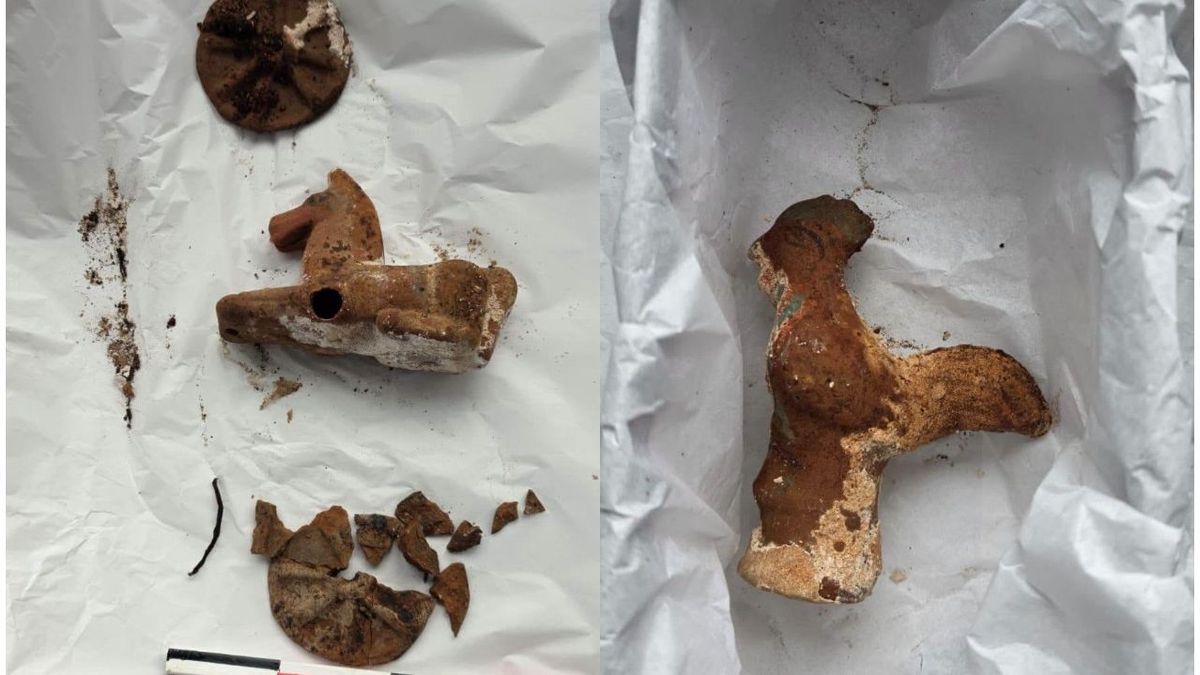
Archaeologists have opened an intact Roman-era sarcophagus and found a wooden coffin, funerary wreaths and clay children's toys inside, infohub.kz reports.
The find was made by staff at the Museum of National History and Archaeology in Constanța, southeastern Romania. The researchers were conducting rescue excavations on a plot earmarked for development, about 1.5 kilometers from the ancient city of Tomis. The sarcophagus was dated to the 2nd–3rd centuries AD, and the burial site lay along an important ancient road that linked Tomis with another ancient city, Histria.
Inside the stone tomb, the archaeologists found a wooden coffin containing a set of objects rare for such burials. Among them were flower garlands, clay toys, including a rattle in the shape of a rooster, and two bullae — protective amulets that in ancient Rome were worn by boys to ward off evil forces. The researchers have not yet said whether the child's remains themselves have survived, since the sarcophagus was opened only at the end of October.
According to the archaeologists, the untouched grave goods provide valuable information about Roman-era burial rites. Ancient legal sources prescribed a short public mourning period for small children, but rich burials show that families treated such losses with deep grief and care. The scientists hope that further analysis of the objects will help shed more light on the daily life of the region's inhabitants in that era.