

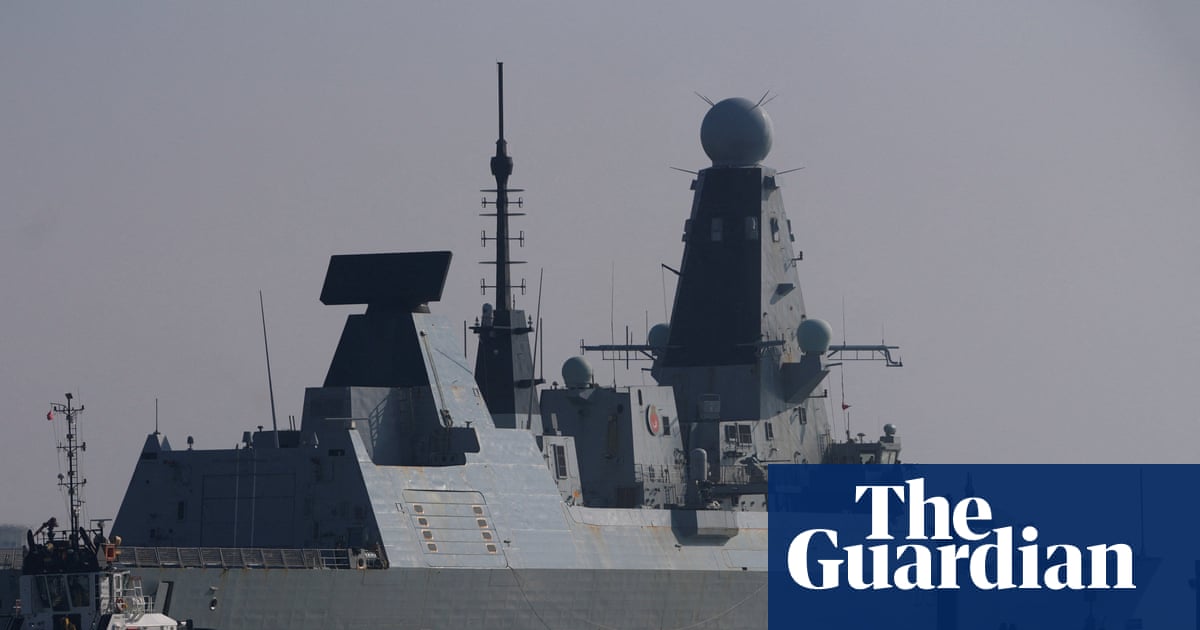
The Royal Navy spent three days tracking Russian vessels as they passed through UK waters, it has emerged. This was reported by infohub.kz.
During the "intense" 72-hour operation last week, radar systems monitored four ships that made their way from the North Sea to the Channel. The fleet was surveilled by HMS Duncan, HMS St Albans and HMS Severn, with a Merlin helicopter providing support.
The Russian destroyer Admiral Levchenko was observed escorting the sanctioned cargo vessels General Skobelev and Sparta towards Dover. In response, Russia deployed its own military resources, including the Neustrashimy frigate, to guard the shipment.
Gen Gwyn Jenkins, the First Sea Lord, warned that shadow fleet vessels continued to pose "an unacceptable risk" to UK security, saying there was "no room for complacency". He said that alongside allies, this approach is forcing Moscow to divert Russian warships away from their core purpose, because Russia knows we stand ready to act again if required.
The Royal Navy recently warned of increasing Russian activity in UK waters. In July, it spent 21 days monitoring ships from Moscow, an increase of 25% compared with the previous year. Officials say they have repeatedly observed warships in the Dover strait and the North Sea.
In June, the Royal Marines seized the Russian tanker Smyrtos, the first time British troops have directly boarded a shadow fleet vessel, one of more than 500 that have been sanctioned by the UK.
The Kremlin has threatened the UK after Andy Burnham visited Kyiv this week in his first overseas trip as prime minister. During the trip, Burnham said the UK would provide Ukraine with military support, including blueprints for components of long-range Scalp missiles.
Although western officials have tried to play down the prospect of direct conflict between Russia and Nato, the Kremlin has accused the UK and its allies of "playing with fire" in relation to their continued support for Ukraine.
Andrei Fedorov, a former Russian foreign minister, said he could not "100% exclude" the possibility of "semi-military" action against Britain in retaliation, raising the prospect of an attack on British drone factories from "unknown sources".