

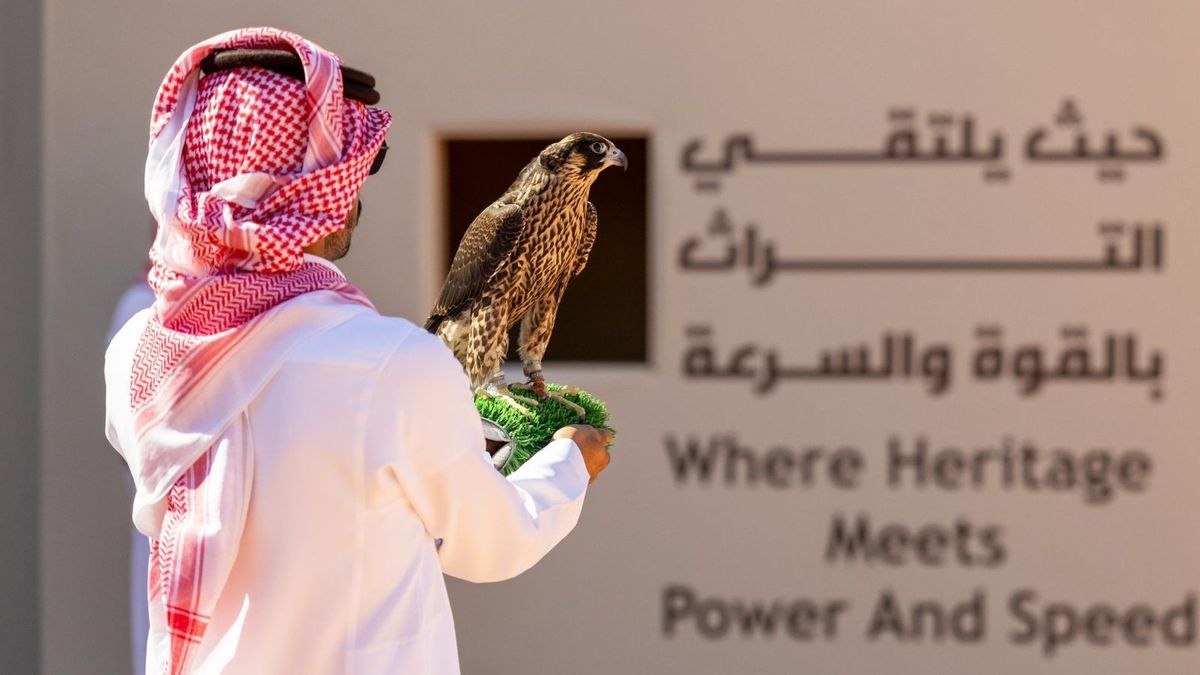
Saudi Arabia and Kazakhstan share more than an interest in breeding and training falcons: both countries are part of the internationally recognized heritage of falconry and work to conserve the birds and return them to the wild. Interest in the subject is growing again — the King Abdulaziz Falconry Festival 2026 is being held north of Riyadh, with Saudi and foreign falconers competing in its contests until November 30, infohub.kz reports.
The festival is organized by the Saudi Falcons Club and is being held at its headquarters in Malham, north of the capital. The program features 140 rounds across two competitions, "Mazayin" and "Melwah." Two rounds are set aside for the "Future Falconer" category. The rounds are divided into categories: amateurs, falcon owners, professionals and "Elite." Separate contests are provided for foreign falconers, and the program closes with rounds for the King Abdulaziz Cup, the "King's Sword" and the "King's Spear."
Falconry holds a special place in the cultural heritage of the peoples of Central Asia, including Kazakhstan and Kyrgyzstan. In these countries, falcons have long been associated with traditional hunting and knowledge of nature. These traditions echo falconry practices on the Arabian Peninsula, although the natural environment and hunting methods differ among peoples.
This shared heritage is recognized by UNESCO, which inscribed falconry on the Representative List of the Intangible Cultural Heritage of Humanity. Kazakhstan and Saudi Arabia were among the European, Asian and Arab countries included in the multinational nomination. The listing highlighted the knowledge and skills involved in breeding and training falcons, caring for them, and passing this knowledge from generation to generation.
A major milestone in Saudi-Kazakh cooperation in this area in 2026 was the release of falcons into the wild in Altyn-Emel National Park. The releases took place under the Saudi "Haddad" program. The program aims to help the birds adapt to their natural habitat and to support the conservation of their numbers.
The park was chosen for environmental reasons: it offers suitable habitat, vast areas and a rich food supply, and the park itself lies on one of the falcons' migration routes. The initiative shows how cooperation between the two countries combines care for cultural heritage with the protection of wildlife in its natural environment.
As for the sporting program, the Melwah competition records the time a falcon takes to fly 400 meters. The Mazayin competition assesses the birds' appearance. The two types of competition give participants the chance to compete in categories determined by the species and age of the falcons.
The Saudi Falcons Club continues to develop falconry-related competitions and attract participants from different countries, working to preserve this heritage and support its continuity. Saudi Arabia's experience in Kazakhstan shows another side of this work: wildlife conservation and cooperation between countries united by the ancient heritage of falconry.