

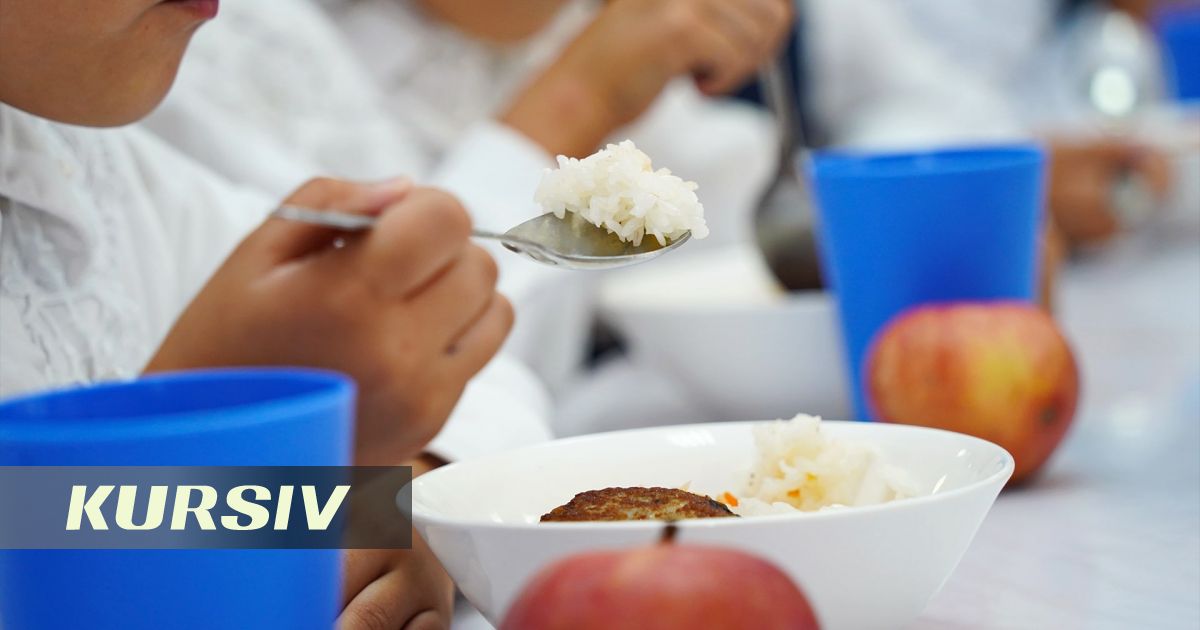
A child's health depends not on a single "superfood" but on how their entire day unfolds. The Ministry of Health reminds us why it's important not to skip breakfast, what to replace unhealthy sweets with at school, and how to avoid intense hunger after lessons... reports the website infohub.kz.
"School age is a period of active growth and development. Therefore, complete and balanced nutrition is very important. It helps maintain the child's energy, concentration, and performance throughout the day," the ministry notes.
What to limit? A student's diet should include more vegetables and fruits, dairy and fermented milk products, sources of protein such as meat, fish, eggs, and legumes, whole grain products, and adequate water. At the same time, it is worth limiting foods high in sugar, salt, and saturated fats, as well as sugary carbonated drinks and frequent snacking on ultra-processed foods. Not only what a child eats matters, but also how, as a regular eating schedule plays an important role.
What to feed? Breakfast can consist of porridge, an egg, a piece of fruit, or bread with cheese/egg and vegetables. It could also be oatmeal, natural yogurt, berries, or fruit. If lunch is still far off and the child is hungry, a small snack is useful. For example: fruit plus yogurt, a small sandwich, or a banana with some nuts or cheese. However, juice with cookies quickly turns a snack into a source of free sugars. Lunch is one of the main meals, so a single bun is not enough. There should be vegetables, white meat, poultry, fish, eggs, or legumes. For a side dish, grains, pasta, potatoes, and so on. Between lunch and dinner, the child may need another snack. Dinner does not have to consist only of "something light." It can be a regular full meal. That is, it could be fish with grains and vegetables, or chicken with potatoes and salad, or legumes with rice and vegetables.
To avoid hunger. "What most often disrupts a student's diet? For example, they eat nothing in the morning, have only a sweet snack at recess, and then after school they are very hungry and want to eat everything at once at home. So the task is not to create an 'ideal menu.' More importantly, the child should regularly have normal food, water, and a variety of products throughout the day," the Ministry of Health emphasized.