

The water volume in the North Aral Sea has reached a record 23.4 billion cubic meters, while saving the Caspian Sea has required Kazakhstan to enlist the help of coastal countries, the Shanghai Cooperation Organization, the United Nations Development Programme and Japan. The government has detailed how the republic is trying to protect its largest water bodies from shrinking, according to infohub.kz.
According to the Cabinet of Ministers, the water volume in the North Aral Sea continues to grow. From 18.9 billion cubic meters in 2022, it rose to 21 billion in 2023 and 22 billion in 2024, reaching 23.4 billion cubic meters last year. Since the start of this year, about 1.5 billion cubic meters of water have been directed into the sea.
The salinity of the Aral Sea has also halved. This has helped restore living organisms and the ecosystem of the water body.
"To maintain the achieved levels, the Ministry of Water Resources and Irrigation annually ensures the passage of at least 2 billion cubic meters of water along the Syr Darya riverbed," the government said.
In addition, the Kazakh authorities have agreed with the World Bank to reconstruct the Kokaral Dam and raise the water level in the Aral Sea to 44 meters on the Baltic system.
The Caspian Sea covers an area of about 390,000 square kilometers, with a water volume of around 76,000 cubic kilometers and a coastline of 6,500 kilometers. Some 130 rivers flow into the Caspian, providing an average annual inflow of about 290 cubic kilometers of water. The bulk comes from the Volga — about 80% — and the Ural — 3.5%. Other major rivers include the Kura, Sulak and Samur.
In the Zhaiyk-Caspian basin, 6 cubic kilometers of water flowed from the Zhaiyk River into the Caspian Sea in 2025, and 4.9 cubic kilometers from the Kigash. In 2026, the combined inflow from these two rivers totaled about 7.3 cubic kilometers.
Kazakhstan regularly promotes joint approaches to preserving the sea. In 2025, at an expanded meeting of the Shanghai Cooperation Organization, President Qasym-Jomart Toqaev proposed creating an SCO Water Problems Research Center. Preparations are also underway for an interstate program to preserve Caspian water with the participation of coastal states.
In addition, the country has launched a project titled "Enhancing Resilience under the Falling Level of the Caspian Sea," implemented with support from the Japanese government. Together with UNDP and international partners, several projects are being developed to manage marine and coastal resources and reduce plastic pollution.
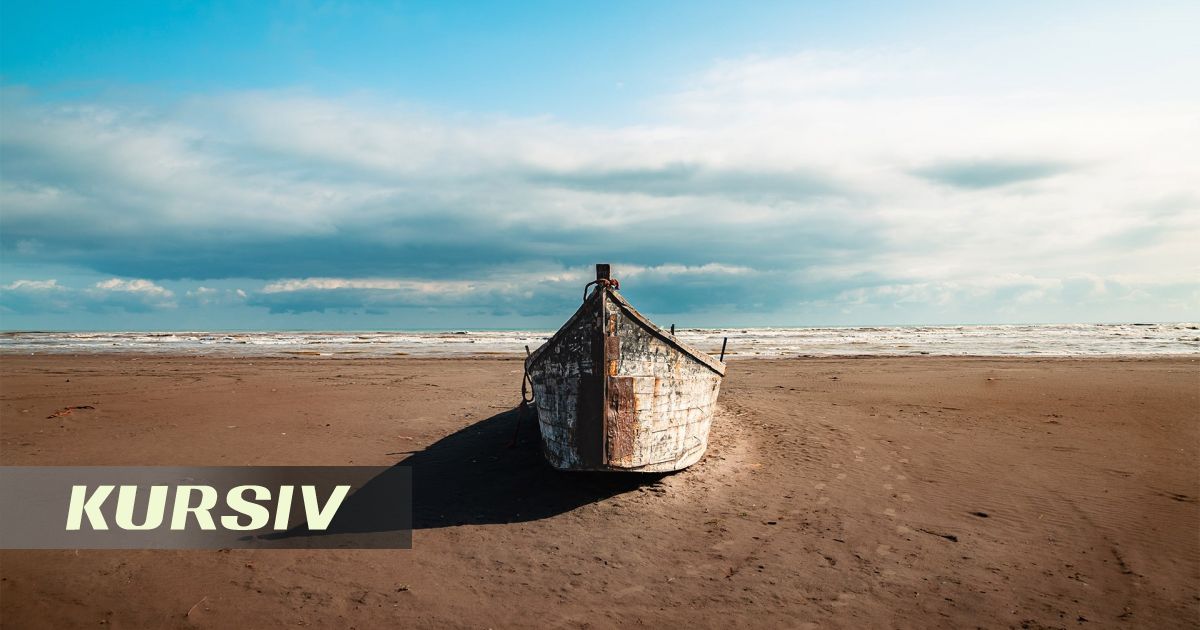
Recall that the UN has issued a frightening forecast for the Caspian Sea over the next 50 years. Satellite images show kilometers of exposed seabed, while ports and fishing villages are cut off from the water. Scientists warn that the Caspian level will continue to fall for at least another half-century. They cite global warming and intense evaporation as the main causes. Meanwhile, the Caspian Sea is home to 90% of the world's remaining sturgeon population.
Earlier, Kursiv wrote that an unusual turtle was spotted on the Caspian shore near the village of Kuryk in the Mangystau Region. For this species, the sea is a rather unusual habitat, so its appearance there raised questions among specialists.