

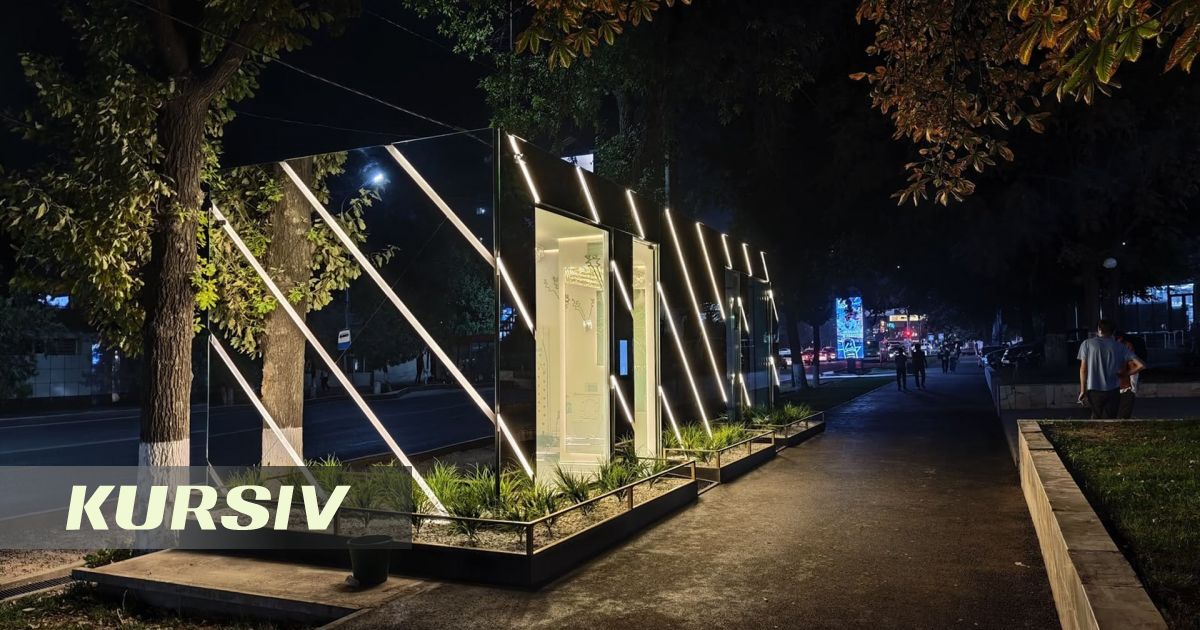
A network of transparent smart restrooms and showers launched under the Miras Tazalyk project has been operating successfully in Shymkent for two years now. Today these facilities are used by at least a thousand people every day, and throughout their entire period of operation they have remained in proper condition, reports infohub.kz.
At the start of the project, residents' reaction was mixed. Many Shymkent residents were convinced that the civilized smart toilets would quickly be vandalized and broken, turning into the usual urban "outhouses."
"The skepticism was understandable. For too long, a public toilet in our cities meant a place you enter only in dire necessity: dark, uncomfortable and often dirty. We decided to test the opposite logic. We tried to make the environment itself signal to a person: it is clean, beautiful and safe here, every visitor is respected here," said Nurken Khalykbergen, rector of Miras University.
That is why the toilets were made unlike conventional public restrooms from the very beginning. Inside, they installed sensor-operated plumbing, good lighting, ventilation and air conditioners, as well as baby changing tables. Conditions for people with special needs were provided separately.
But appearances, as Khalykbergen tells it, are only half the battle. To keep a toilet clean, it has to be constantly monitored.
"A true standard is tested not by a photograph on opening day, but by the condition of the facility a month, a year and two years later. Behind the beautiful door stand daily cleaning, water, soap, consumables, ventilation, minor repairs and a team working without days off. Building a facility is hard. Consistently keeping the promise of 'clean, safe, free, 24/7' is far harder," Khalykbergen noted.
And the Miras Tazalyk experiment appears to have proven itself over two years. The restrooms have been used more than 500,000 times, and all this time they have remained in working and civilized condition. Today the transparent cubicles are visited by no fewer than a thousand people a day.
At first, entry worked via QR code, but now facial recognition is used. According to the rector, the system helps track visitor flow and understand when additional cleaning is needed and where the next facility should be opened.
"For us, data is not a decoration for the word 'smart,' but a tool for daily management. The system helps us see the real load, understand how residents' habits are changing and where the next facility is needed," Khalykbergen said.
The project is financed by Miras University, while the Shymkent akimat helps with land plots, utility connections and permits. No funds from the city budget were allocated for the construction of the first cubicles.
Recall that Shymkent's smart toilets received international recognition last year, being named the best in the world at the World Toilet Summit 2025.
The project was praised for its level of hygiene and thoughtful accessibility. The key principle of the smart cubicles is fully contactless use. Inside, everything runs on sensors: from sinks to toilets. This minimizes direct contact and makes the space noticeably cleaner and more comfortable for visitors.
Earlier, Kursiv LifeStyle wrote that an unusual transparent toilet, similar to those installed in Shymkent, appeared in the Park of 28 Panfilov Guardsmen in Almaty.