

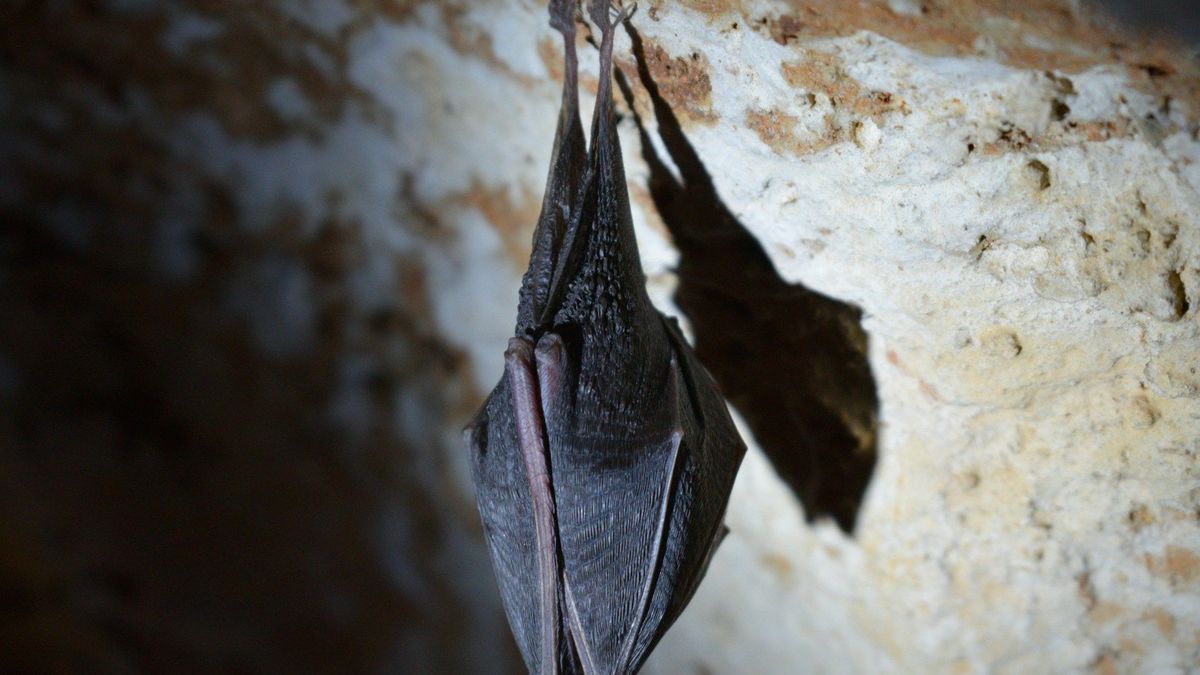
Researchers have discovered that smooth-nosed bats possess a unique immune system that allows them to resist dangerous viruses. As it turns out, these animals have two sets of antibody genes, a feature not found in other mammals, reports infohub.kz.
Scientists from Tulane University, together with specialists from Stanford University and the U.S. Centers for Disease Control and Prevention, have found a possible explanation for the phenomenal resistance of bats to infections. The results of the work were published in the journal Science Advances.
The study showed that members of the family of smooth-nosed bats, which includes more than 500 species, have a unique structure of the immune system. Unlike other mammals, which have only one set of antibody heavy chain genes, these bats have two separate systems of such genes. This duplication allows the body to produce a wider variety of protective proteins.
As study co-author Hannah Frank from Tulane University notes, such an immune system arrangement has never before been observed in mammals. The discovery shows that the adaptive immunity of bats is much more complex than previously thought. Smooth-nosed bats inhabit all continents except Antarctica and serve as a natural reservoir for many viral infections, while they themselves rarely suffer from them in severe form.
The authors emphasize that the dual antibody system does not fully explain the phenomenon of infection tolerance, but it gives scientists a new direction for research. Understanding how bats coexist with viruses without harm to their health will in the future help to better study the immune mechanisms of other species and reduce the risks of disease transmission to humans.