

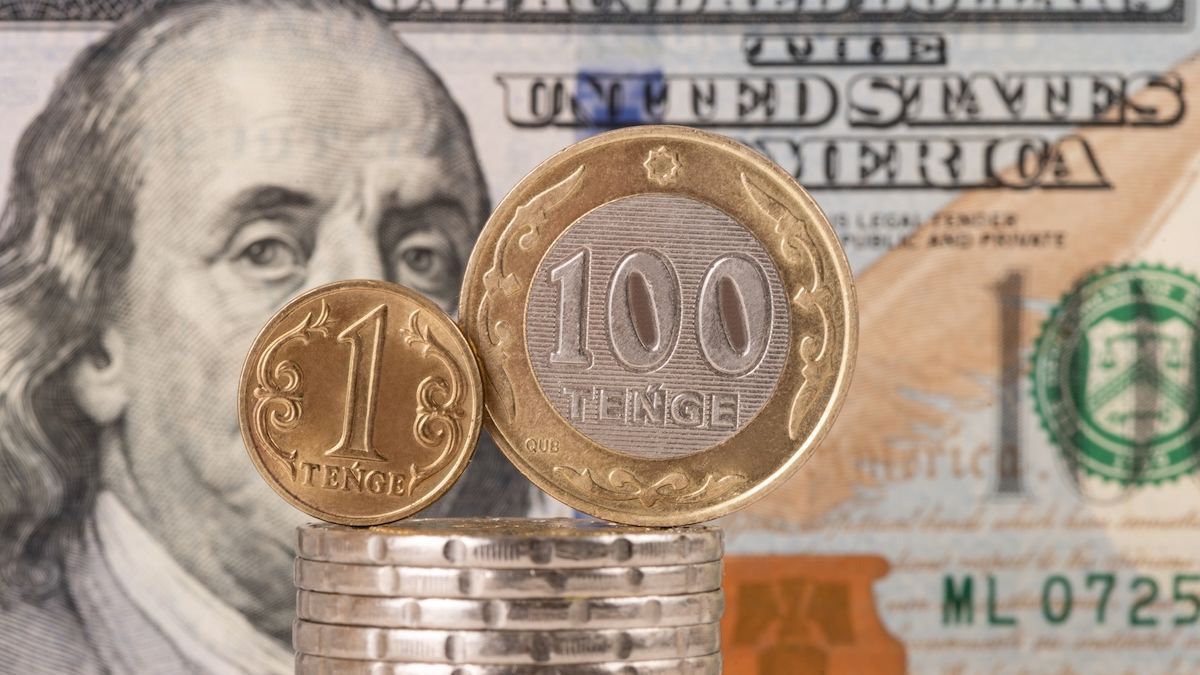
Kazakhstanis are used to expecting their national currency to weaken, and even as the tenge strengthens in 2026, many believe the dollar is "bound" to return to 500 tenge. Economist Ruslan Sultanov explains why that view is wrong and what actually moves the exchange rate, infohub.kz reports.
The national currency of Kazakhstan is traditionally seen by the public as an asset prone to inflation. For years people have expected it to weaken, because that was the pattern for a long time. So it is common to hear that the dollar "must return" to higher levels and that the current rate has no fundamental basis. Yet in 2026 the tenge has been strengthening actively, and on September 16 it was worth less than 440 tenge at some exchange offices.
However, economist Ruslan Sultanov notes in his Telegram channel "Economic Literacy" that the tenge's exchange rate against the dollar owes nothing to anyone — it depends on market conditions.
According to the expert, the belief that the tenge must inevitably weaken may be only half right. This is because even with the current actively strengthening rate since September 2025, the country's economy has not changed — that is, no large number of factories has appeared, and exports have not increased. But economic fundamentals are not the only thing that affects the value of the national currency.
"The dollar is not bought based on the state of the economy alone. It is paid for in tenge. And one thing decides: how many dollars were brought to the market today and how many people want to take out. Let's accept a rule on which the whole idea rests. Only what has been brewing for years is fundamental. And let's apply it in both directions. There were weeks when the dollar rose by half. The economy did not change at all during those weeks: the same factories, the same exports. By the same rule, that move should have been called unjustified and about to reverse. It did not reverse. And no one called it unjustified then. A rule that is applied only when the currency strengthens is no longer a rule," Ruslan Sultanov notes.
As the expert explains, the current situation with the actively strengthening national currency against the US dollar is due to three main supporting factors that have persisted for several months in a row:
large exporters sell dollars on the exchange because salaries and taxes are paid in tenge, which puts pressure on the US currency;
the state sells dollars to also obtain tenge to cover budget expenses;
the yield on tenge remains high, so a tenge deposit is noticeably more attractive than a dollar one (about 18% per annum for the national currency versus 1% in dollars), which reduces demand for foreign money.
"The rate holds exactly as long as its reasons hold. It has no other obligations. If oil changes, imports revive, rates go down — the rate will shift. So next time you hear 'it must return,' ask: which reason exactly has changed? The economy does not have to match our beliefs. So much the worse for beliefs," Ruslan Sultanov notes.