

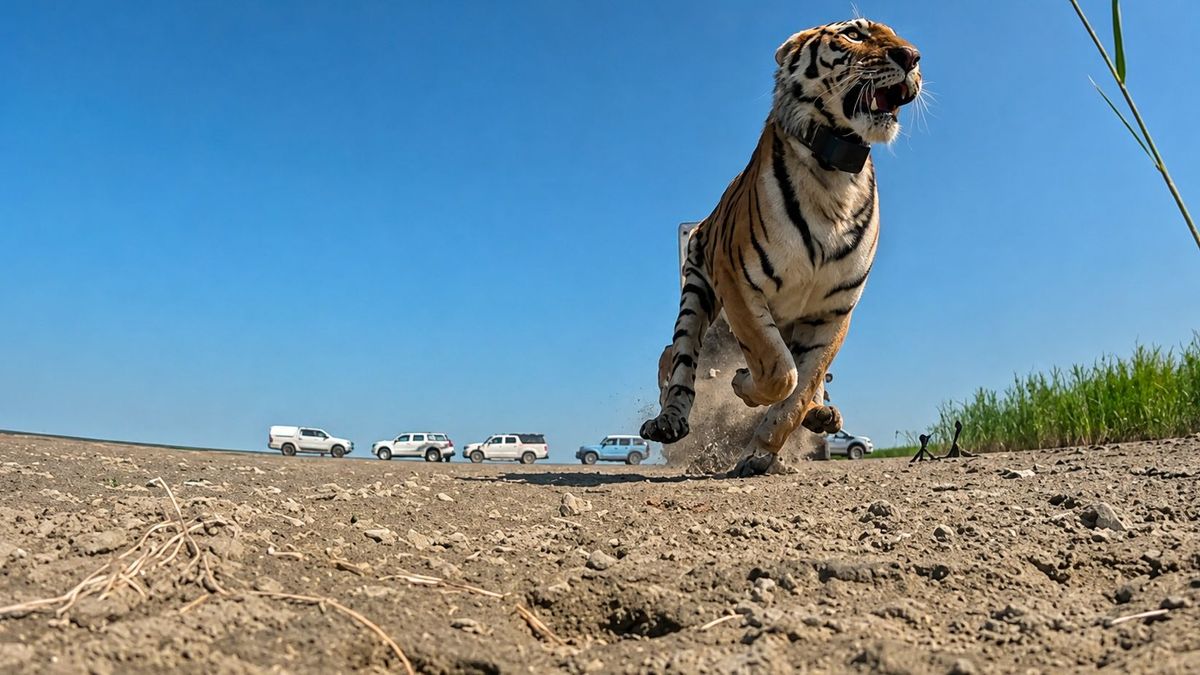
Tigress Umit, released into the wild in Kazakhstan, continues to adapt to her natural environment. Specialists are tracking her movements, activity, and behavior using several methods, reports the website infohub.kz.
The predator's life is monitored remotely and directly in her habitat. This involves GPS monitoring to track her movements remotely, as well as studying her tracks and other natural signs. Camera traps provide additional insights into her behavior.
“Umit is exploring tugai areas, spots near water, and natural habitats of wild animals, gradually settling into the new environment. The data collected on her movements, activity, and behavior helps specialists assess the adaptation process,” said the Ministry of Ecology and Natural Resources of the Republic of Kazakhstan.
Monitoring of the tigress continues.
Recall that on May 28, Russian President Vladimir Putin published an article in the newspaper “Kazakhstanskaya Pravda,” in which he touched upon the cooperation between the two countries in ecology and spoke about the transfer of Amur tigers to Kazakhstan to restore their population. The next day, the Ministry of Ecology reported that Russia had handed over four Amur tigers to Kazakhstan — two adults and two cubs. The animals were captured in the wild in Khabarovsk Krai.
On June 10, the Ministry of Ecology clarified that the tigers had been named: the male tiger — Amur; the tigress — Umit; the male cub — Turan; the female cub — Ussuri. Later, the ministry explained how they plan to ensure the safety of people living near the Ile-Balkhash reserve, where the Amur tigers will be released. And a few days ago, it became known that the female Amur tiger Umit was released into the wild in Kazakhstan.