

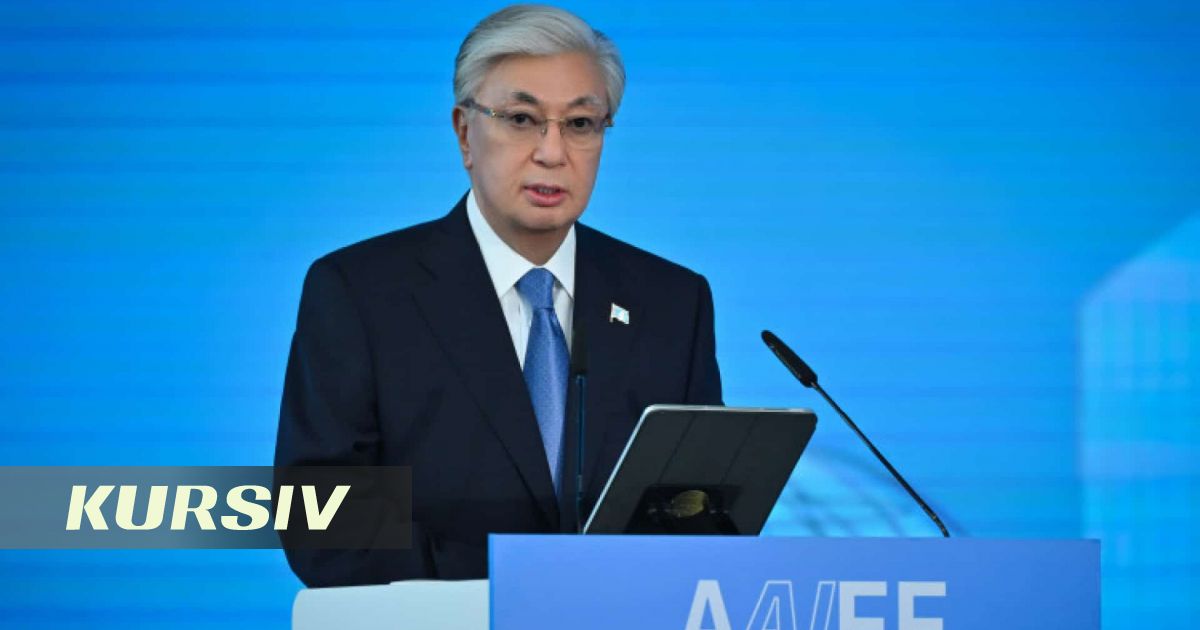
President of Kazakhstan Qasym-Jomart Toqaev has summarized the results of the country's education reform. The head of state recalled the newly adopted Constitution, which for the first time enshrines provisions for the development of the education system, as well as the modernization of the system of government, infohub.kz reports.
According to Toqaev, over the past seven years the country has built 1,342 schools with more than 1 million student places, and another 101 schools are under construction this year. Under the national project "Keleshek Mektepteri," 217 new-standard schools for 460,000 students have been built, about 40% of them in rural areas.
"The state is currently implementing a program for the mass introduction of special lessons based on artificial intelligence systems in secondary schools. The government must pay particular attention to this extremely important area of work," the president said.
The president noted growing interest among young people in the teaching profession.
"This year, more than 12,000 graduates, including over 2,000 holders of the "Altyn Belgi" badge, received state grants in pedagogical specialties. Stipends for students who have chosen the teaching vocation have grown 2.5-fold. Ahead of the new school year, more than 15,000 teachers were employed in the regions, and half of them are young specialists," Toqaev said.
According to him, experienced educators should support their younger colleagues in order to establish traditions of professional continuity. The president also noted the importance of international cooperation among universities in the scientific and educational sphere.
Turning to the digitalization of education, Toqaev said that, on his instructions, the systematic introduction of artificial intelligence into the secondary education system has begun.
"In September of this year, the Ministry of Education approved the Standard for the Use of Artificial Intelligence in Education. Access to advanced methodologies and digital platforms will be provided to all schools in the country, regardless of whether they are located in a metropolis or a remote village," the president said.
He cited data from the international PISA-2025 study: in terms of digital readiness, Kazakh schools already outperform the average among OECD countries, and the cognitive adaptability index of students is also above average.
"But this is only a starting point, not a reason for complacency. A huge amount of work lies ahead of us," Toqaev emphasized.
Earlier, he congratulated Kazakh teachers, calling them key figures in every person's life.