

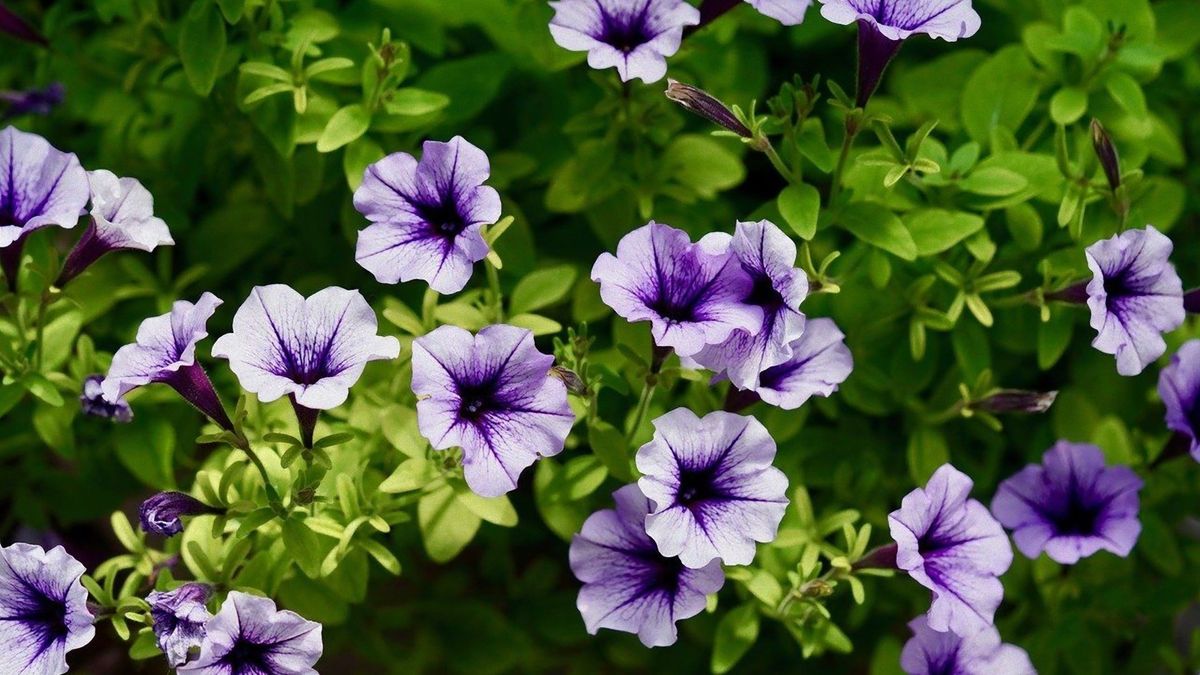
Biologists at the Hebrew University of Jerusalem have found that the same proteins determine both the color and the scent of petunias, and they succeeded in changing the flowers' fragrance, infohub.kz reports.
It turned out that the plants use the amino acid phenylalanine as a shared raw material both for producing pigments and for generating fragrant compounds. A research team led by Oded Shalit and Alexander Vainshtein studied the EOBV protein, which interacts with two other color-related proteins, AN1 and AN11. The researchers found that this combination does not enhance the flower's scent but suppresses it.
Using CRISPR genome-editing technology, the scientists switched off EOBV production in the petunias. The plants kept their usual appearance, but their chemical makeup changed: the petals began releasing more eugenol, isoeugenol and vanillin — substances that give the scent of cloves and vanilla. At the same time, the release of methyl benzoate, the main component of the usual petunia scent, declined.
The edited flowers also withstood heat better. When the temperature rose to 28 degrees, ordinary petunias became 12% narrower and lost scent intensity, whereas the modified plants narrowed by only 6% and retained their previous scent strength. The authors of the work, published in the journal Plant Physiology, have not yet tested how people or pollinating insects perceive the new bouquet.