

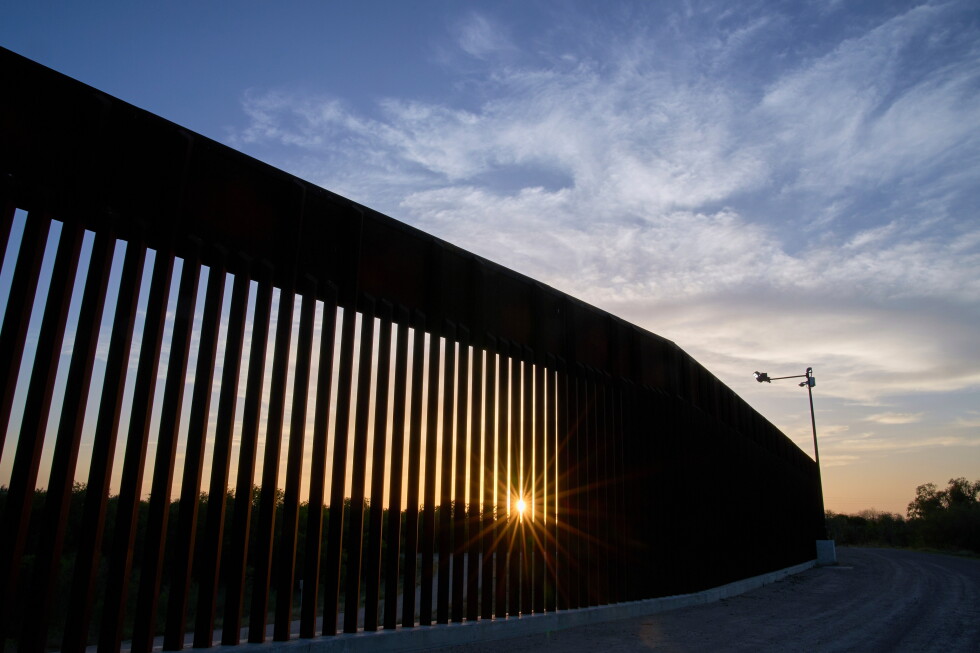
A U.S. federal court has allowed the Trump administration to build 62 miles of border wall through a Native American tribe's reservation. This was reported by infohub.kz.
U.S. District Judge Richard Leon in Washington, D.C., denied the Tohono O'odham Nation's request to halt construction of the wall on its 2.8-million-acre reservation. The tribe had sought a court order to stop the construction, but the judge ruled that the tribe failed to prove that the wall would change its reservation boundaries without congressional authority.
The judge also rejected the tribe's claim that the wall would illegally trespass on its land. In his ruling, Leon wrote: "I find that the Government's interests in securing the border, enforcing immigration laws, and ensuring public safety outweigh any surviving irreparable harms at this juncture."
Tribe officials have not yet commented on the decision. The O'odham reservation in the Sonoran Desert in Arizona abuts 62 miles of the Mexico border. The tribe has over 37,000 members, including thousands who live in Mexico.
Tribe attorneys argued that building the wall would cause "significant devastation" to the reservation, including the destruction of mountain peaks sacred to the O'odham. They stated that the wall "would fray the ties between O'odham communities and families on opposite sides of the border, interfere significantly with O'odham religious rituals and practices, and destroy plant and animal resources sacred to the O'odham."
In 1907, President Theodore Roosevelt issued a proclamation reserving a 60-foot strip of public land along the U.S.-Mexico border for a buffer zone called the "Roosevelt Reservation," which was formed a decade before the reservation's establishment.
Tribe attorneys called the suggestion that construction could be confined to the 60-foot corridor "fanciful at best." During a July 22 hearing, Judge Leon called the tribe's request for a preliminary injunction "extraordinary" and expressed doubt that U.S. laws favor the tribe. Leon, nominated by Republican President George W. Bush, said he couldn't find a previous court ruling under comparable circumstances. "This is a novel case with novel issues," the judge said.