

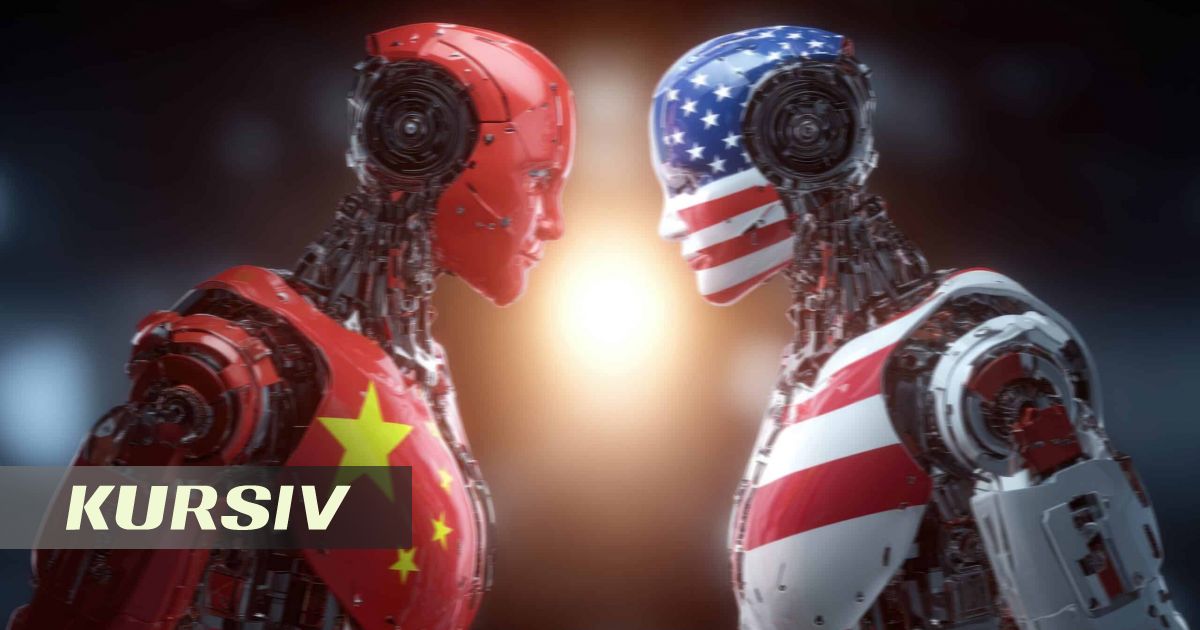
Washington is preparing to warn dozens of countries to take a clear stance in the technological rivalry with China, reports infohub.kz.
According to Reuters, the US may exclude from its AI coalition any nation that also joins a competing Chinese initiative. The agency cites an American official and a draft internal State Department letter.
The letter is planned to be sent to 35 countries that signed the US statement on harnessing the potential of artificial intelligence. Among them are participants in the Pax Silica initiative, which unites countries for cooperation in AI, semiconductor production, and access to critical minerals.
Washington has taken particular note of Kazakhstan. The country became the first in Central Asia to join Pax Silica, but it also belongs to a China-led AI cooperation coalition. According to Reuters, Kazakhstan is currently the only known country participating in both initiatives.
The draft US letter states that participation in Pax Silica implies not just formal membership but certain commitments. "To be part of everything is to be part of nothing," the document says. Countries are urged to "deliberately choose" AI partnerships and not combine them with participation in initiatives that Washington considers competing.
An American official, speaking on condition of anonymity, told Reuters that Washington's position boils down to the principle: "You can't have it all." "It is hard to see how a country can be considered a reliable partner of one technological ecosystem while simultaneously joining an initiative created by China to promote a competing vision of AI development," the official said.
The Pax Silica initiative was launched by Washington to strengthen supply chains related to AI, semiconductors, and critical minerals. It already includes about two dozen countries, including Japan, Australia, and South Korea.
In July, Chinese President Xi Jinping announced the creation of a World Association for Artificial Intelligence Cooperation. Beijing promotes open-weight model technologies as an alternative to the American approach.
The US-China rivalry in AI is intensifying as Chinese models rapidly advance, according to Reuters, narrowing the gap with closed systems from American companies like OpenAI and Anthropic.
Washington is also seeking to secure access to critical minerals needed for modern electronics and technology production. China retains a significant position in this area, which has already been used as leverage in trade disputes with the US.
The US State Department declined to comment to Reuters on the possible leak of internal documents. It was also reported that the Chinese and Kazakh embassies in Washington did not immediately respond to the agency's requests.
Earlier, it was announced that the first data center with NVIDIA and Firebird AI in Kazakhstan would launch in June 2027.