

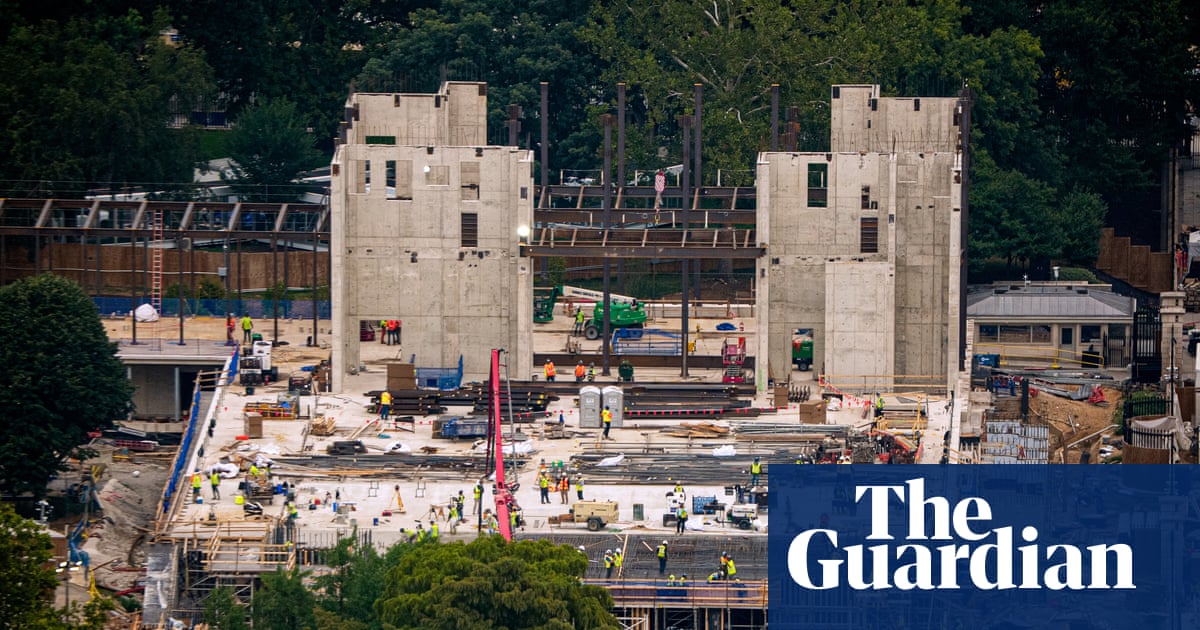
The US Supreme Court has allowed Donald Trump to continue construction of his controversial White House ballroom for now, temporarily pausing a lower court order that would halt much of the project.
Supreme Court Chief Justice John Roberts signed a temporary order on Friday, permitting work to continue on the planned White House addition – a top priority of the president – while the Court considers an emergency appeal from Trump's administration.
The order puts the Friday deadline from the appeals court on pause. That court had ordered construction to stop while a legal challenge proceeded, after concluding earlier this month that the ballroom project likely requires congressional approval before work can continue.
The Trump administration then turned to the Supreme Court, arguing that construction of the structure was critical to national security and the safety of the US president.
On Tuesday, the National Trust for Historic Preservation had urged the Supreme Court to suspend the ballroom project following an earlier lawsuit seeking to block construction.
The massive 90,000 sq ft (8,400 sq meters) ballroom project, part of the president's sprawling plans to reshape the nation's capital, has already involved the demolition of the White House East Wing. Construction also includes an underground military facility that the administration says is needed to protect the president.
The underground military bunker would be a five-story complex that will include shelters, a hospital and other features designed to protect the president and senior officials during an emergency.
The total cost of the project is expected to exceed $400 million.
Administration officials say the ballroom itself will be reinforced with missile-resistant columns and a drone-proof roof, allowing the structure to serve as a shield for both the underground military complex and the wider White House.
Construction on the ballroom has been under way for 10 months, with the administration saying the project is now approximately 65% complete.
The administration has argued that authority over White House renovations is held by the president, not Congress or the courts. The Justice Department also argued that leaving the site in its current condition, effectively an open construction zone, makes protecting the White House more difficult.