

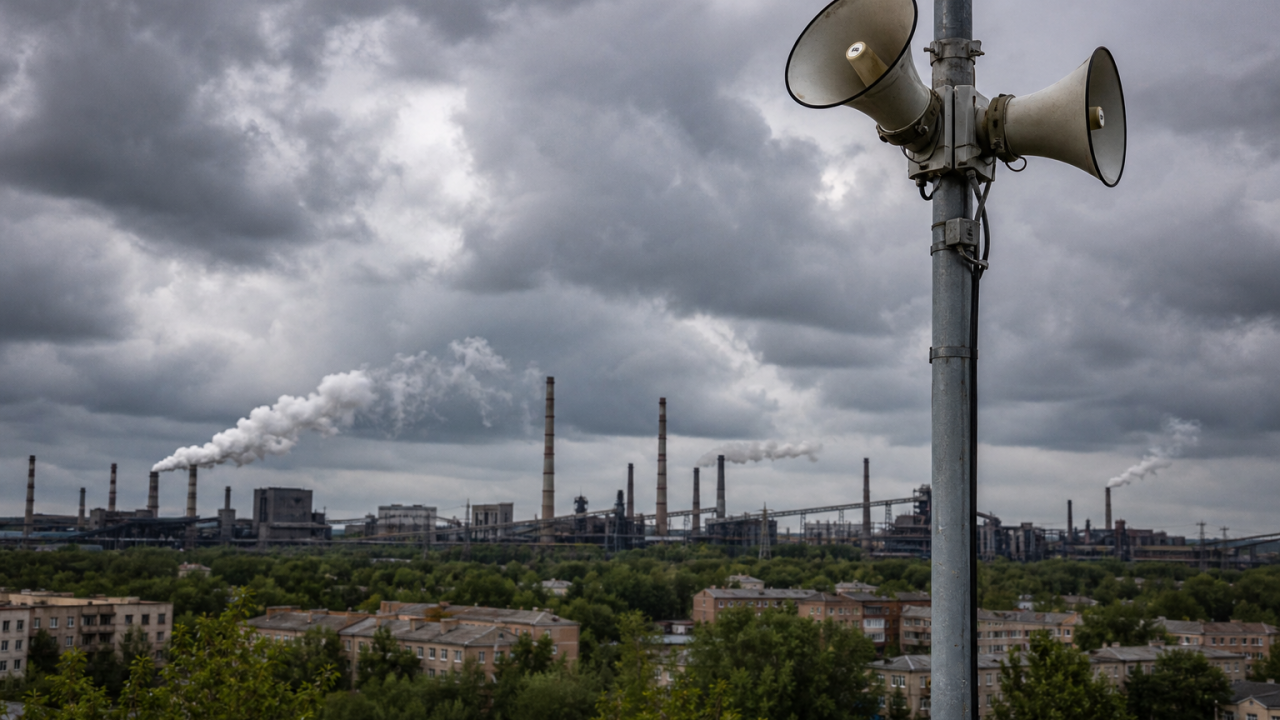
In Ust-Kamenogorsk, the city authorities have approved a specific procedure for responding to man-made emergencies, based on a mediation agreement between the akimat (city administration) and lawyer and activist Alexey Bozhkov. This was stated in a ruling by the specialized inter-district administrative court of East Kazakhstan Region, as reported by infohub.kz.
Before the trial began, the parties reached a settlement agreement, which the court recognized as compliant with legal requirements and approved. Under its terms, the akim of Ust-Kamenogorsk must develop and approve, by July 30, 2026, a mandatory regulation for informing the public in the event of man-made emergencies at hazardous production facilities and enterprises that use toxic, potent poisonous, and other dangerous substances.
The document sets specific requirements for the future regulation. In particular, the population must be alerted no later than ten minutes after emergency information is received. Subsequently, authorities are obliged to gradually provide residents with updated details: the location, nature of the emergency, type of hazardous substance (if identified), and recommendations for public protection. Repeated alerts are required as new data emerges. Information must be disseminated through all available means, including official websites and mass media.
Two days after the ruling, the court had to revisit the case due to a clerical error. The initial text stated that the akimat must "review and approve" the regulation. Later, the court corrected the wording to specify that the parties agreed on "development and approval of a mandatory regulation." The court emphasized that the correction was technical and did not alter the essence of the ruling or the agreements reached.
The court also clarified that the approved settlement agreement is binding. If its terms are not voluntarily fulfilled, the document may be enforced through a writ of execution.
The activist filed the lawsuit after a May accident at the Kaztsink LLP metallurgical site in Ust-Kamenogorsk, when many residents claimed they did not receive timely official information and did not know whether the incident posed a health risk. The akimat's failure to promptly notify the public became the subject of the lawsuit in the specialized inter-district administrative court of East Kazakhstan Region.