

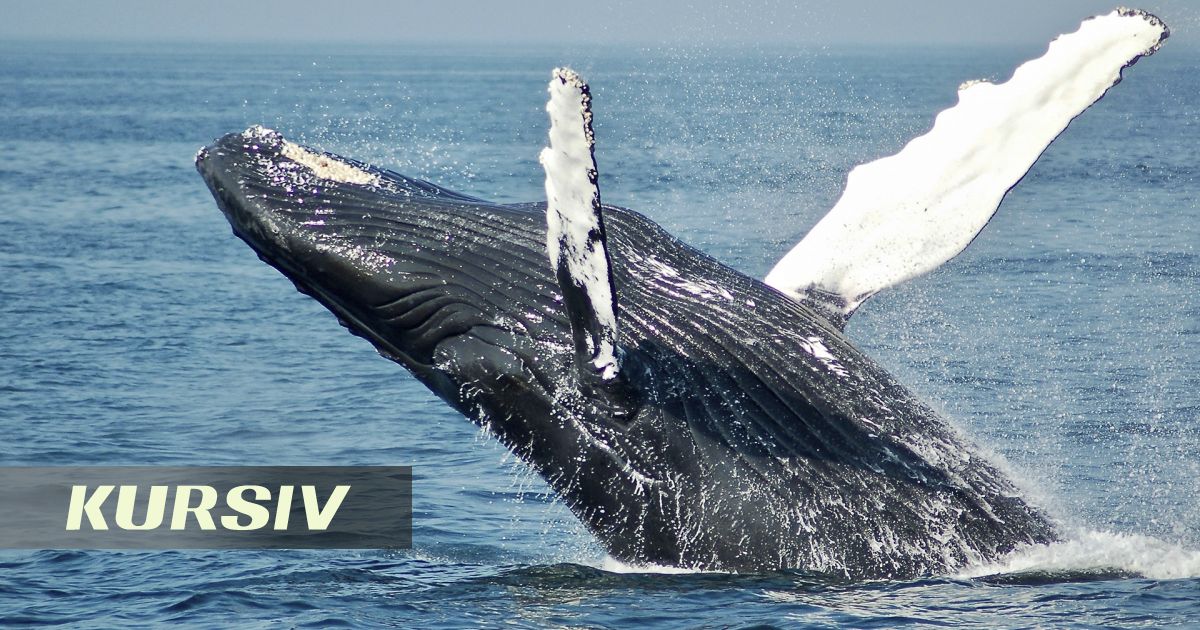
Due to global warming, thousands of large whales have appeared off the coast of East Greenland, where they previously could not venture because of sea ice. Now the ice has retreated, opening up new feeding grounds, reports infohub.kz.
As reported by the BBC, scientists have recorded humpback whales, fin whales, and minke whales off the island's coast. They conducted observations from ships and aircraft, used satellite tags to track movements, and also drew on data from local hunters. Previously, thick ice literally blocked the way to the shore, but now the water has warmed and the ice has receded.
The researchers note that before 2006, not a single humpback whale had been seen in this region. However, by the summer of 2024, thousands of these giants were counted there. It is estimated that at that time, there were about 4,000 humpback whales, 6,000 fin whales, and several thousand minke whales in the Greenland Sea.
The whales come here in search of food. As the water warmed, fish, mainly capelin, as well as krill, moved closer to Greenland. The whales are having a feast off the coast: over the four summer months, they consume about 1 million tons of fish and plankton.
This puts additional pressure on capelin stocks, which are important not only for whales but also for other marine animals and fisheries. The indigenous Arctic inhabitants – narwhals and belugas – are losing their usual cold icy homes and cannot compete with the huge newcomers.
Earlier, Kursiv LifeStyle reported that NASA presented a new three-dimensional model of the geoid, created on the basis of satellite observations of the Earth. In the visualization, the planet does not look like a perfect sphere, but as an uneven object with bulges and depressions.