

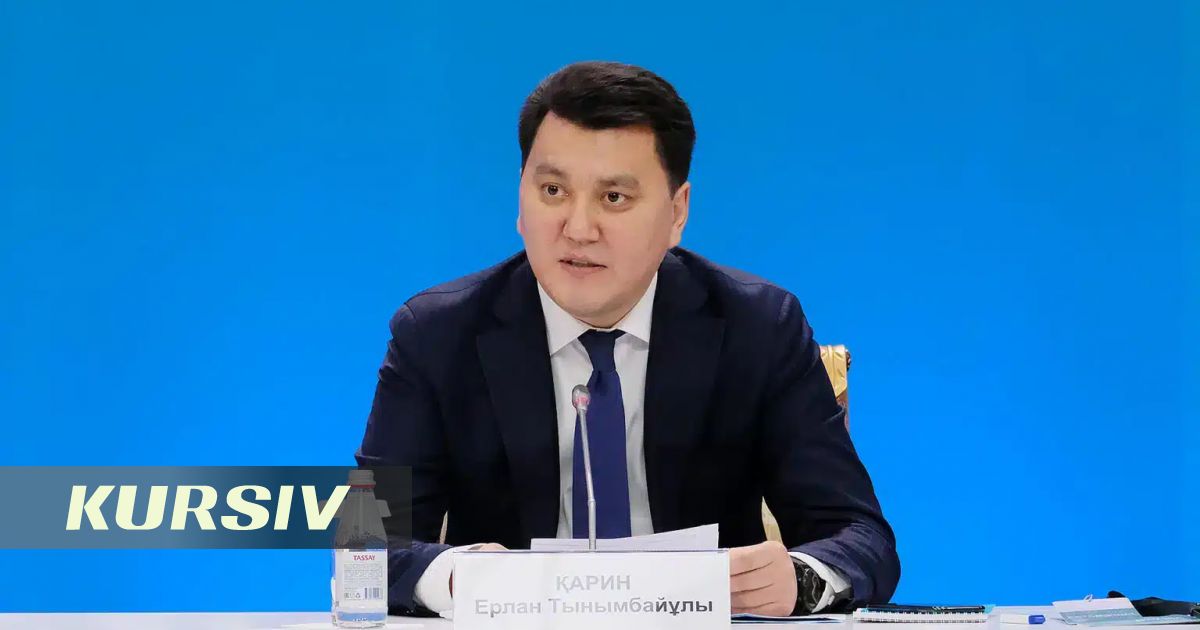
Kazakhstan's development and prosperity largely depend on the personal culture of its citizens and the emergence of a new public ethics, Yerlan Karin, first deputy head of the presidential administration, said on Facebook while commenting on the Interior Ministry's efforts to combat illegal content on social networks, according to infohub.kz.
Karin stressed that many conflicts in society stem not from objective disagreements but from disrespect for others, bad manners and disregard for basic rules of conduct.
"A society with a well-formed inner culture and firm moral principles is capable of withstanding various challenges of our time," he wrote.
In his view, disputes and conflicts should be prevented primarily through the development of personal culture. He listed mutual respect, conscientious work, law-abiding behavior, and maintaining cleanliness and order as its manifestations.
Karin is convinced that it is impossible to change social habits and improve the quality of the nation in a short time or through ideological campaigns alone.
"Such changes cannot be achieved with attractive slogans. That is why today it is more important to consistently implement concrete measures rather than engage in formal propaganda," he noted.
He recalled that at the instruction of President Kassym-Jomart Tokayev, Kazakhstan has been gradually working in this direction. Schools have introduced a unified educational program "Adal Azamat", a law against vandalism has been adopted, protection of natural sites has been strengthened, and rules regulating face concealment in public places have been introduced.
In addition, the country has banned profanity in public places, tightened road traffic rules, and introduced liability for insulting the honor and dignity of citizens on social networks.
Karin separately highlighted the role of legal mechanisms in shaping public ethics. As an example, he cited the Interior Ministry's practice of publicly reporting cases of social media users being held accountable for dangerous pranks, insults and provocative acts done for popularity.
"Such measures against violators should certainly serve as a warning to others," he wrote.
Earlier, the Kursiv publication reported that the Interior Ministry had brought nine social media users to administrative responsibility for dangerous pranks, insults, profanity and other illegal content. Among them were bloggers from Astana, Almaty, Shymkent and the Zhambyl region, who staged provocations for views and donations, and also caused physical harm to each other during livestreams.
Later, in the Abai region, a 26-year-old female streamer was arrested for 10 days for a livestream featuring profanity, indecent behavior and mentions of drugs. In Aktobe, police brought a 38-year-old man to responsibility after he posted a video with profanity on TikTok and Instagram, but the type of punishment was not specified. In the Almaty region, a 22-year-old author of similar content was arrested for five days for demonstrative disrespect for social norms.