
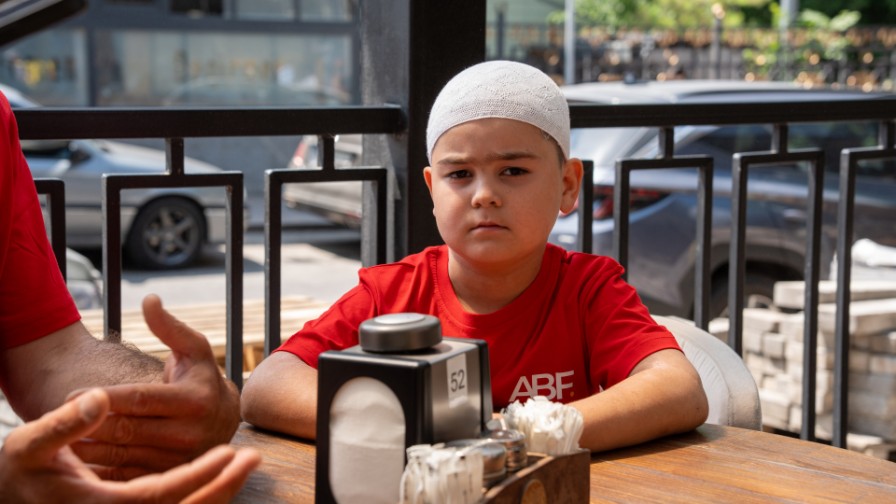
© Tengrinews.kz / Болат Айтмолда_
Dagestani Man Meets Kazakh Boy He Saved Through Bone Marrow Donation
In a deeply moving encounter, Ahmed Abdullayev, a bone marrow donor from Dagestan, met Abdullah Yakhyaev, the young Kazakh boy whose life he helped save. The meeting, filled with emotion and gratitude, symbolized a powerful bond forged across borders through an act of profound human kindness.
A Life-Saving Connection
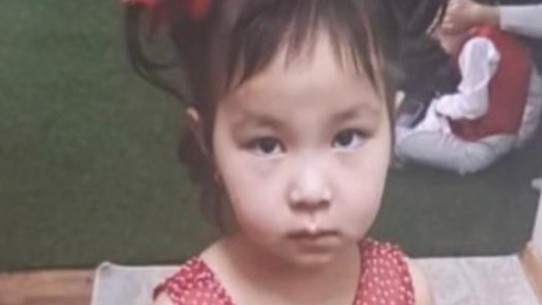
Abdullah was diagnosed with a severe form of aplastic anemia in 2023 at the age of three. This rare and serious condition affects the bone marrow's ability to produce essential blood cells. The only viable treatment was a bone marrow transplant, a procedure that replaces damaged or destroyed blood-producing cells with healthy ones from a donor.
Finding a suitable donor proved challenging. Abdullah's immediate family members, including his closest brother, were not a match. Even the Kazakh donor registry, which boasts over 12,000 potential donors, did not yield a compatible match. However, an agreement with Russia opened up new possibilities, leading to the discovery of Ahmed Abdullayev.
An Unlikely Match
Remarkably, Ahmed, a 30-year-old man of Dargin ethnicity from Dagestan, turned out to be a genetic twin for the young Kazakh boy. His heritage, a mix of Uzbek, Lezgin, Uighur, and Russian, defied expectations. In April 2024, Ahmed donated his bone marrow, becoming Abdullah's lifesaver.
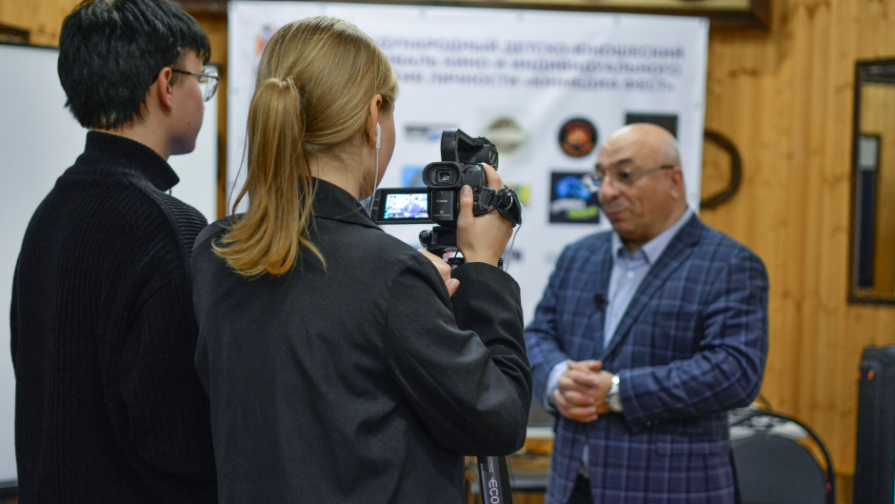
The reunion in Almaty was a significant event, marking the first international meeting between this donor and recipient. Svetlana Selyunina, director of the Asel Baiseitova Charity Foundation, which organized the meeting, highlighted the importance of such events. "These stories are very important because they serve as an example for others," she stated. "We want to show people that a donor makes a good deed once and continues their usual life, and this does not affect their health in any way."
A Moment of Anticipation
Before the official meeting, Abdullah's mother, Aigun Yakhyaeva, shared her overwhelming emotions. "I'm very emotional – my whole body is trembling," she confessed. "I couldn't sleep at all today. Although we know Ahmed, we only spoke on the phone. According to the rules, donors and recipients cannot meet immediately after transplantation, but two years after the transplant, we were allowed to exchange contact information. That's when we got acquainted, but we had never met face-to-face."
Abdullah, now transitioning to the second grade, expressed a surprising ambition when asked about his dreams: "I want to fly into space." His mother chuckled, noting, "I didn't expect that either. I learned what my son dreams about."
The Meeting and Beyond
When Ahmed and Abdullah finally met, the interaction was calm and respectful. They exchanged a handshake, and Ahmed offered a comforting pat on Abdullah's shoulder. Despite the profound significance of the moment, the young boy remained composed, perhaps not fully grasping the magnitude of the event.
Ahmed himself downplayed his role, stating, "Heroes are the doctors who organized my meeting. I am just a conduit – the Almighty chose me to help this child. If it weren't me, it would be someone else in my place."
The event also acknowledged the dedicated medical professionals involved: Ulzhasgas Uskenbaeva (Head of the Hematology Department at Almaty Children's Hospital No. 2), Gulnar Abdilova (Head of the Republican Center for Pediatric Oncology and Hematology), Yerghali Sarsekbaev (Head of the Transplant Department at the National Center for Pediatrics and Pediatric Surgery), Khadizhat Tankayeva (Head of the Makhachkala Blood Center), and Natalia Malysheva, the doctor who monitored Ahmed throughout the process.
Ahmed's journey to becoming a donor began in his student years, inspired by his sister. He recalled the moment he was called about Abdullah: "I didn't hesitate at all – I agreed immediately. I was only worried that I might disappoint the people who were counting on me." The process involved extensive testing in Makhachkala, with cell collection taking place in Kirov Oblast, and the precious cargo transported to Almaty by Dr. Malysheva under strict temperature controls.
Aigun Yakhyaeva shared a personal connection to Dagestan, as her grandmother hailed from the region. She expressed a desire to visit again, a sentiment echoed by Khadizhat Tankayeva, who warmly invited Abdullah's family to experience the hospitality of Dagestan, complete with its sea, barbecues, and traditional Lezginka dance.
The word "Barkalla," a Dagestani expression of gratitude, resonated throughout the gathering, perfectly encapsulating the profound thanks felt for Ahmed's selfless act. As Elmir Alieva, head of a public foundation supporting children with oncological diseases, advised, "You can say 'Barkalla' – 'thank you,' it's gratitude, everyone understands it in the Caucasus." The sentiment was clear: Barkalla, Ahmed!
Бұл туралы Infohub.kz ақпарат агенттігі хабарлайды.
-
Ахмед Абдуллаев пен Абдулла Яхьяровтың кездесуі – бұл тек донор мен реципиенттің бірінші кездесуі ғана емес, сонымен қатар екі ел арасындағы достық пен адамгершіліктің жарқын көрінісі.
-
Известный поэт и предприниматель Айнұр Турсынбаева поделилась секретами хорошей жизни из Стамбула, призвав экономить энергию и питаться умеренно.