

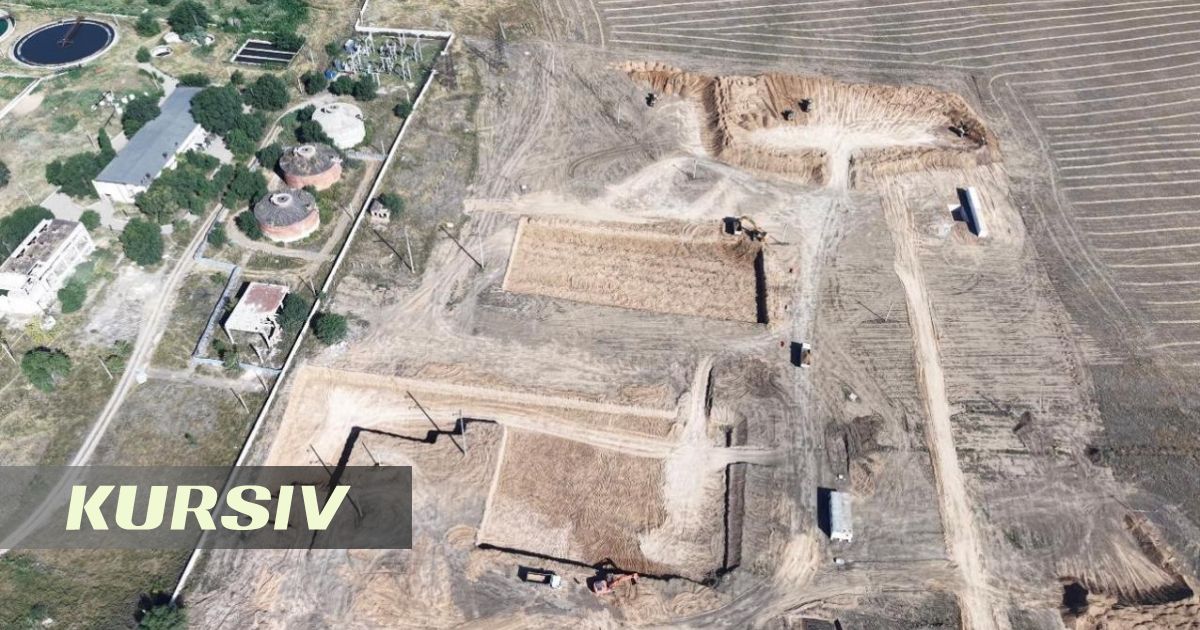
Construction of new wastewater treatment facilities has started in Aktobe, designed to replace a station that has been in operation since 1981. This is the first large-scale project of its kind in 45 years, reports infohub.kz.
According to the regional administration, the project cost is estimated at about 43 billion tenge. The new infrastructure is intended not only to replace worn-out equipment but also to create a capacity reserve for the city's further development.
The existing treatment facilities were commissioned 45 years ago, and today their wear and tear is about 70 percent. Daily, the station receives between 70,000 and 80,000 cubic meters of wastewater, and during floods this volume reaches 95,000 cubic meters. At the same time, only about 62 percent of Aktobe's population is covered by centralized sewerage.
The new station will have greater capacity: it is designed to treat 100,000 cubic meters of wastewater per day, and during peak periods the throughput can reach 130,000 cubic meters.
"The project is financed through borrowed funds from the European Bank for Reconstruction and Development under a state guarantee. Up to 90 percent of the costs for repaying and servicing the loan will be covered by the republican budget, and at least 10 percent by the local budget. Thus, the entire financial burden will not fall on residents," said Ashat Shakharov, akim of Aktobe region.
As reported by Nagymzhan Aldiyarov, General Director of JSC "Aqtobe su-energy group", the new station will feature a four-level treatment system. It will include mechanical and biological treatment, ultraviolet disinfection, and sludge processing with biogas production. The sludge is planned to be dried and processed into granules, and the biogas will be used to generate electricity.
The project also includes the rehabilitation and sealing of two pipelines that discharge treated water.
Construction has already begun. As work progresses, the number of specialists on site is planned to increase to 350 people. The project is expected to be completed in May 2028.
After the new station is launched, the treated water can be used for fishery purposes or discharged into a water body, provided environmental requirements are met and necessary project documentation is available. The existing treatment facilities will continue to operate until the new station is commissioned, after which their further condition and the need for reconstruction will be determined.