

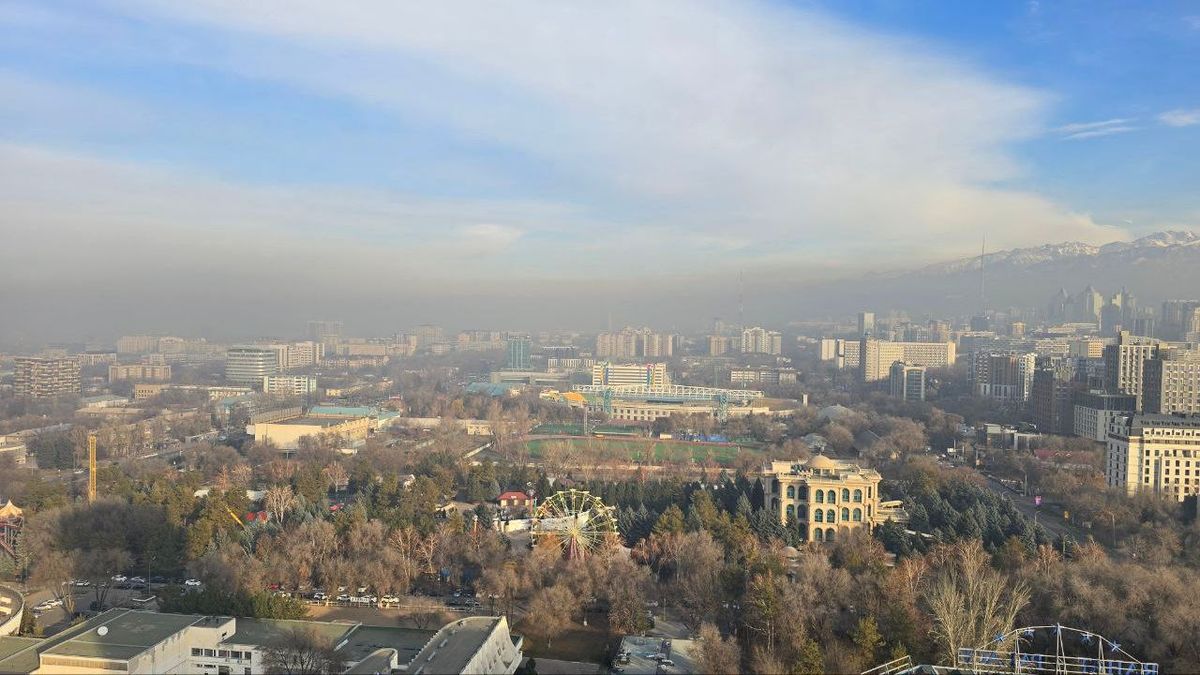
About 189,000 tonnes of pollutants enter Almaty's atmosphere every year, with roughly 60% of that volume — around 113,000 tonnes annually — coming from motor vehicles. The city administration reported this, citing data from the Department of Ecology and Environmental Protection, according to infohub.kz.
The department stressed that cars are not the only source of air pollution. In the cold season, private homes heated with coal and firewood add extra pressure on the atmosphere, as do facilities using solid and liquid fuel, including bathhouses and public catering establishments such as shashlik eateries.
According to specialists, Almaty's natural features also affect air quality. The city sits at the foot of the Zailiysky Alatau mountains. In winter, especially in windless weather, a temperature inversion forms here: a warm layer of air prevents emissions from dispersing, causing pollutants to accumulate in the lower layers of the atmosphere.
The city administration recalled that Almaty has planned a phased introduction of new environmental requirements to improve air quality. In particular, air protection rules approved on December 30, 2025, provide for tighter control over stationary pollution sources, the use of gas-cleaning equipment and restrictions on the use of solid and liquid fuel in areas with access to gas.
A separate area concerns reducing transport emissions. The city is continuing to renew its bus fleet and is expanding the network of dedicated lanes for public transport. These measures are aimed at developing an alternative to travel by private car.
Almaty has also been running a pilot low-emission zone (LEZ) project since April. In the pilot phase, participation is voluntary, with no entry fees, fines or traffic restrictions. The project allows the city to test mechanisms for the future application of environmental requirements to motor vehicles.