

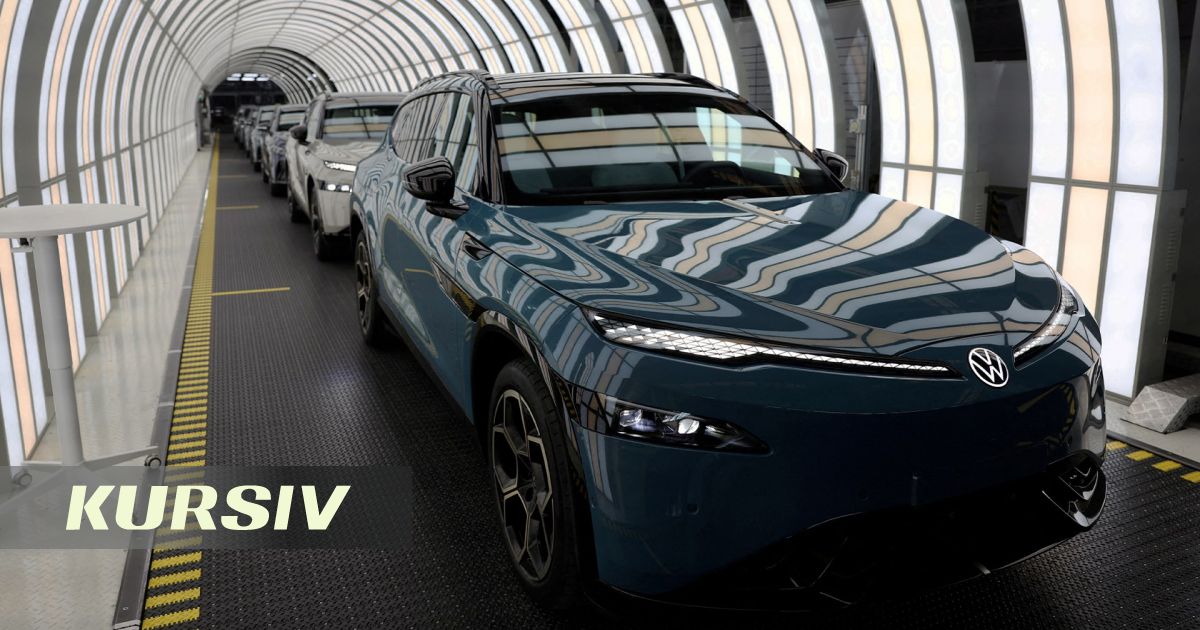
German automakers are rapidly losing their foothold in the Chinese market, where local electric vehicle manufacturers compete not only on price but also with cutting-edge technology. In the second quarter of 2026, sales of Mercedes-Benz, BMW, and Volkswagen in China fell by at least 30%, according to infohub.kz.
Not long ago, a German car was considered a status symbol in China, but now a premium badge alone is no longer enough. Local companies refresh their lineups faster, integrate smart features, and offer more attractive prices.
A telling example is Mercedes-Benz. In the first half of the year, the brand sold just 1,153 battery-powered CLA models in China, while Xiaomi sold over 80,000 SU7s at a comparable price point. Chinese cars increasingly appeal to buyers with advanced infotainment systems and voice assistants.
BMW also faces pricing challenges. The company is betting on its electric Neue Klasse models, but high costs remain a hurdle. BMW's forecast for operating margin in 2026 has been cut to 1–3%.
Volkswagen is forced to act even more aggressively. CEO Oliver Blume has admitted the company needs to speed up. To that end, the manufacturer is already partnering with Chinese firms Xpeng and SAIC.
The main problem for German brands, according to Autoblog, is speed. Traditional automakers can take about four years to develop a new model, while the Chinese EV market refreshes roughly every 1.5 years.
In the end, a car in China is increasingly like a smartphone on wheels. Buyers want not only good handling and a recognizable logo, but also modern software, artificial intelligence, entertainment, and regular updates. It is in these areas that German brands have to catch up with local rivals.