

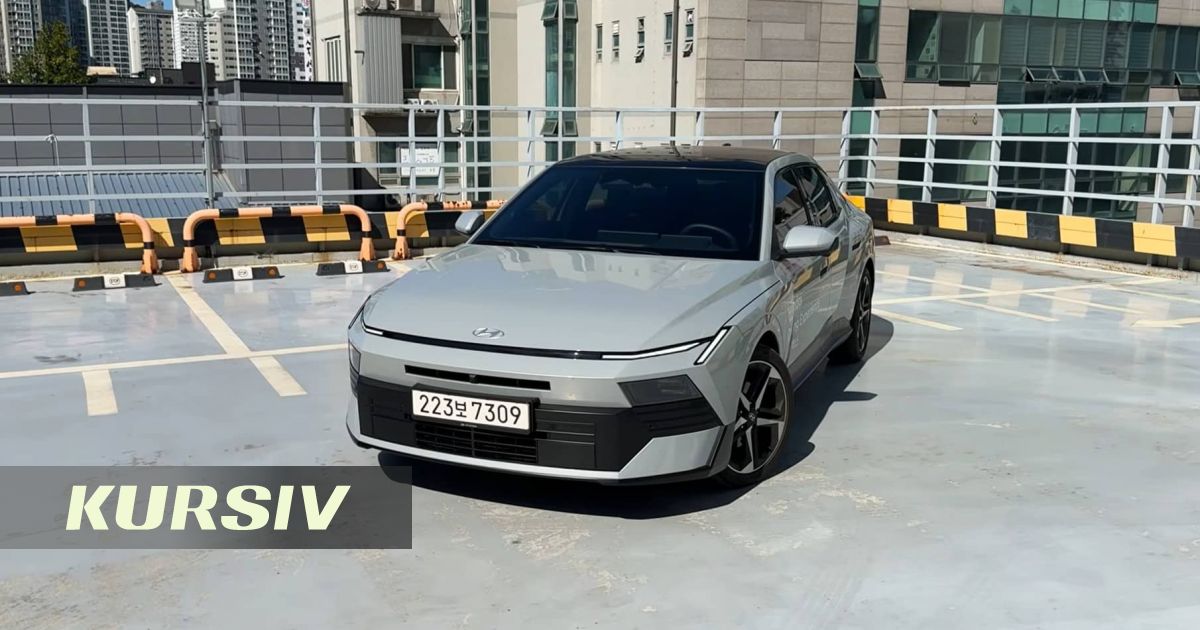
Sales of the new Hyundai Avante, known in other markets as the Elantra, have begun in South Korea. Car dealer and blogger Viktor Li took the eighth-generation sedan for a test drive and noted that its performance remains one of the more contentious points, according to infohub.kz.
The new Elantra has effectively received a new body. The bumpers, grille and lighting have changed: the front now features sharper lines, a two-tier headlight design and daytime running lights running along the edge of the hood.
The sedan has also grown larger. Its length is now 4765 mm, its width is 1855 mm, and the wheelbase has reached 2750 mm. According to the reviewer, the 30 mm increase in wheelbase is noticeable in cabin space, especially in the second row.
The suspension was the highlight of the drive for Li. The front retains a MacPherson setup, but the shock absorbers have been revised. The rear still uses a torsion beam, whose settings were changed, partly through new hydraulic bushings.
On rough roads, the Elantra struck the blogger as softer and more "grown-up" than its predecessor. Handling, however, did not suffer. Among other pluses, he noted the small turning radius and the brakes' predictable operation.
The gasoline version gets a 2.0-liter naturally aspirated engine producing 149 hp and an IVT continuously variable transmission with simulated eight speeds.
When driven gently, the powertrain is smooth and predictable, but under hard acceleration it lacks power: in Li's words, the engine "roars but doesn't go." When overtaking, the engine and CVT pairing behaves more confidently, and throttle response remains predictable.
Inside, the reviewer noted the comfortable seating position, pleasant-feeling materials, a large display and a set of electronic aids. For example, when the turn signal is activated, an image of the blind spot appears on the screen, while surround-view cameras help during maneuvers.
In Korea, the gasoline 2027 Hyundai Avante is priced from 23.98 million to 31.52 million won — roughly 8.1–10.7 million tenge. The hybrid version, with a 1.6-liter engine, produces a combined 157 hp and starts at 30.42 million won, or about 10.3 million tenge.
Overall, the new Elantra leaves the impression of a more comfortable and mature sedan. The engine, however, has not changed in the name of performance: the main improvements concern comfort, handling and cabin space.
Earlier, Kursiv Auto reported that the new Elantra Hybrid had become more powerful and 10% more fuel-efficient. And just before that, Hyundai unveiled the new 2027 Tucson with a 292-hp hybrid powertrain in New York.