

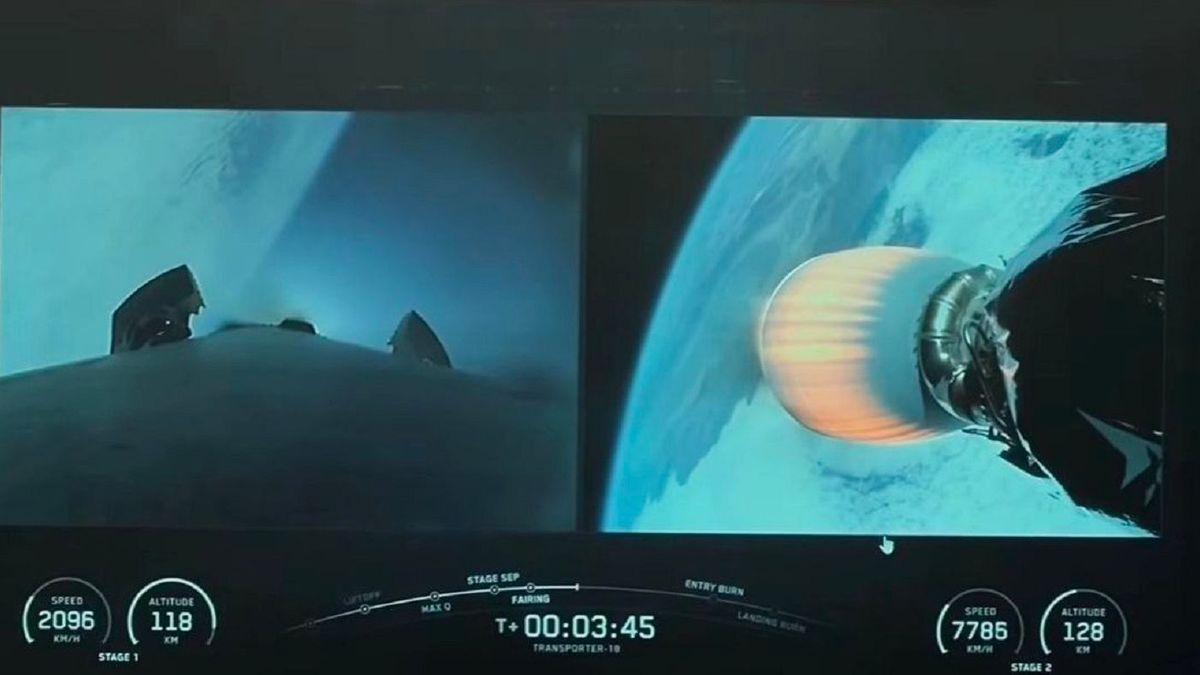
On October 1, a satellite developed by Kazakh schoolchildren lifted off into space aboard a rocket from Elon Musk's SpaceX company from Vandenberg Space Force Base in California, according to infohub.kz.
The picosatellite, called NIS PocketQube, was built by students at the Nazarbayev Intellectual School in the Nura district of Astana. According to NIS, the spacecraft's arrival in orbit marked the culmination of a multi-year educational and engineering project that brought together schoolchildren, teachers, and space industry specialists from Kazakhstan and abroad.
Work on the project began in 2019 with the idea of creating an educational environment where students could study space technology not only in theory but also by working on a real spacecraft. The active phase started in 2020, when the school established the NIS Space laboratory and launched a specialized course, "Electronics of Space Technology," for students in grades 7–10.
"NIS PocketQube is an ultra-small satellite in the PocketQube format. It measures 5×5×5 cm and weighs 250 grams. Despite its miniature format, the spacecraft was equipped with onboard control, power, and radio communication systems, as well as solar panels," the school said.
Over the course of the project, 17 students have taken part in the NIS PocketQube team, some of whom are now NIS graduates.
"They worked on 3D modeling of the satellite, calculated equipment layouts, worked with electronic boards and SMD components, programmed microcontrollers, developed data processing algorithms in Python, and took part in preparing the spacecraft for ground tests. Over several years, the team went through virtually the entire cycle of creating a small spacecraft, from the first drawings and prototypes to testing and preparing the flight model for launch. In December 2022, the spacecraft passed ground thermal vacuum and mechanical tests at the National Space Center," NIS said.
The data received from the satellite is planned to be used in students' research projects in physics, astronomy, programming, and engineering disciplines. A ground station will be installed to receive and process the information, providing access to satellite data for schoolchildren across Kazakhstan.