

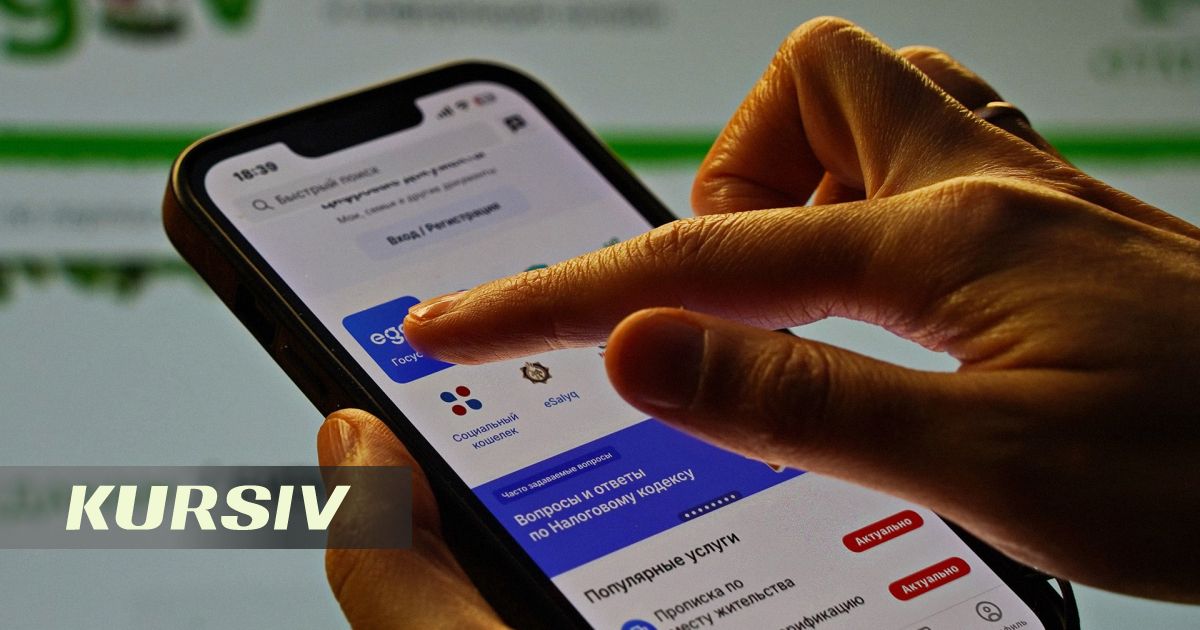
Kazakhstan's Ministry of Artificial Intelligence has been granted the authority to approve the list of mobile applications that telecom operators will not charge for. In effect, Kazakhstanis will be able to use such services free of charge, the website infohub.kz reports.
The ministry's new power is set out in government resolution No. 853, which took effect on October 1. Under the document, the ministry is tasked with approving the list of mobile applications of social and state importance.
Deputy Minister of Artificial Intelligence and Digital Development Doszhan Mussaliyev explained the practical meaning of this status earlier at a briefing at the Central Communications Service. According to him, legislation provides for zero-rated access to socially significant applications — operators have no right to charge for the megabytes of internet traffic used by them.
As a result, including an application on the list allows users to access it regardless of whether they have funds in their account. The government resolution itself, however, does not describe the criteria by which third-party programs may qualify for this status.
The basic list of services was drawn up earlier. By order of the head of the ministry dated August 21, 2026, four mobile applications were included in the list: eGov Mobile, eGov Business, Aitu Superapp and Enbek. The order officially took effect on September 5, 2026.
In addition, the ministry received a number of new powers in the areas of telecommunications, cybersecurity and personal data. In particular, the ministry will approve the rules for telecom operators to transmit information about a calling subscriber, as well as the rules for providing data on communication networks and facilities for Kazakhstan's digital telecommunications map.
The document separately stipulates that the ministry will approve the rules for verification, registration and re-registration of phones — subscriber devices for cellular communications. The ministry will thus determine the procedure for registering mobile devices, including their re-registration.
The ministry will also approve the criteria for classifying digital objects as artificial intelligence systems, the rules and criteria for recognizing digital objects as critically important, and the methodology for categorizing them.
Furthermore, the ministry will maintain registries of individuals who collect or process personal data, as well as registries of personal data security breaches.