

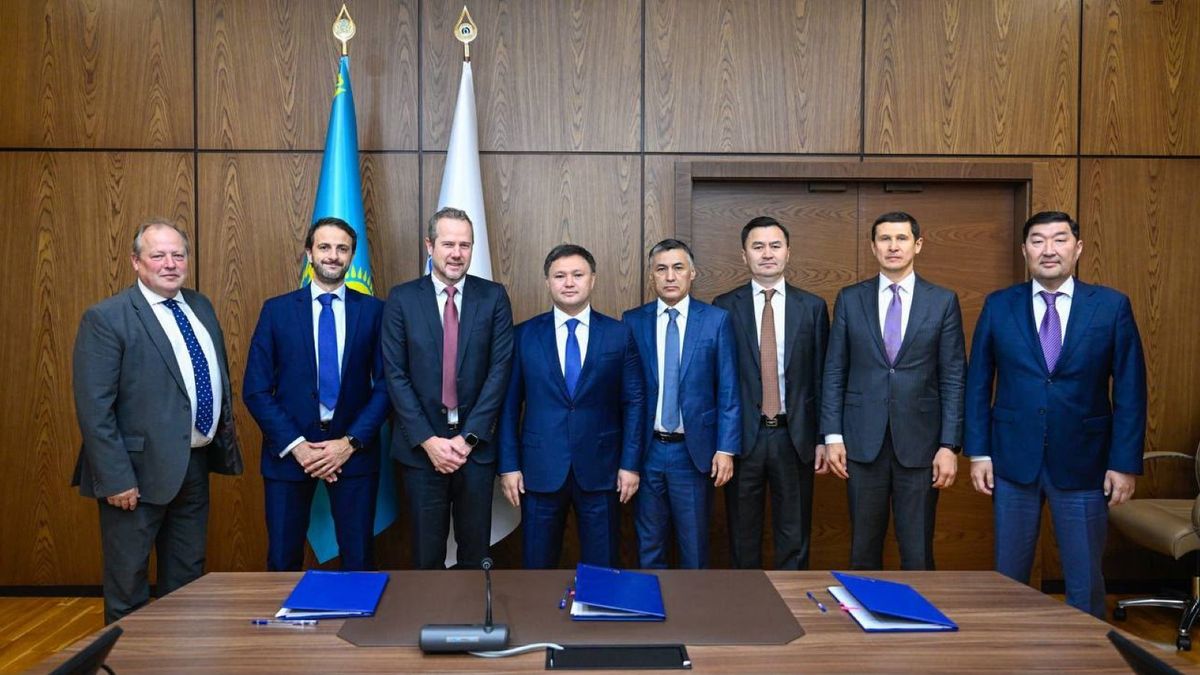
Kazakhstan is bringing in an international investor to modernize its aviation fuel infrastructure: KazMunayGas (KMG), Spain's Exolum Aviation and KazMunayGas-Aero have signed a cooperation agreement covering the construction of fuel supply complexes, the upgrade of storage facilities and the adoption of international standards, infohub.kz reports.
The trilateral document was signed at a meeting between KMG Management Board Chairman Askhat Khasenov and Iván Muíño, Exolum's vice president for aviation. Kazakhstan is the first country in the Eurasian region where Exolum is entering the market.
The company operates in 10 countries across Europe and the Americas and manages 68 terminals and pipelines with a total length of about 6,000 km. Its aviation division services the fuel infrastructure of 50 airports. Its international expertise is now set to be used to develop the Kazakh market.
The cooperation is being carried out as part of systemic measures to develop the transport and logistics sector of the economy and strengthen Kazakhstan's role as a leading aviation hub in Central Asia, in line with instructions from the head of state.
The parties are considering the construction of new fuel supply complexes (FSCs) and specialized aviation fuel storage facilities, as well as the modernization of existing sites. The infrastructure is to be adapted to handle Jet A-1 international-standard fuel in compliance with the requirements of the Joint Inspection Group (JIG). Modern fuel infrastructure must ensure the necessary quality, safety and operational standards. This is an important component of servicing international airlines and developing transit routes.
Modernizing the FSCs will be one of the conditions for strengthening Kazakhstan's position in aviation logistics between Europe and Asia.
Under the partnership, the parties will divide responsibilities: KMG will provide local market expertise and interaction with aviation industry participants, while Exolum will contribute international technologies and expertise in managing fuel facilities.
Particular emphasis is placed on technology transfer and the training of Kazakh specialists. As Askhat Khasenov noted, the cooperation should accelerate the technological renewal of the industry and create conditions for further growth in international air traffic through Kazakhstan.
The next step is an economic analysis. Based on its results, the parties will determine specific projects, the volume of investment, the allocation of obligations and the implementation stages.