

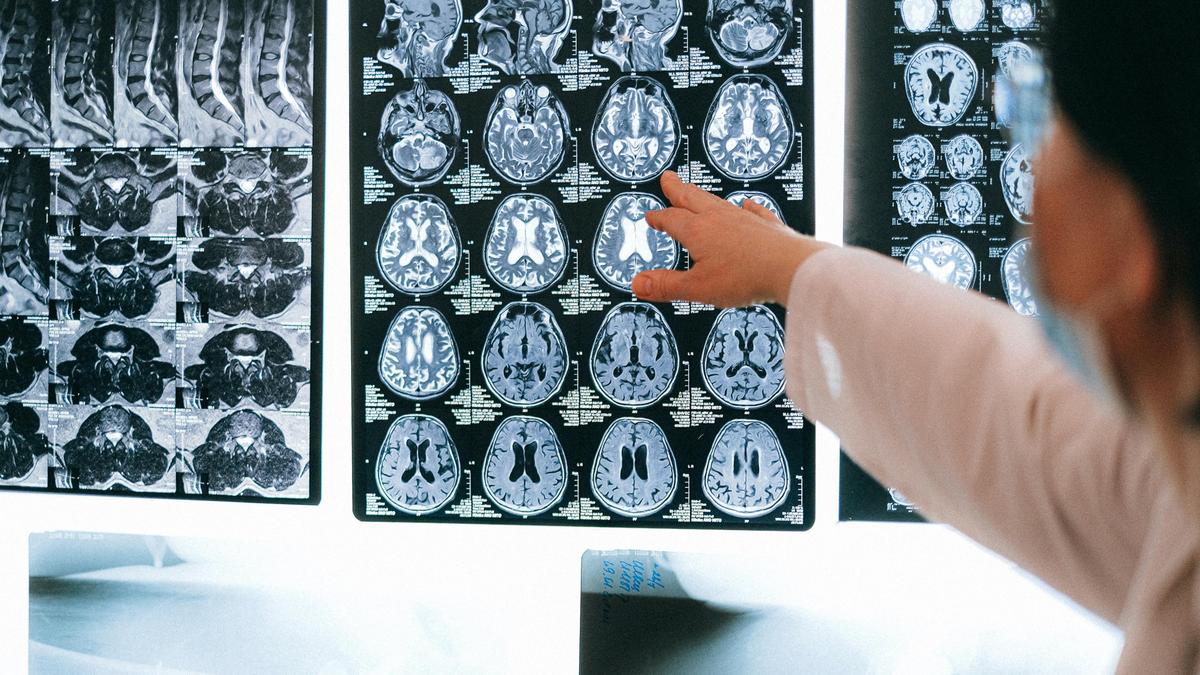
Israeli and American neuroscientists have challenged the established view that consciousness is formed in the cerebral cortex. According to their new theory, the subjective sense of "self" is generated by the evolutionarily ancient brainstem, infohub.kz reports.
Marshall Devor of the Hebrew University of Jerusalem and Mark Baron of Harvard Medical School presented their concept in a study published in the scientific journal The Neuroscientist. They argue that fundamental subjective perception does not arise in the cerebral cortex, as is commonly believed, but in the brainstem — one of the most ancient structures in vertebrates.
Traditional neuroscience assigns the cortex an exclusive role as the generator of awareness. However, the authors emphasize the difference between processing sensory signals and direct subjective experience. The main piece of evidence is the phenomenon of pain: unlike vision or hearing, pain has no strictly localized zone in the cortex. Moreover, direct stimulation of the cortex produces flashes of light or auditory hallucinations, but almost never reproduces an actual sensation of pain.
The brainstem has traditionally been regarded merely as a regulator of sleep, breathing and heartbeat that sustains wakefulness. The researchers, however, drew attention to clinical cases of children with hydranencephaly, who have virtually no cortex but retain basic emotional reactions, attachment and a sense of pain. Laboratory animals displayed similar behavioral patterns after surgical removal of the cerebral cortex.
According to the proposed model, the brainstem generates a primitive but essential sense of "presence," adding subjective coloring to the cortex's unconscious computations, like color added to a black-and-white photograph. If the hypothesis is correct, the capacity for conscious perception may be far more widespread among animals than previously thought.